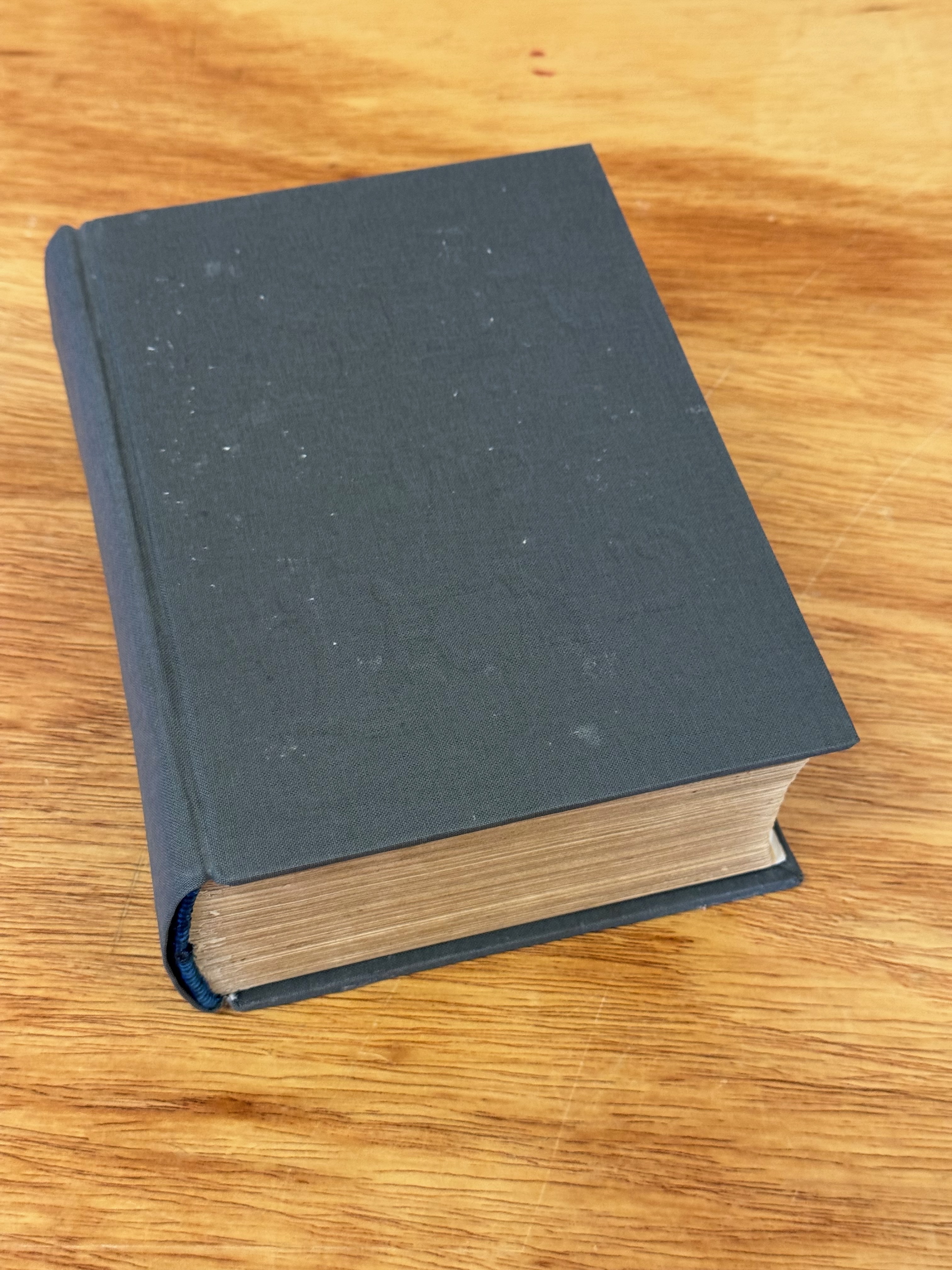
Adventures in Bookbinding
The Question
Almost a year and a half ago, my good friend Stu reached out one morning with a question:
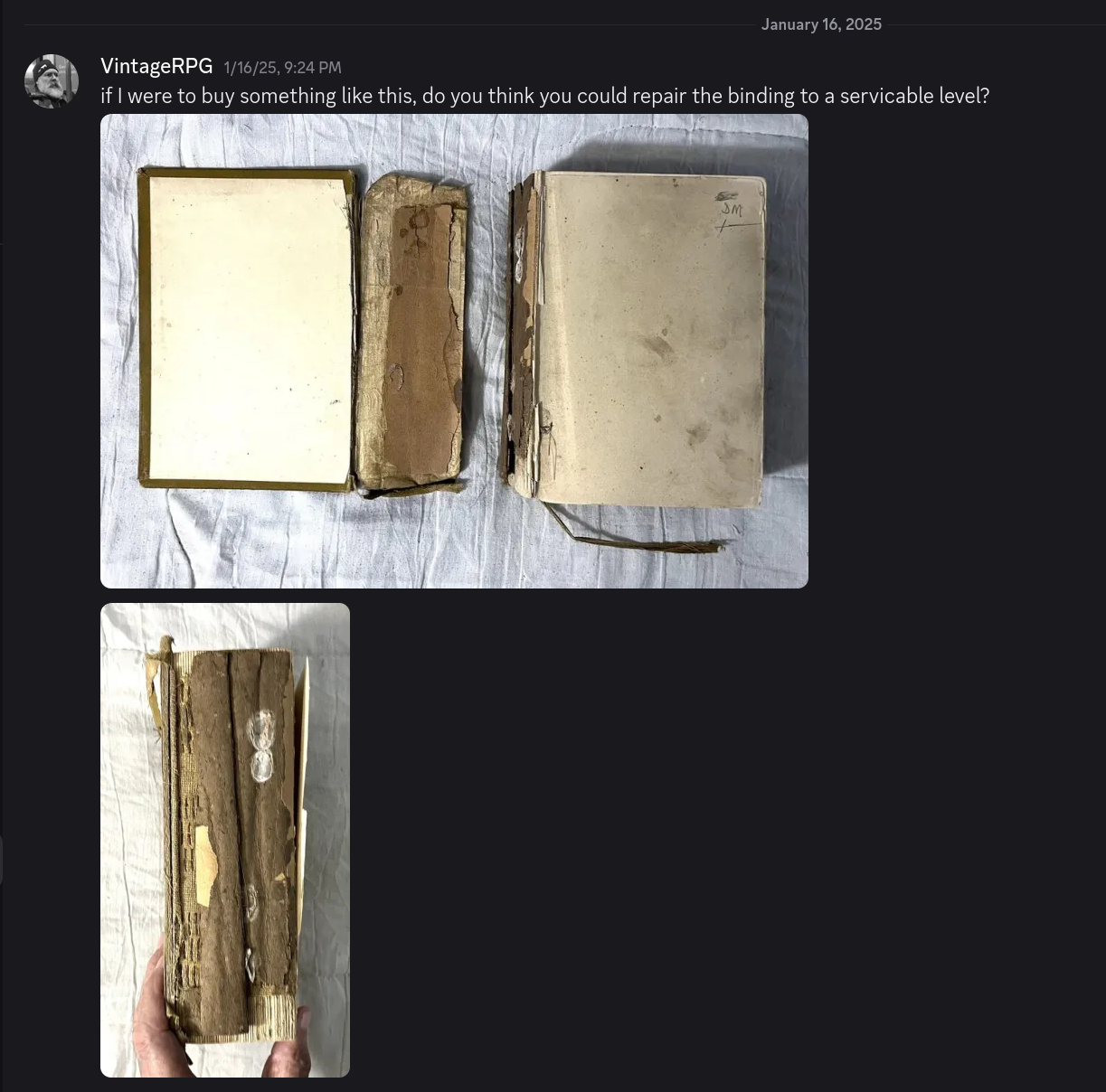
Could I, indeed! I had not too long before started teaching myself bookbinding techniques by watching DAS Bookbinding videos on YouTube, and had taken a few tentative steps myself, acquiring or making tools and supplies to do it.
Stu's project was certainly bigger, but I felt up for the task, and readily agreed. I ordered the book off eBay and some additional supplies I anticipated needing and set to work assessing the state of the book. It would prove to be eighteen months of learning, false starts, and procrastination before ultimately coming together just before attending the most recent Geek Flea in Stu's hometown.
Around this time, I discovered Four Key Book Arts, another YouTube channel and Dennis had recently posted a three-part series on restoring a book of very nearly the same vintage as Sea & Land. It was the perfect tutorial as I had to perform almost exactly the same repairs.
Assessing the cover
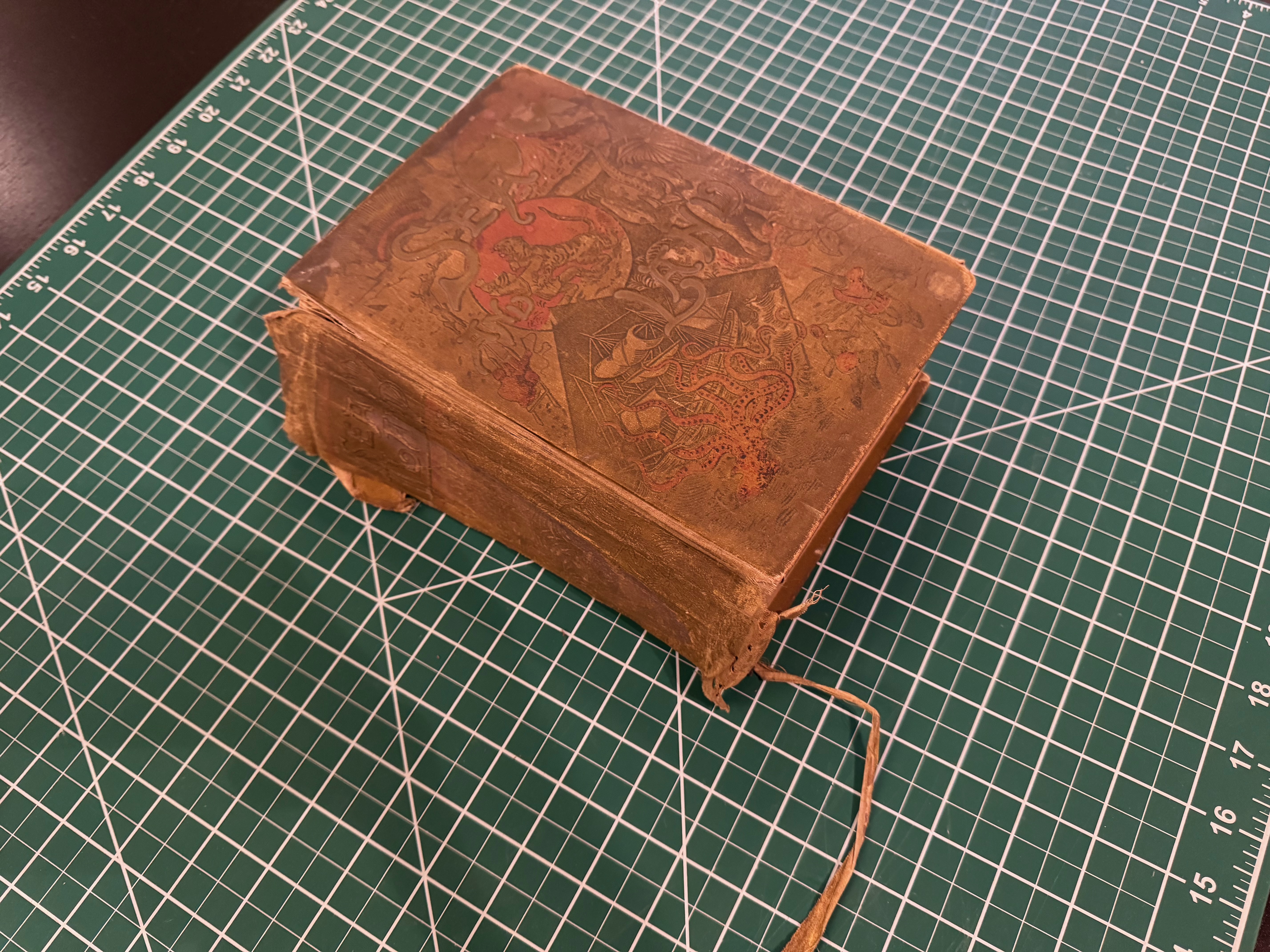
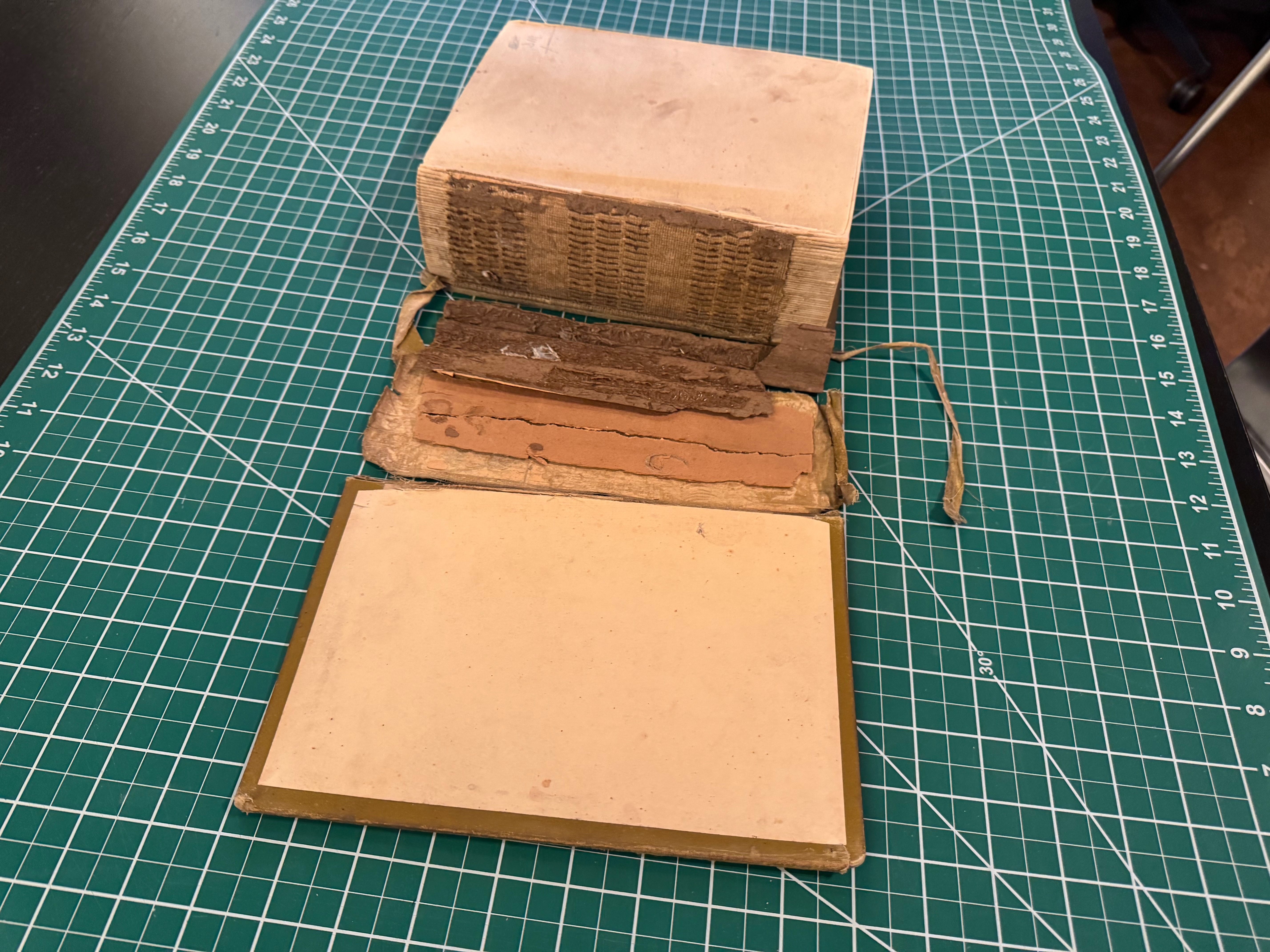
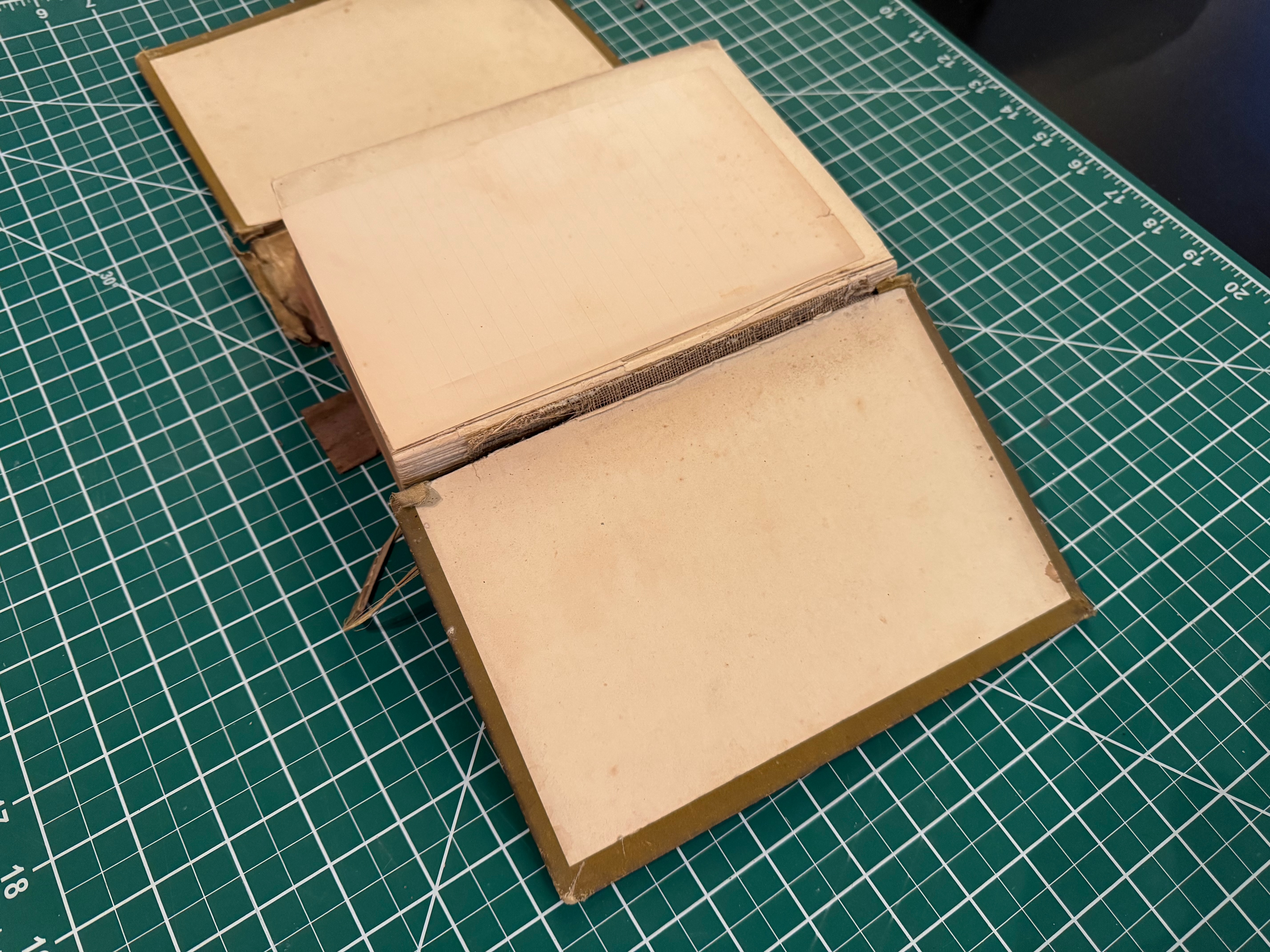
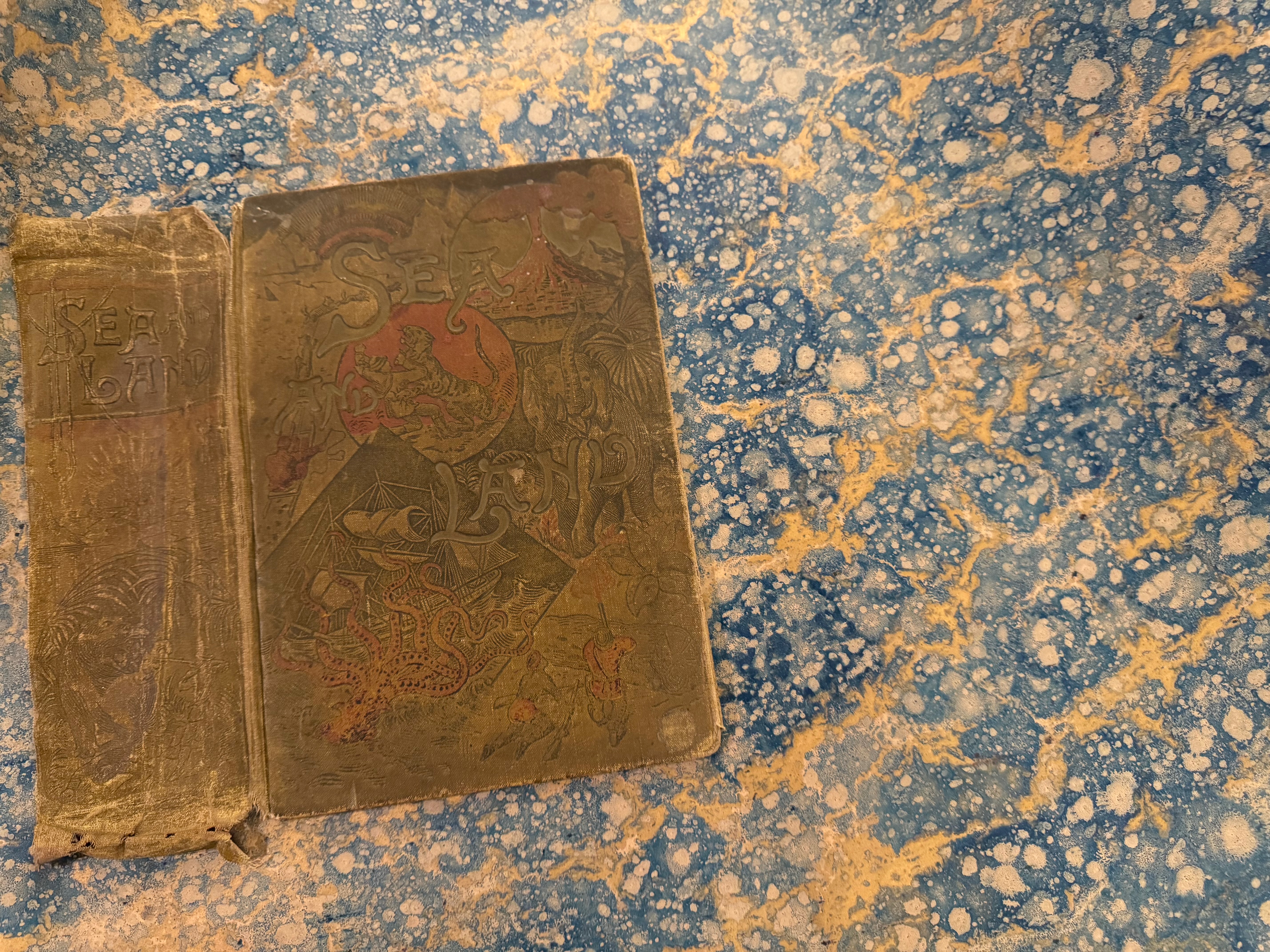
The book arrived, and I was immediately impressed by its bulk, despite its small stature. The front cover and spine were completely separated, and the back cover was hanging on literally by a few threads.
Removing the cover
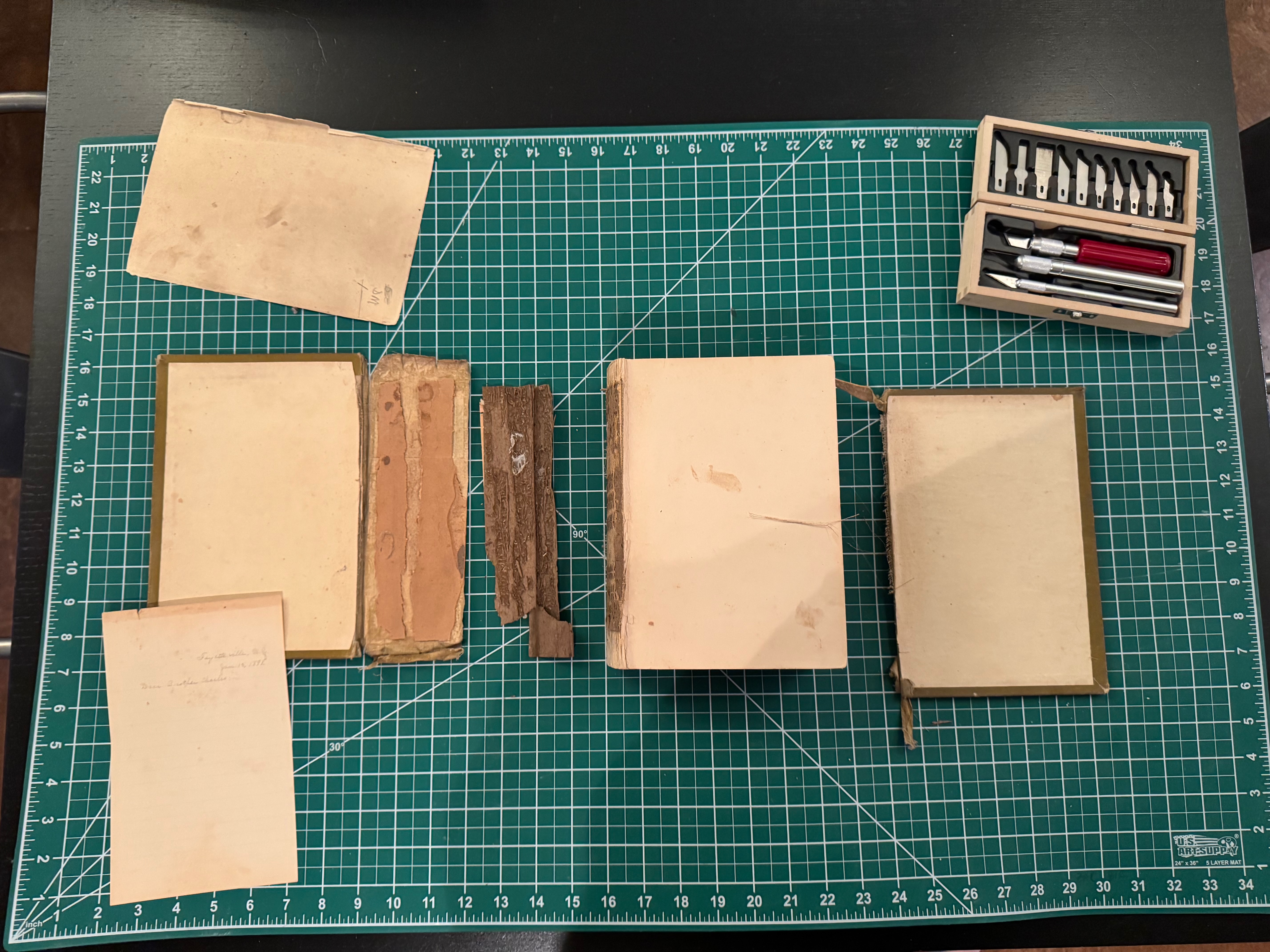
A deft stroke with a razor blade and the back cover was off. I was reasonably certain by this point that the original cover wouldn't be, uh, recoverable. With the text block fully free, it was time to look at their overall condition.
Examining the signatures
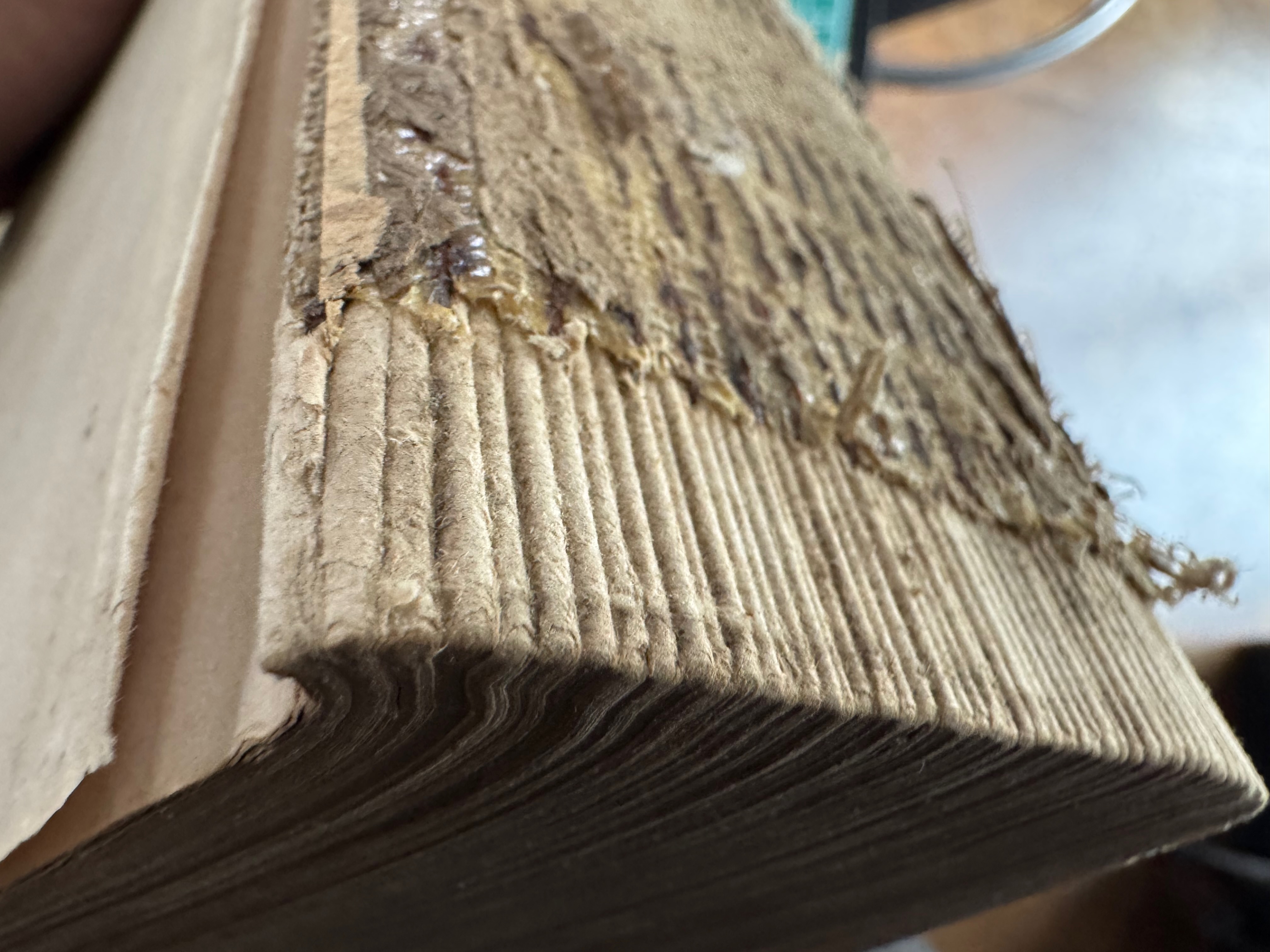
The signatures all looked complete, and I could tell that they'd undergone a rounding process before that left a thick shoulder consistent with the thickness of the cover. But once they all came apart, they'd need to be re-flattened, or "knocked down".
Hidden treasures
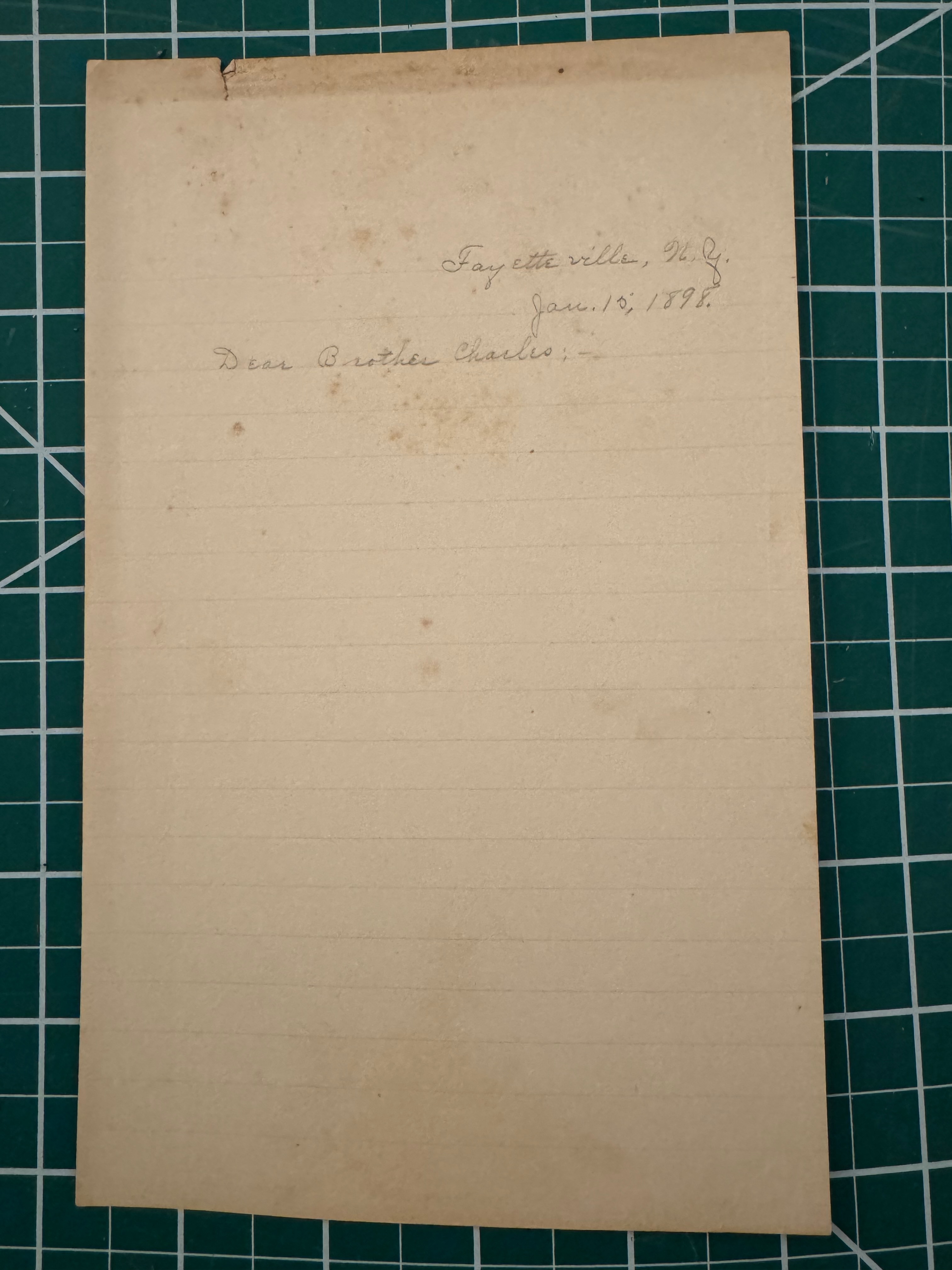
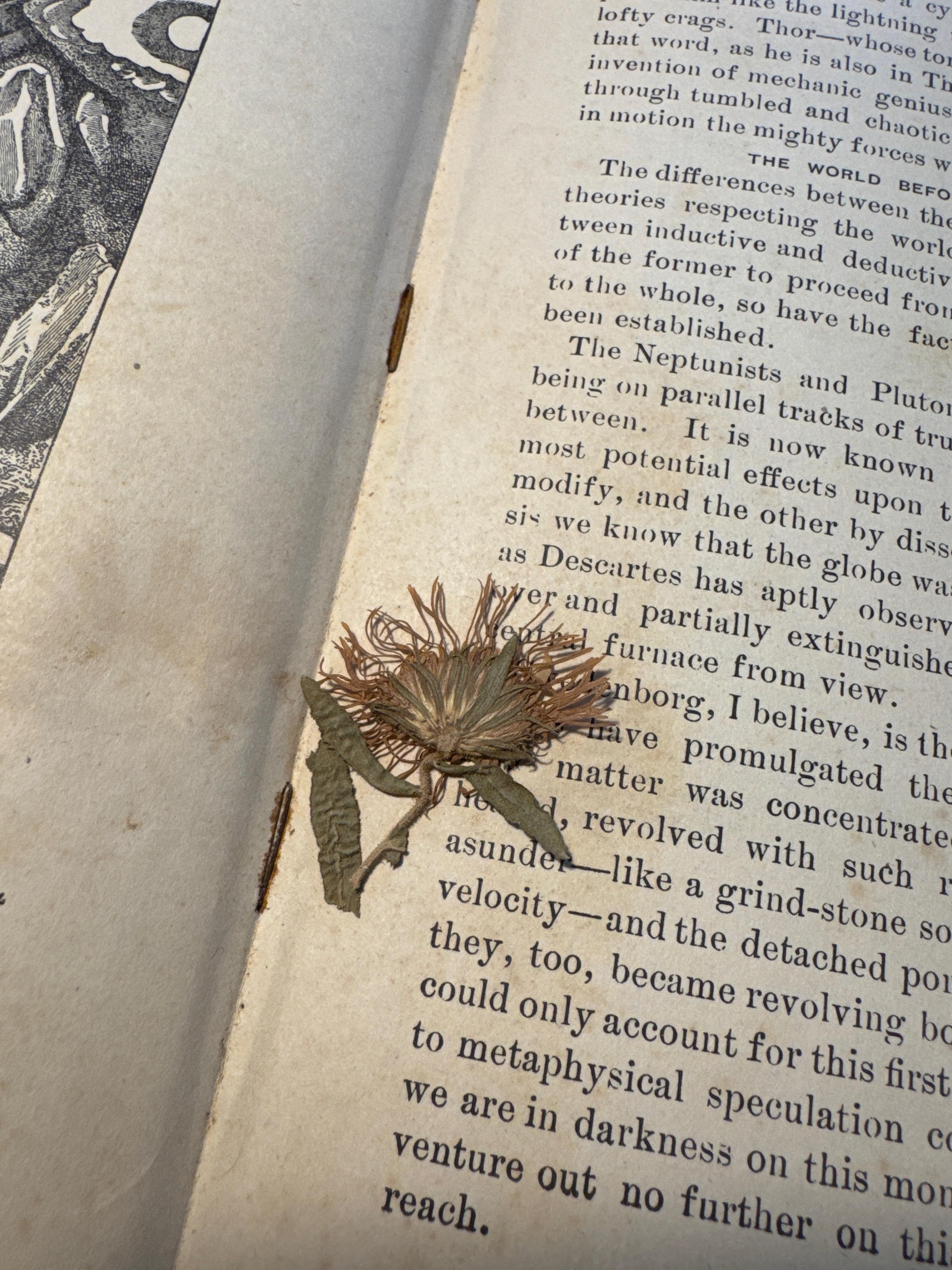
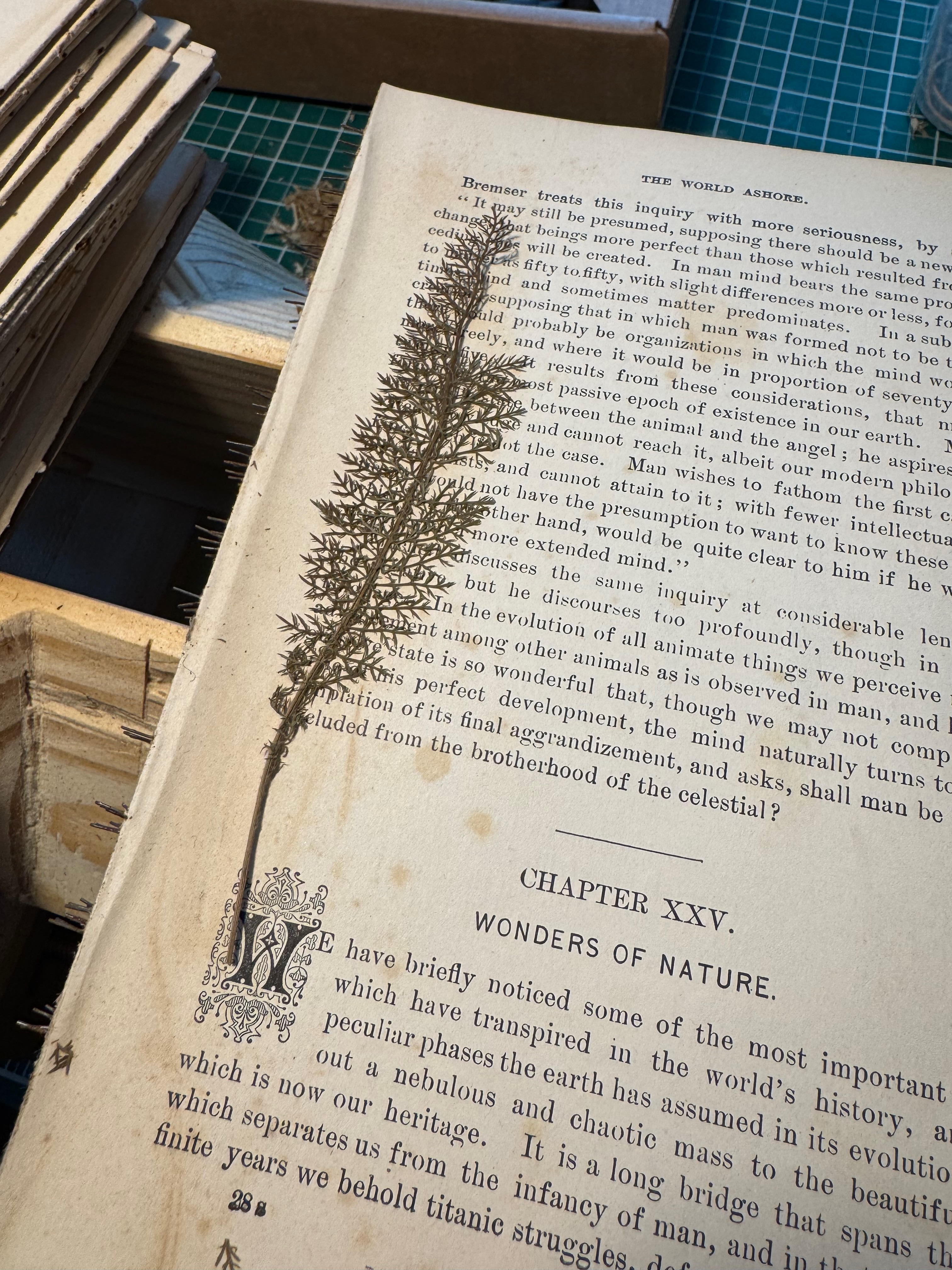
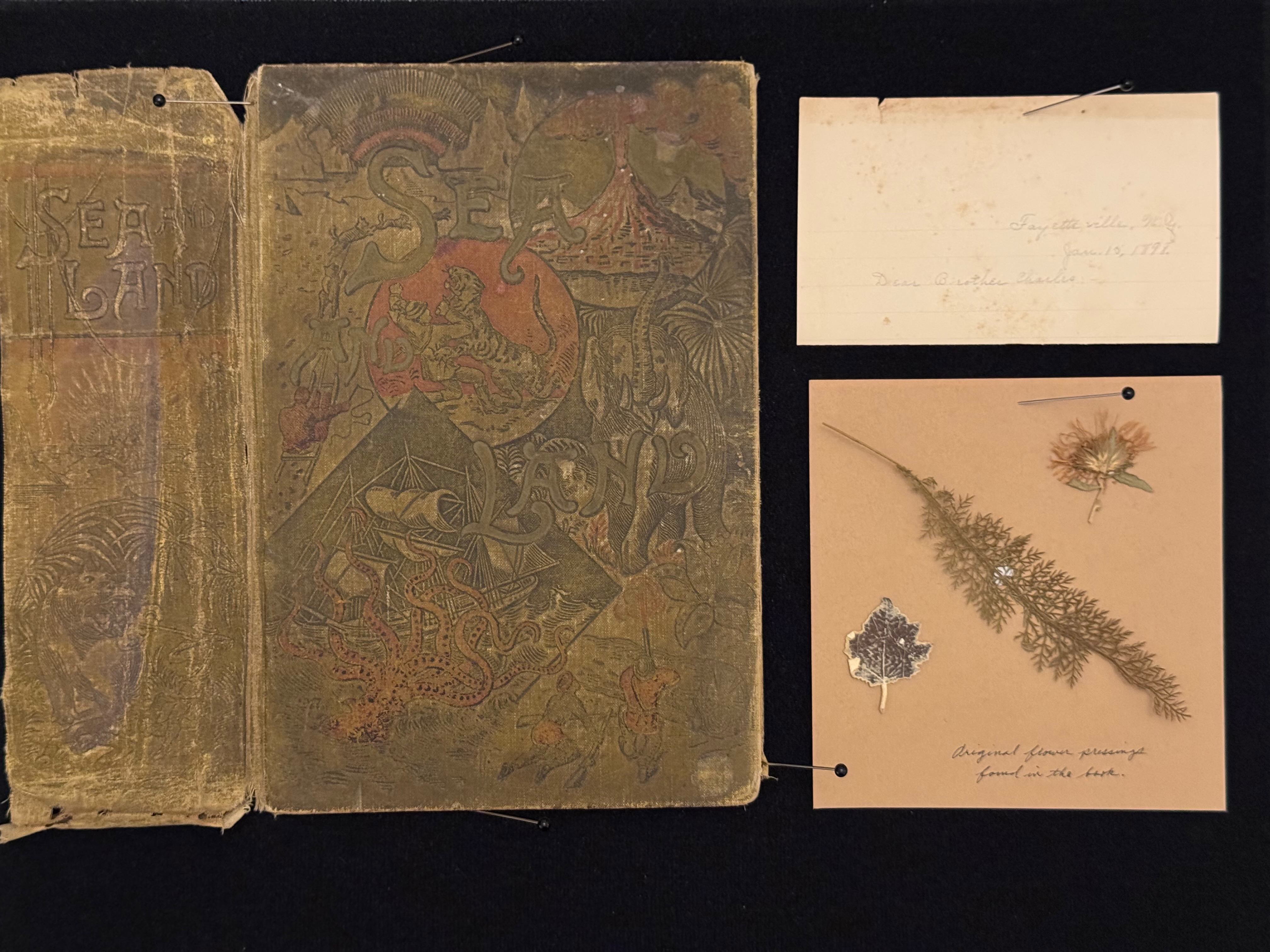
Looking through the book itself, I came across an original note from some previous owner's sibling, as well as a few pressed flowers and plants.
Matching the endpapers
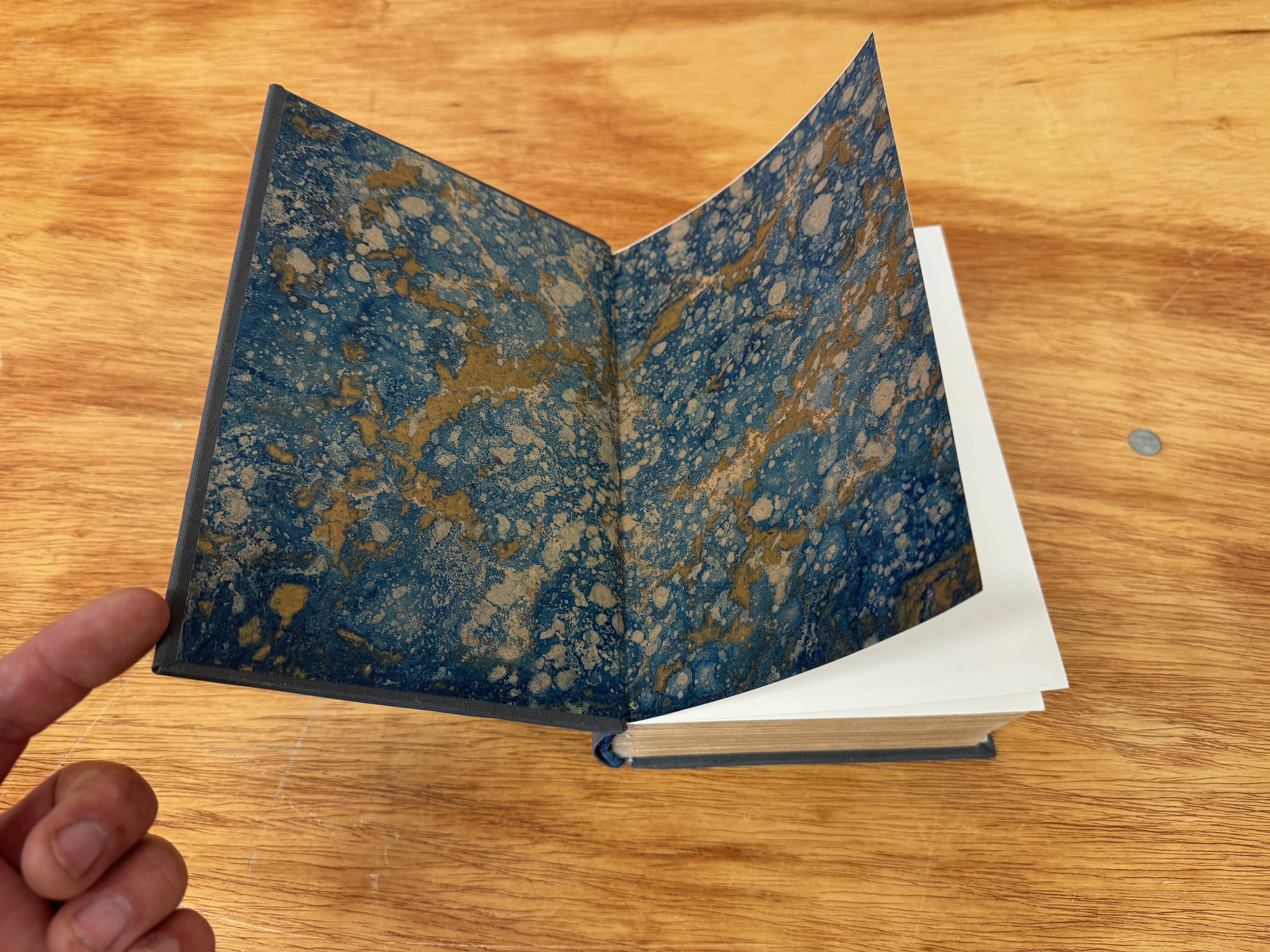
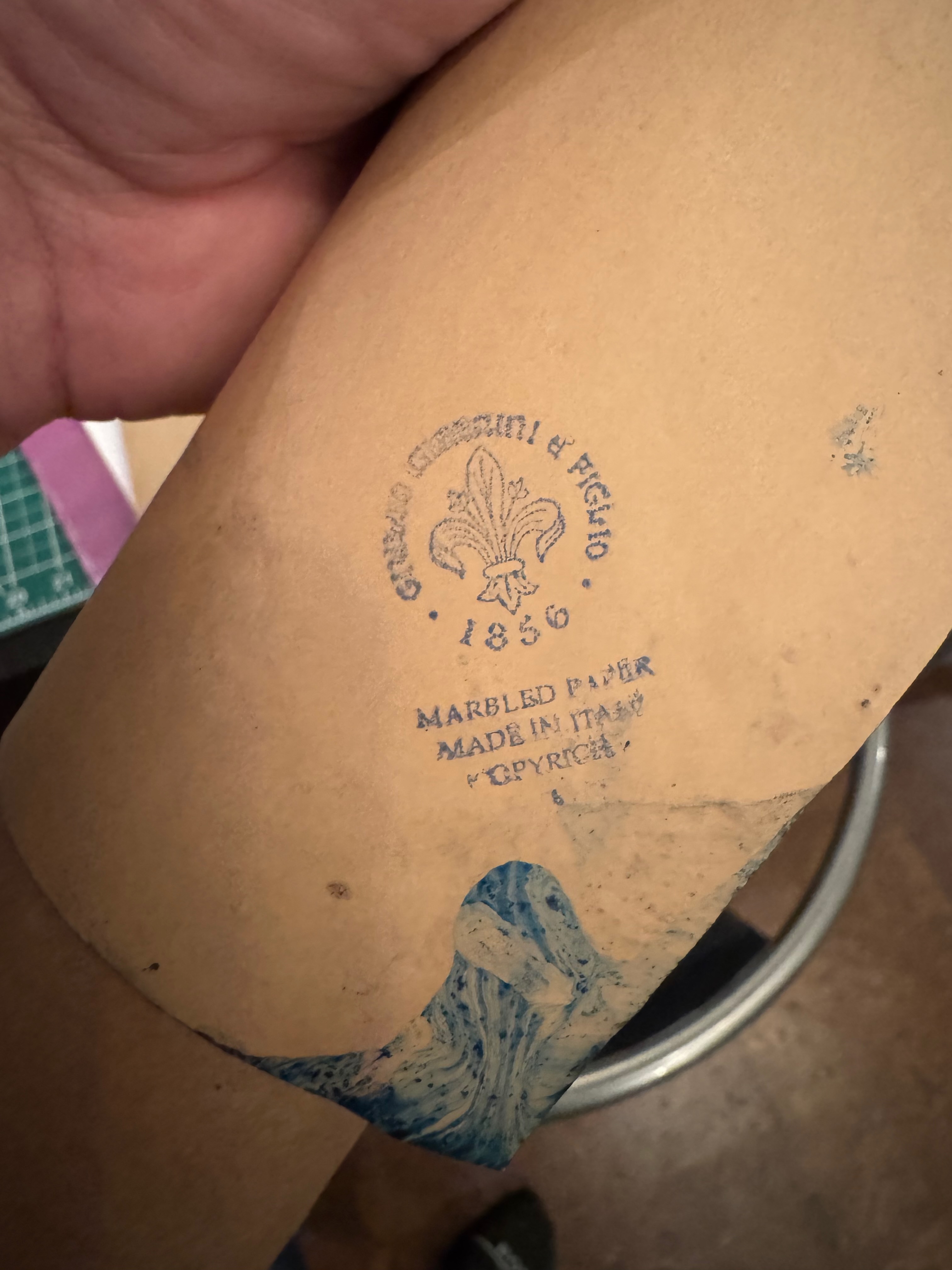
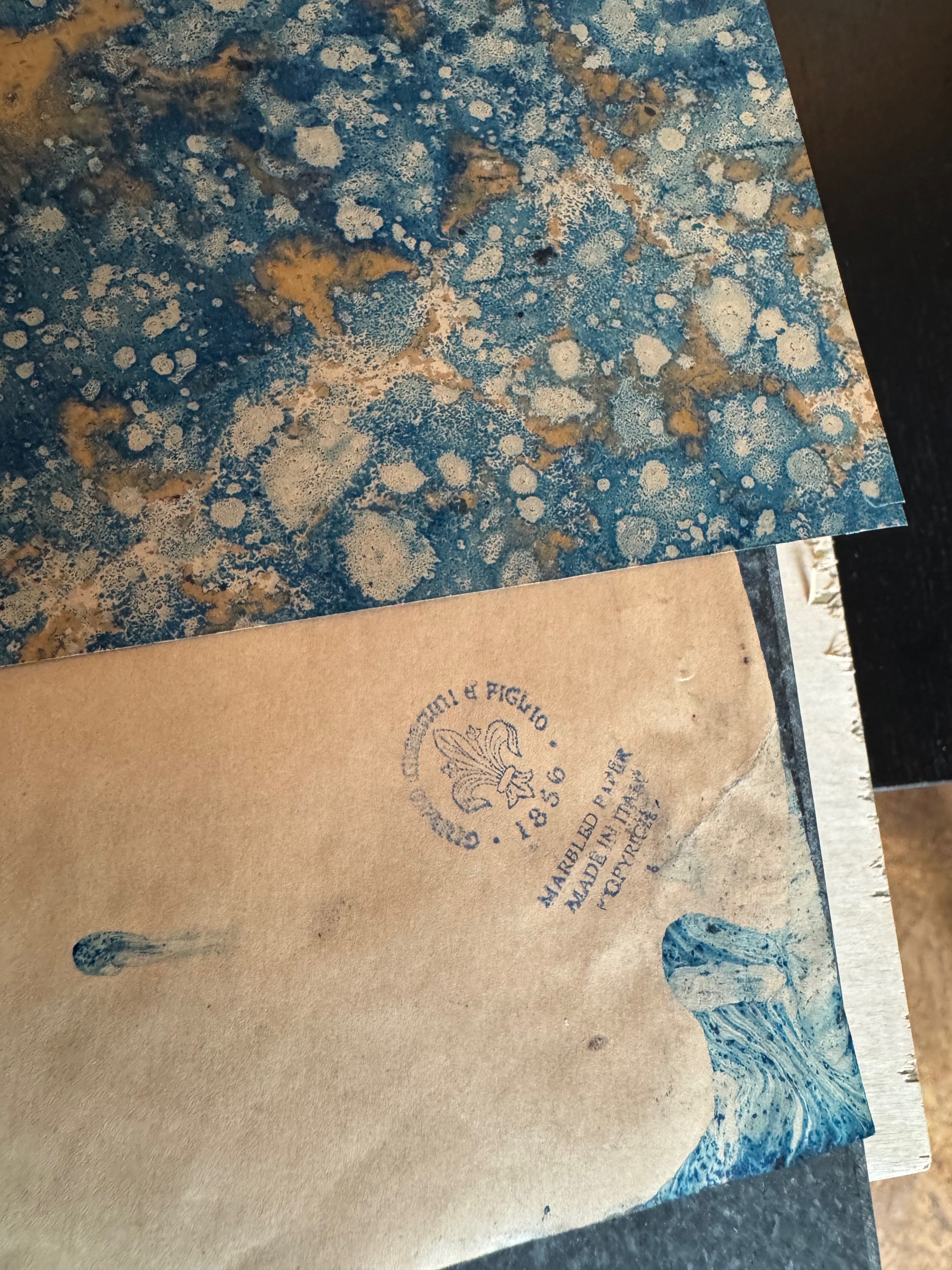
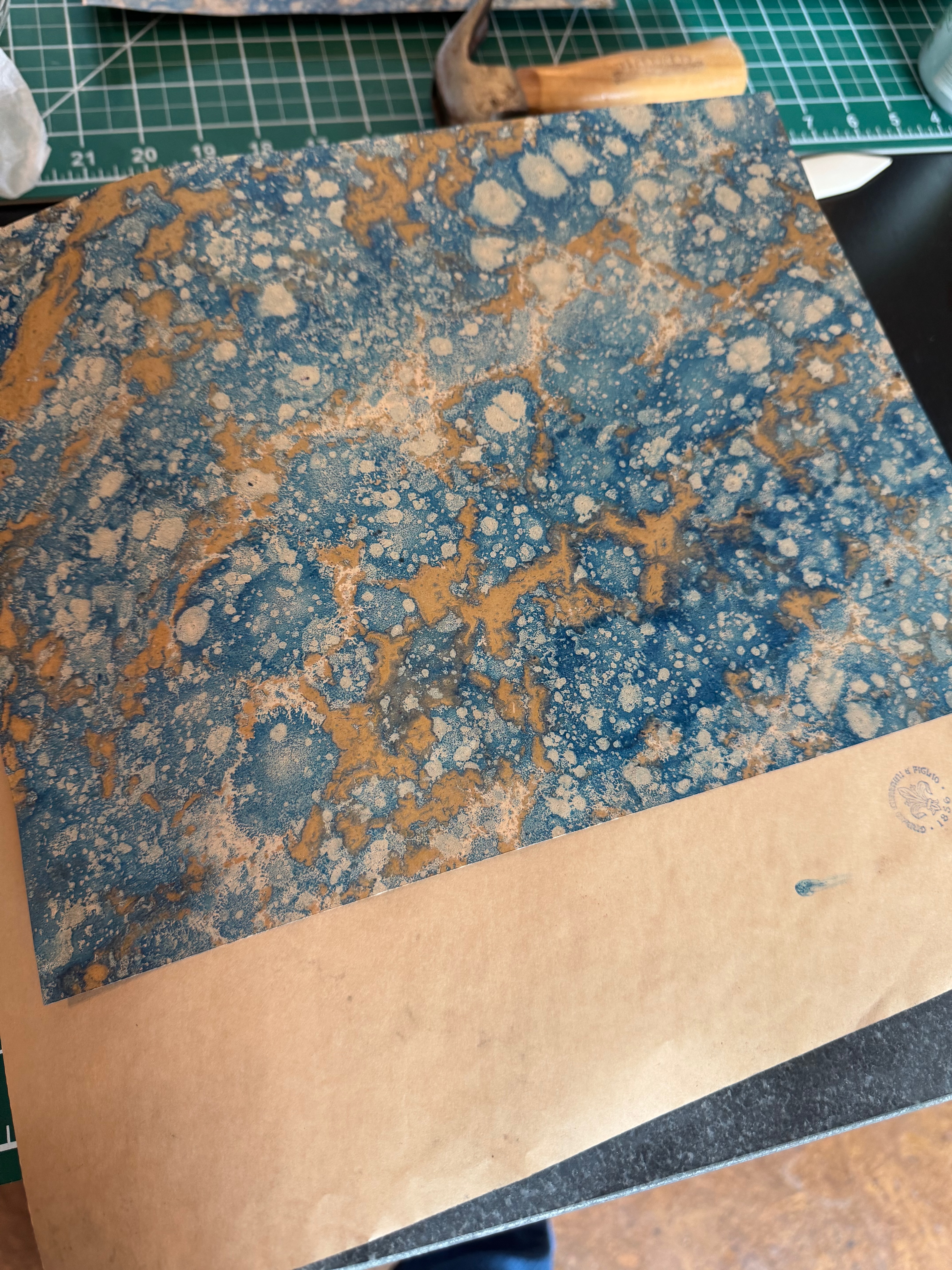
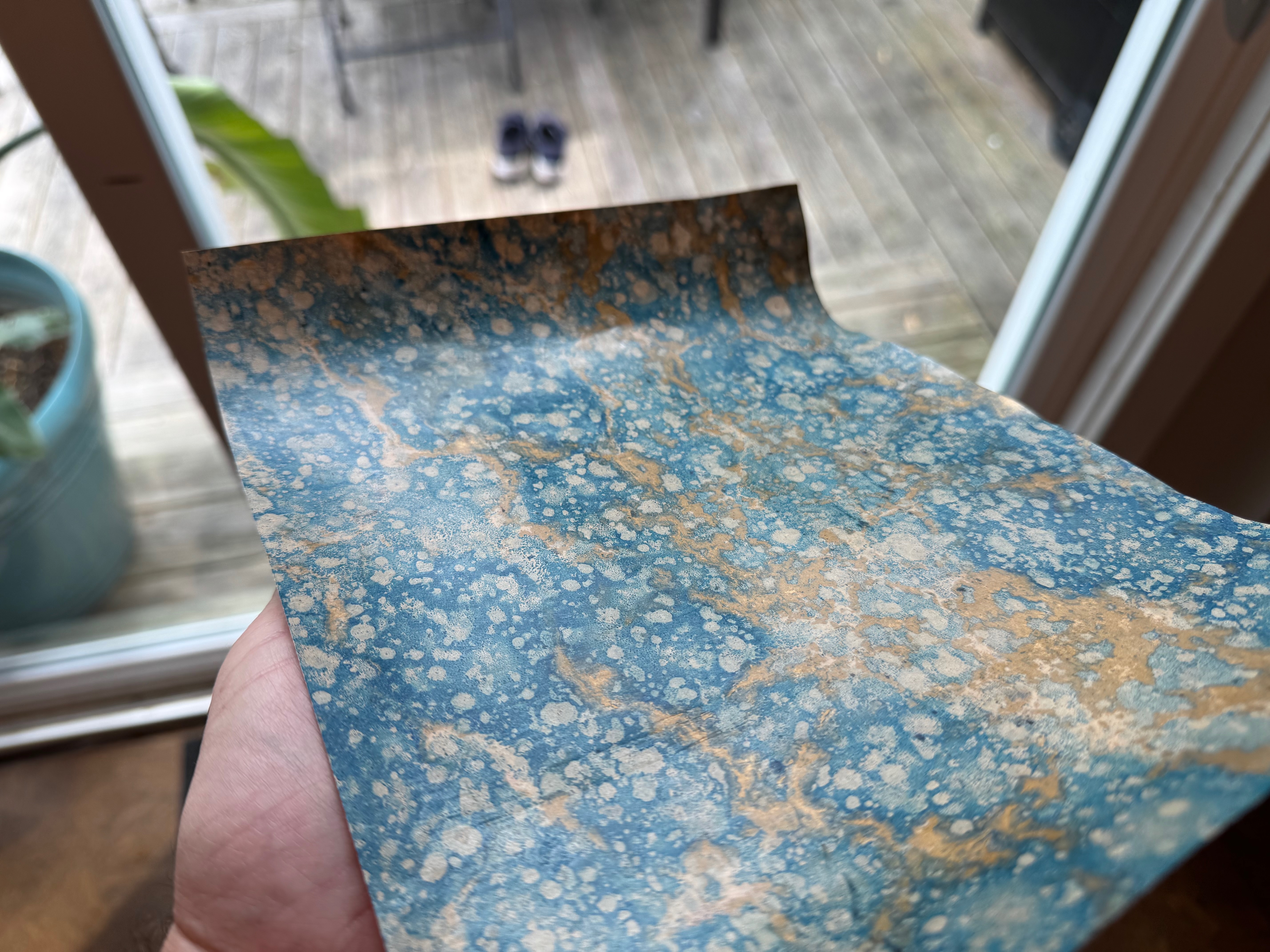
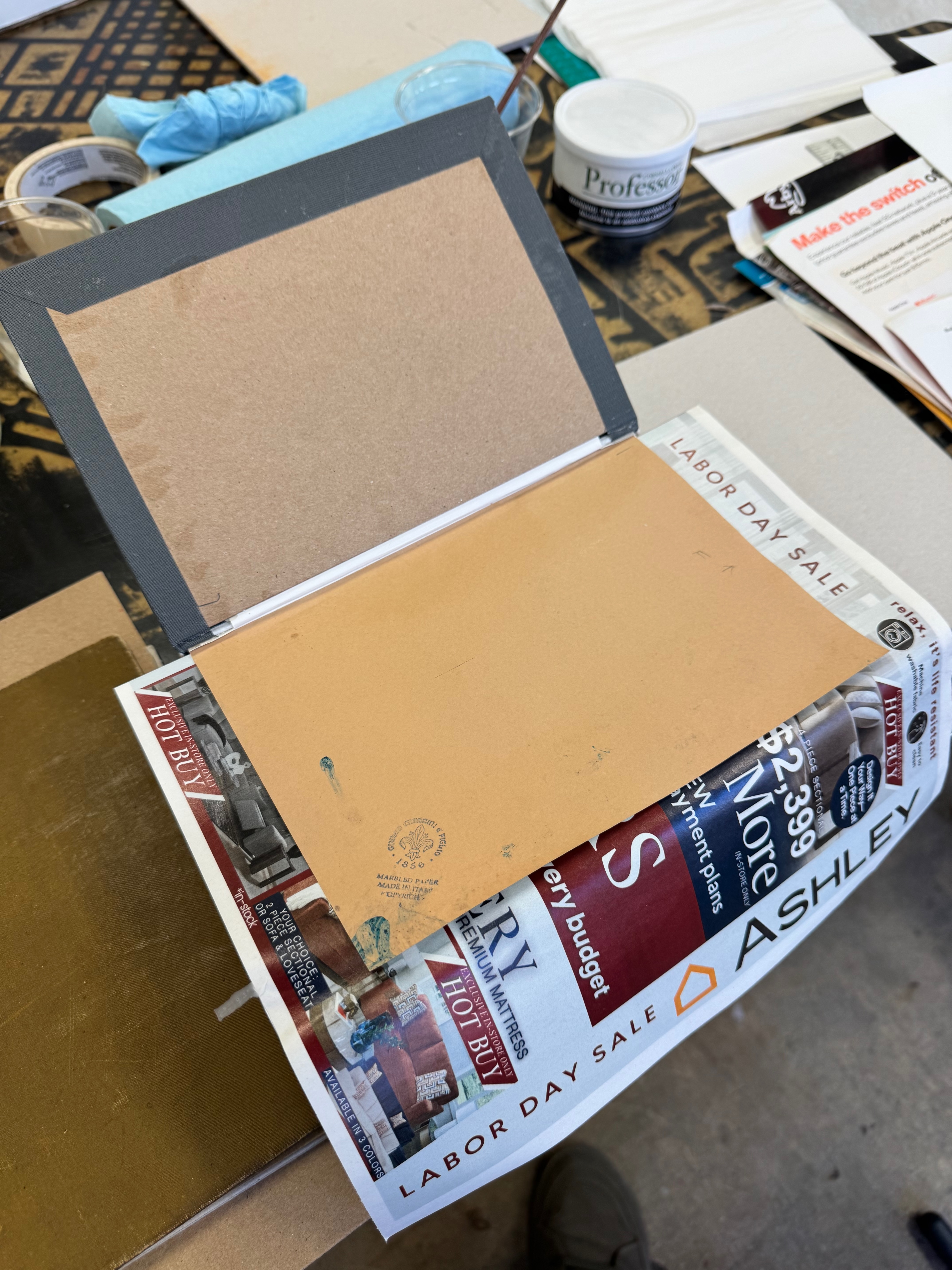
Given the title of the book, I decided to go with a gold and blue marbled paper. I felt it would match the period in looks and suit the theme well.
Building the lying press
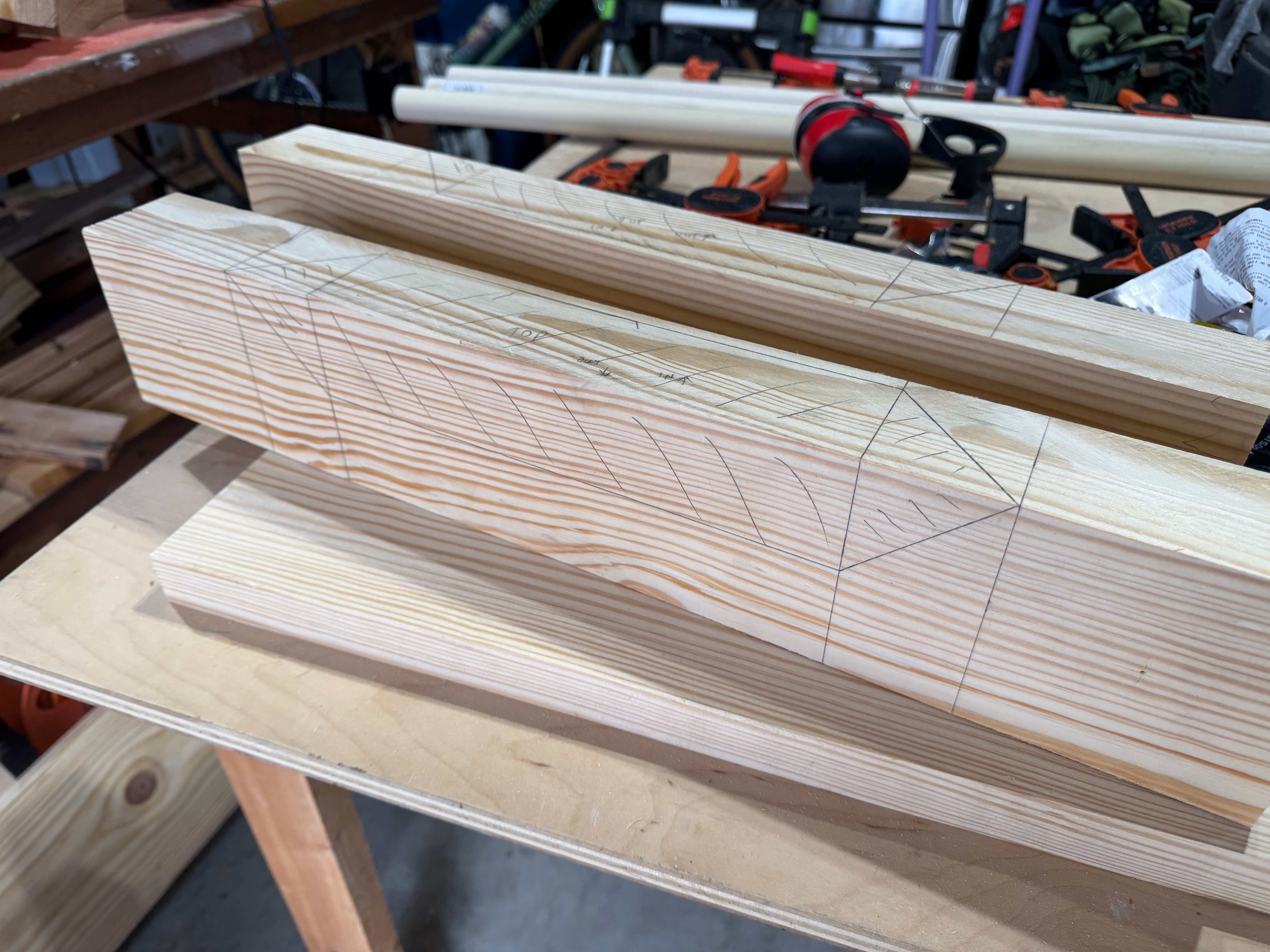
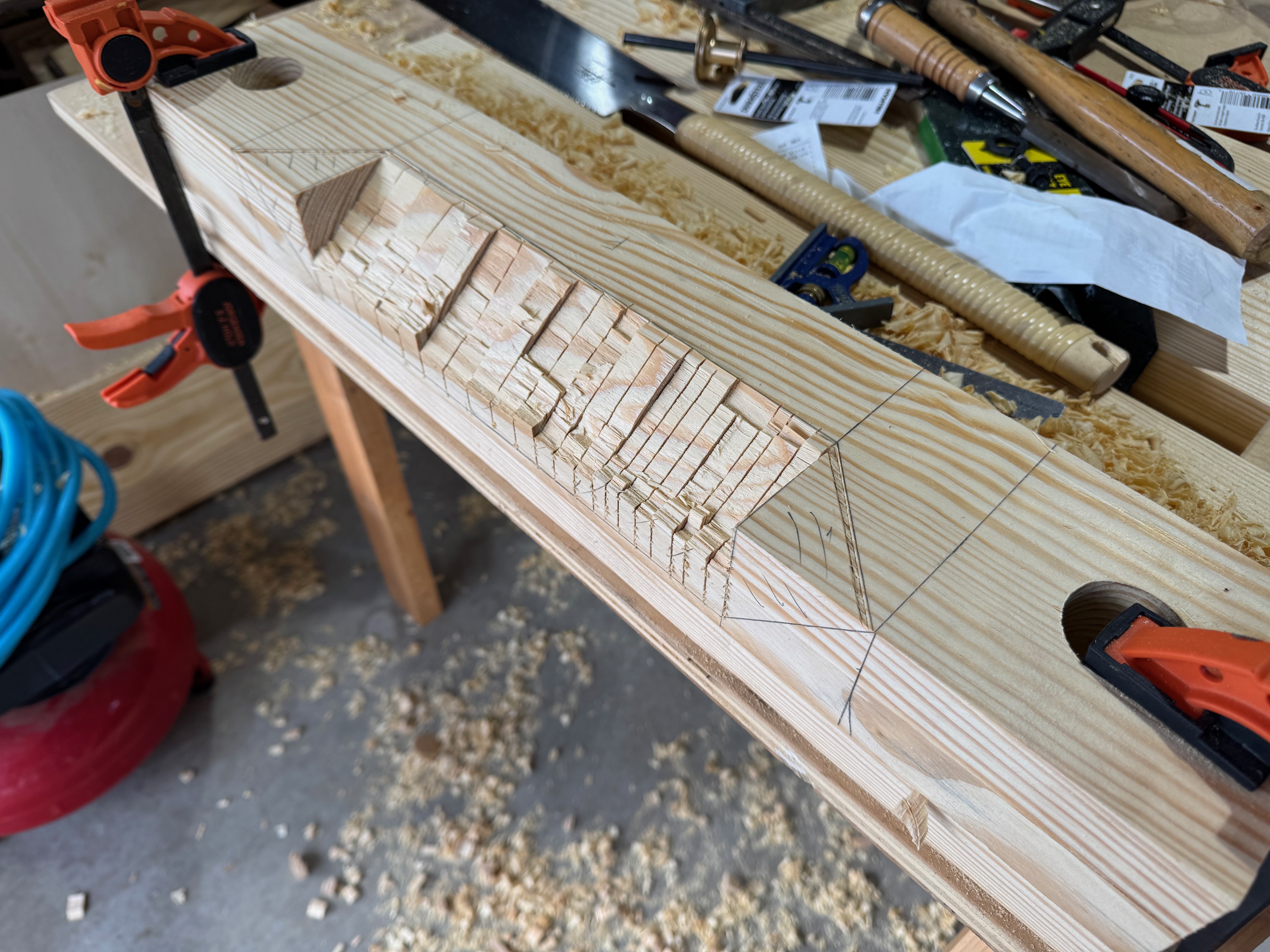
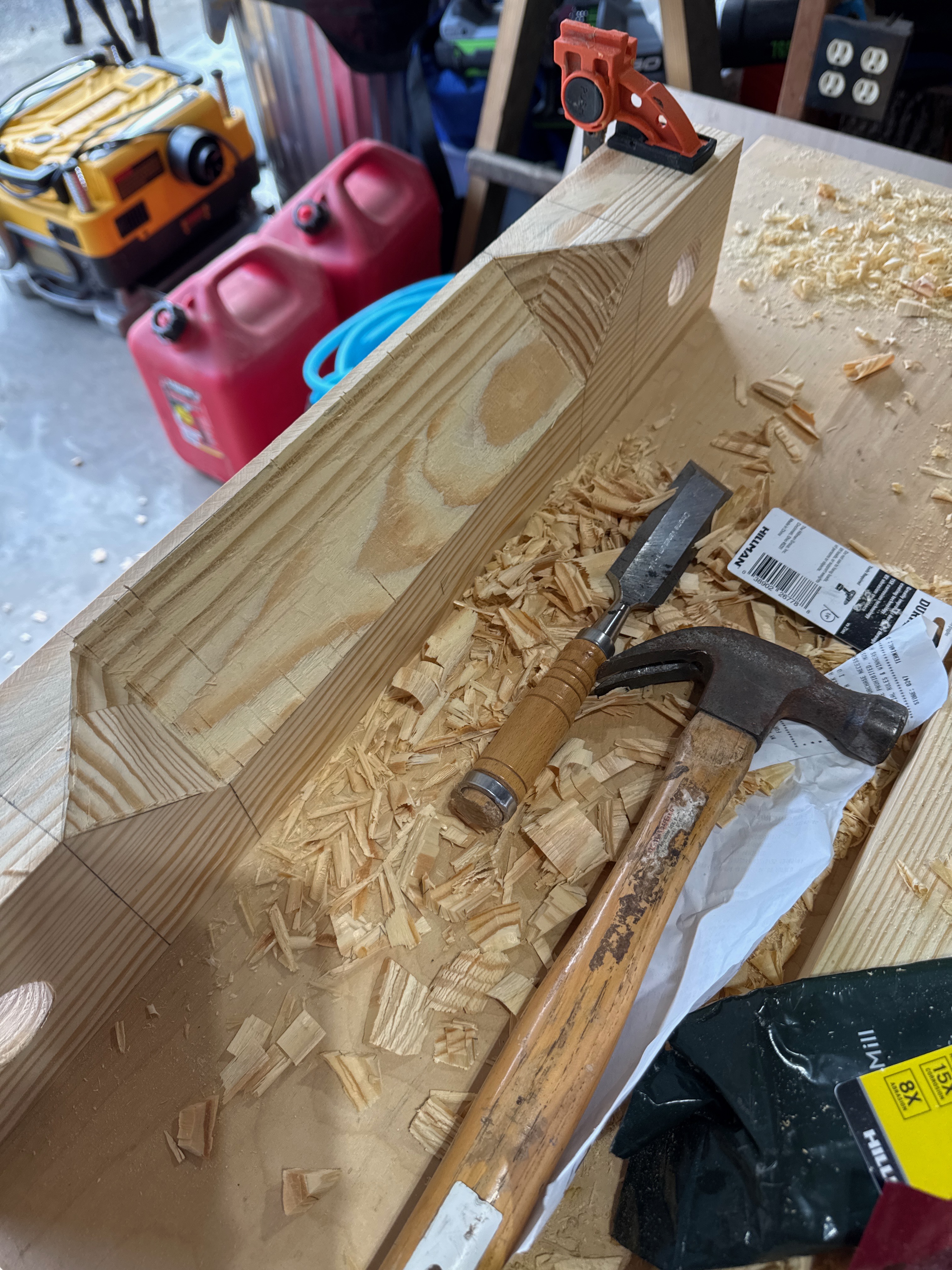
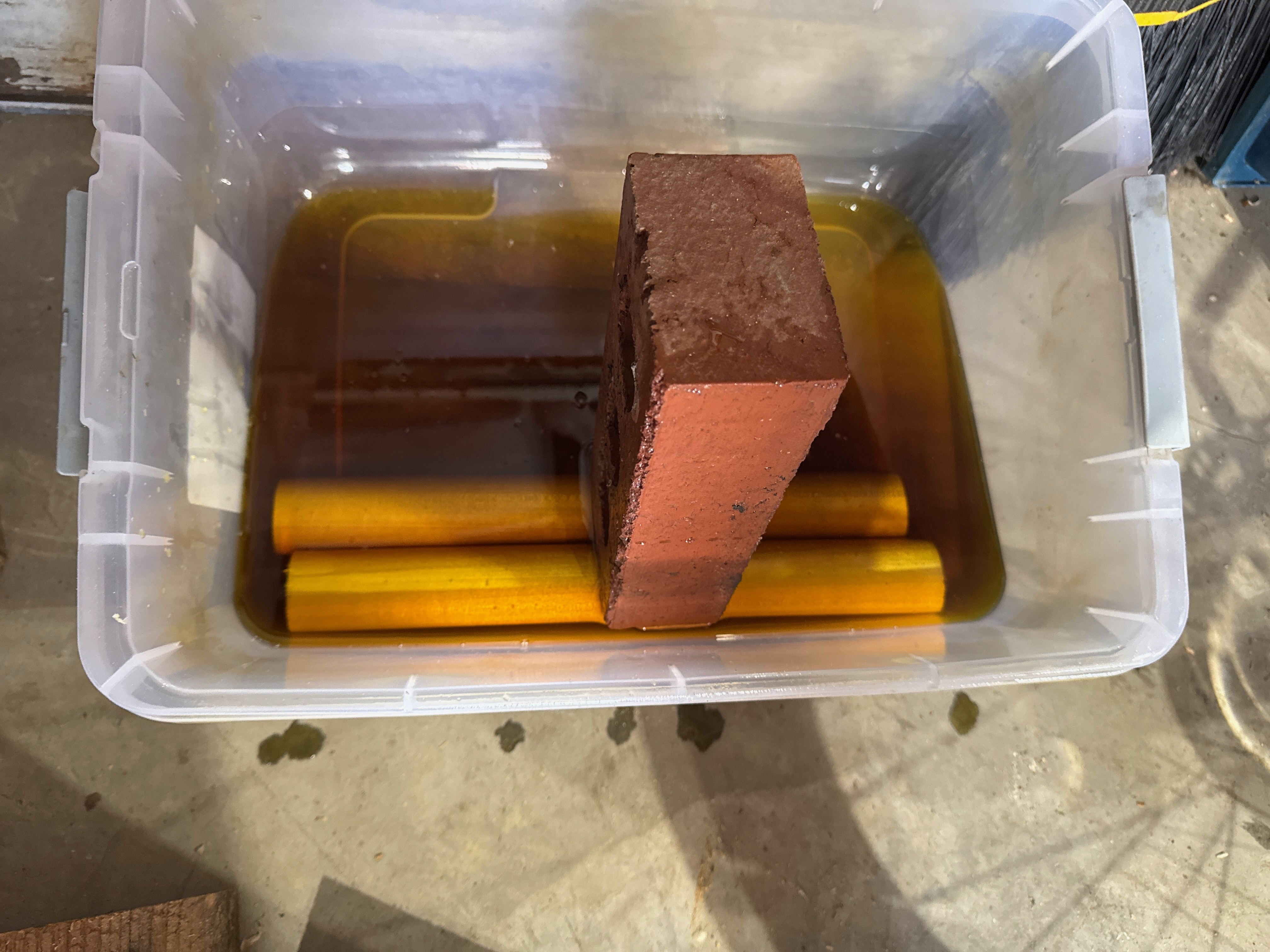
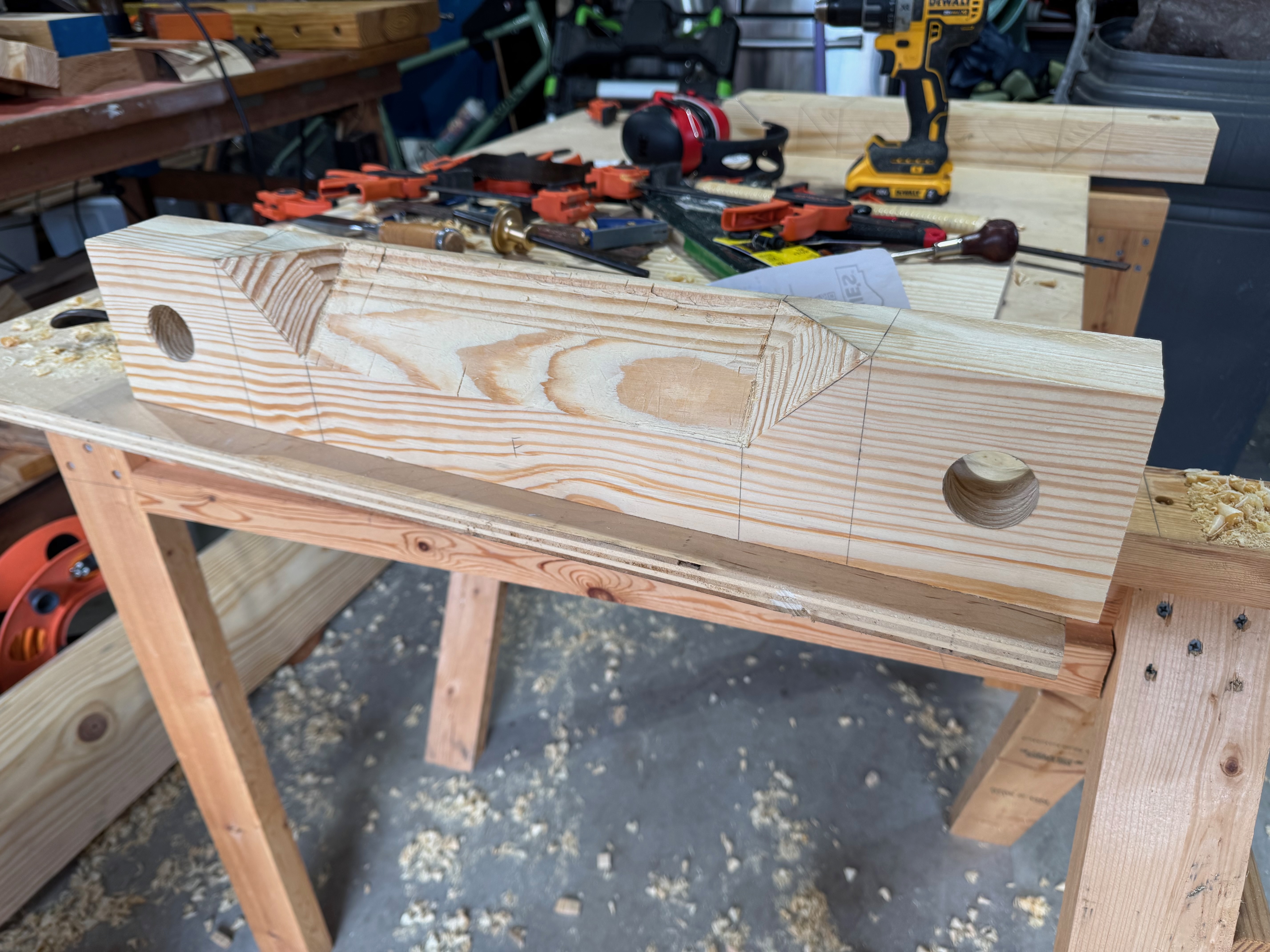
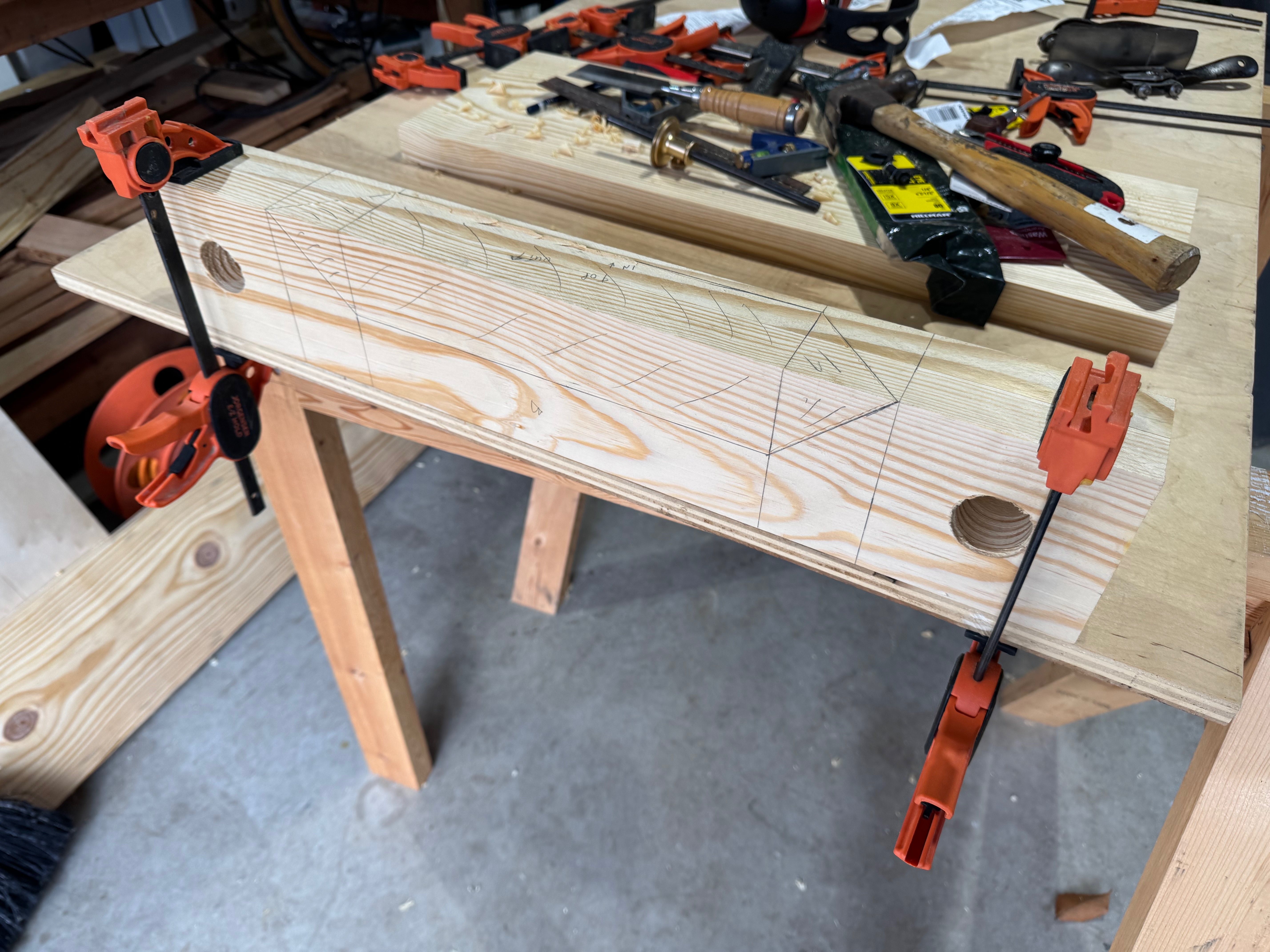
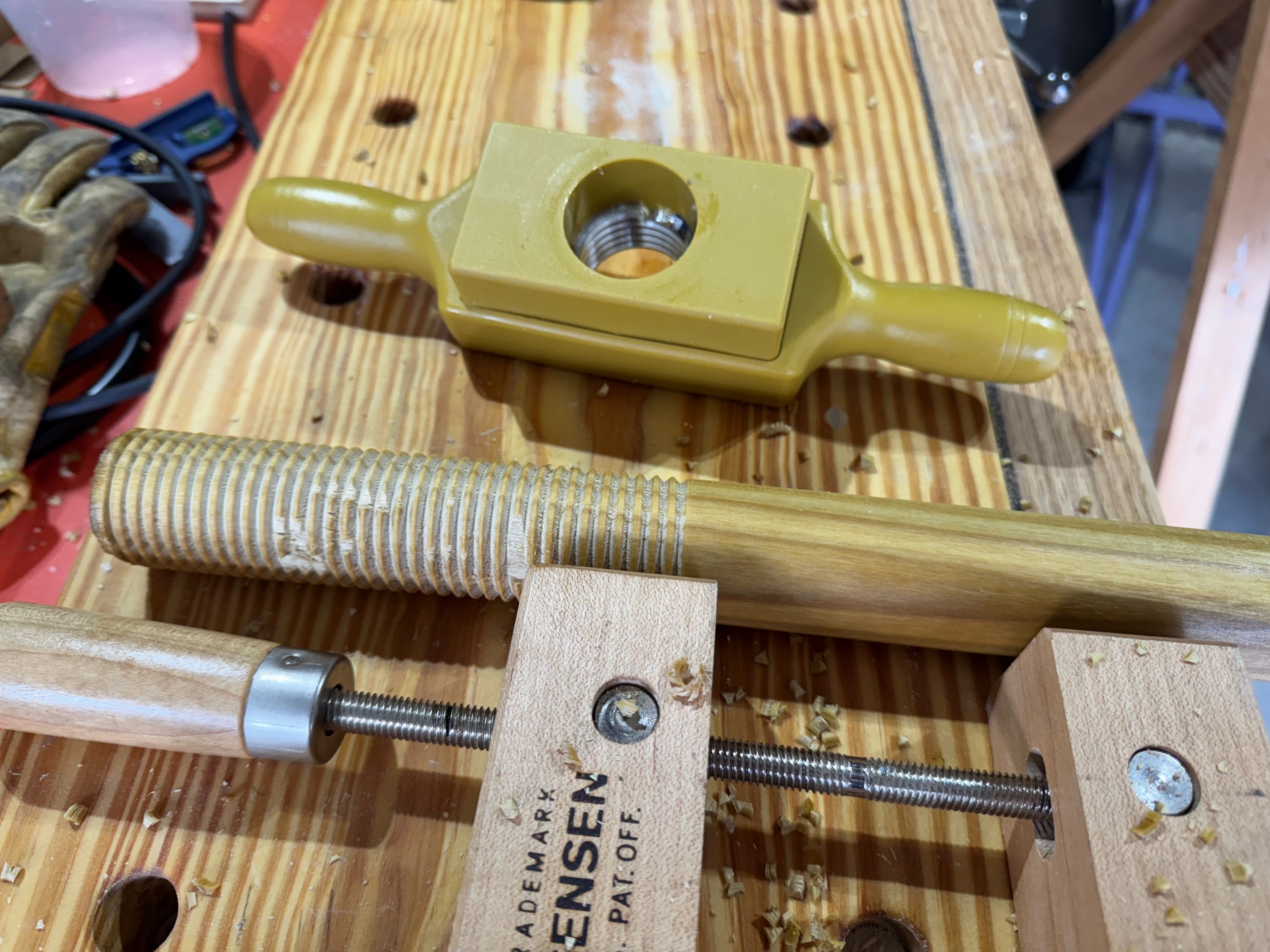
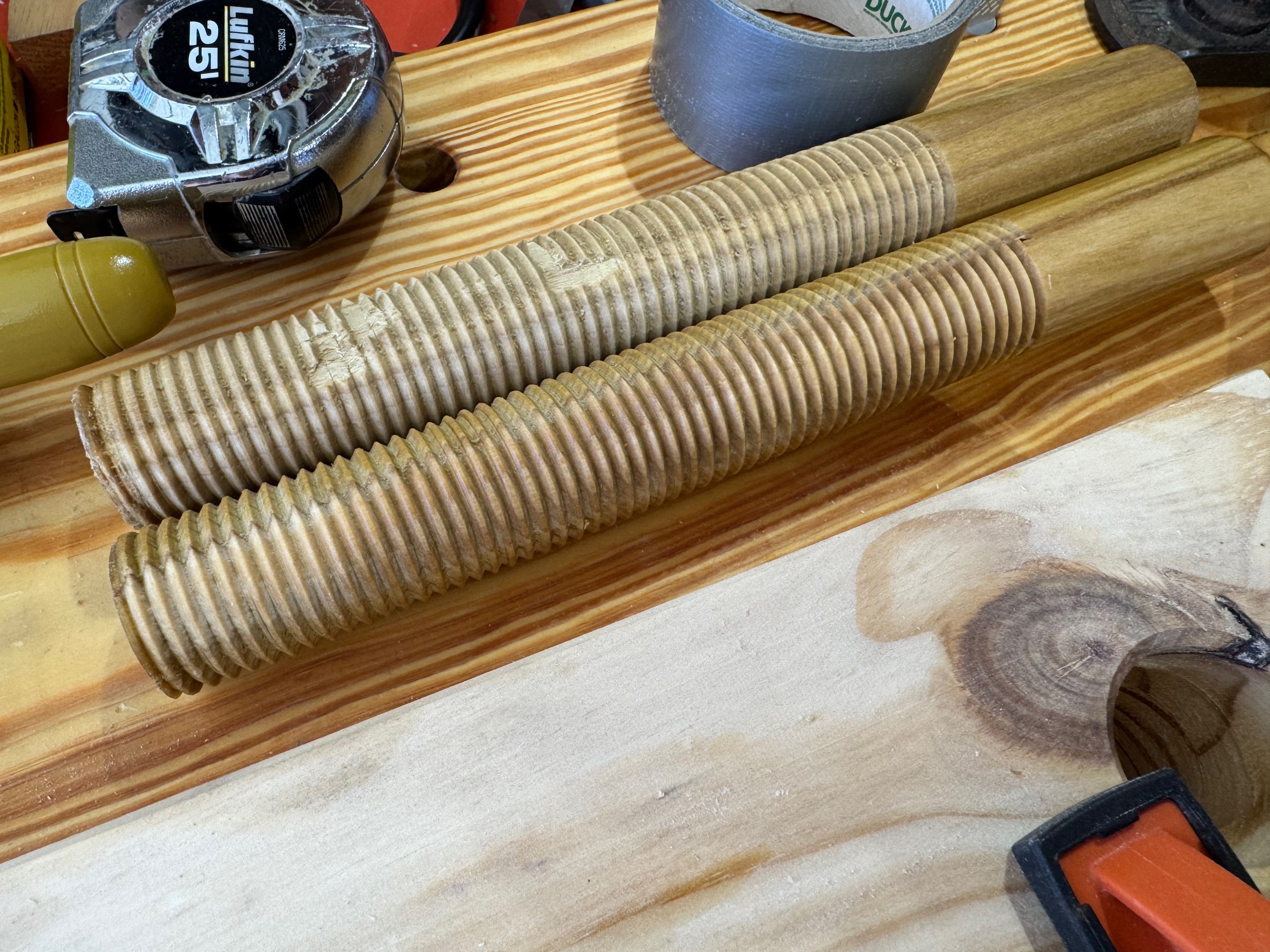
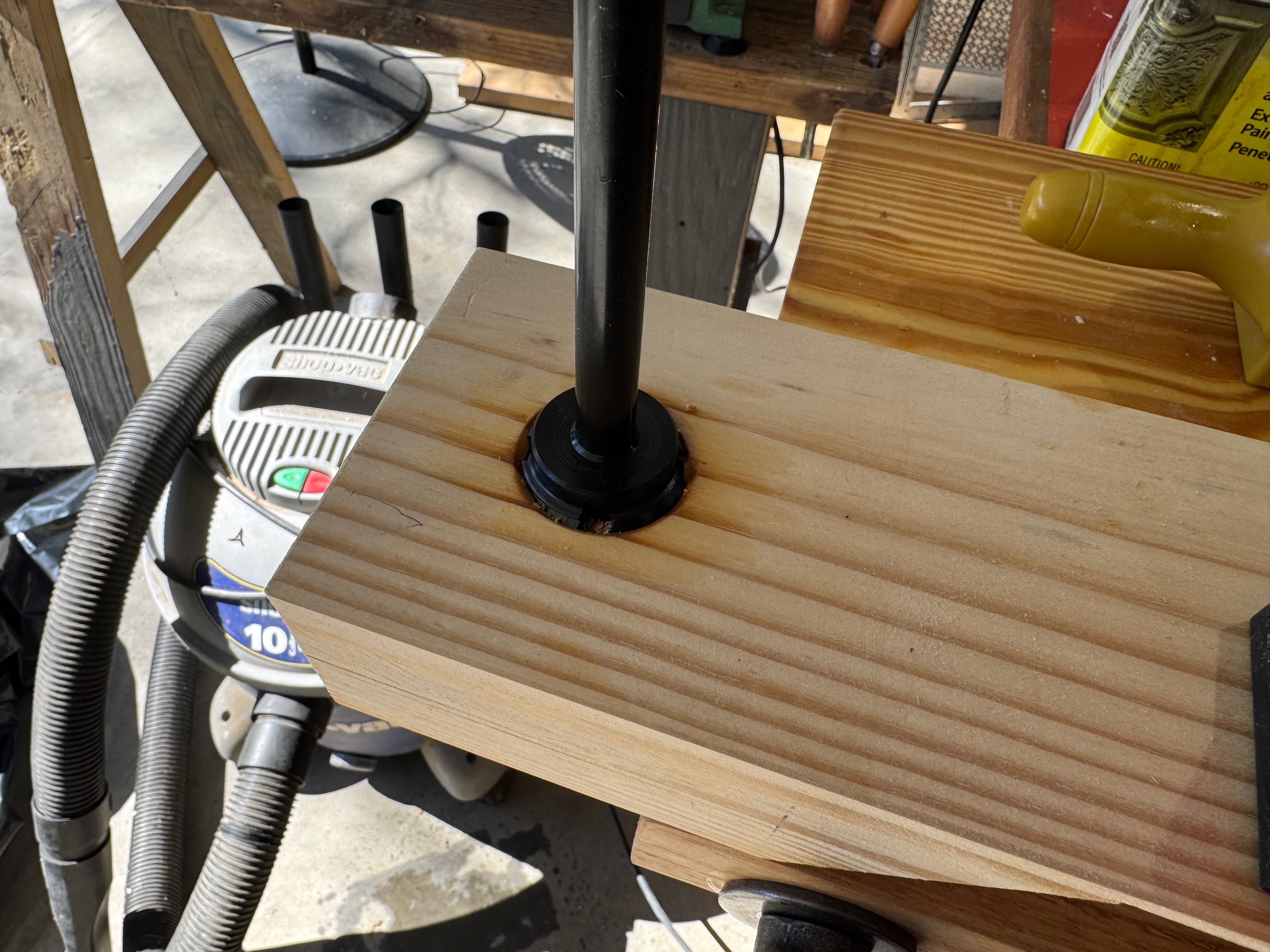
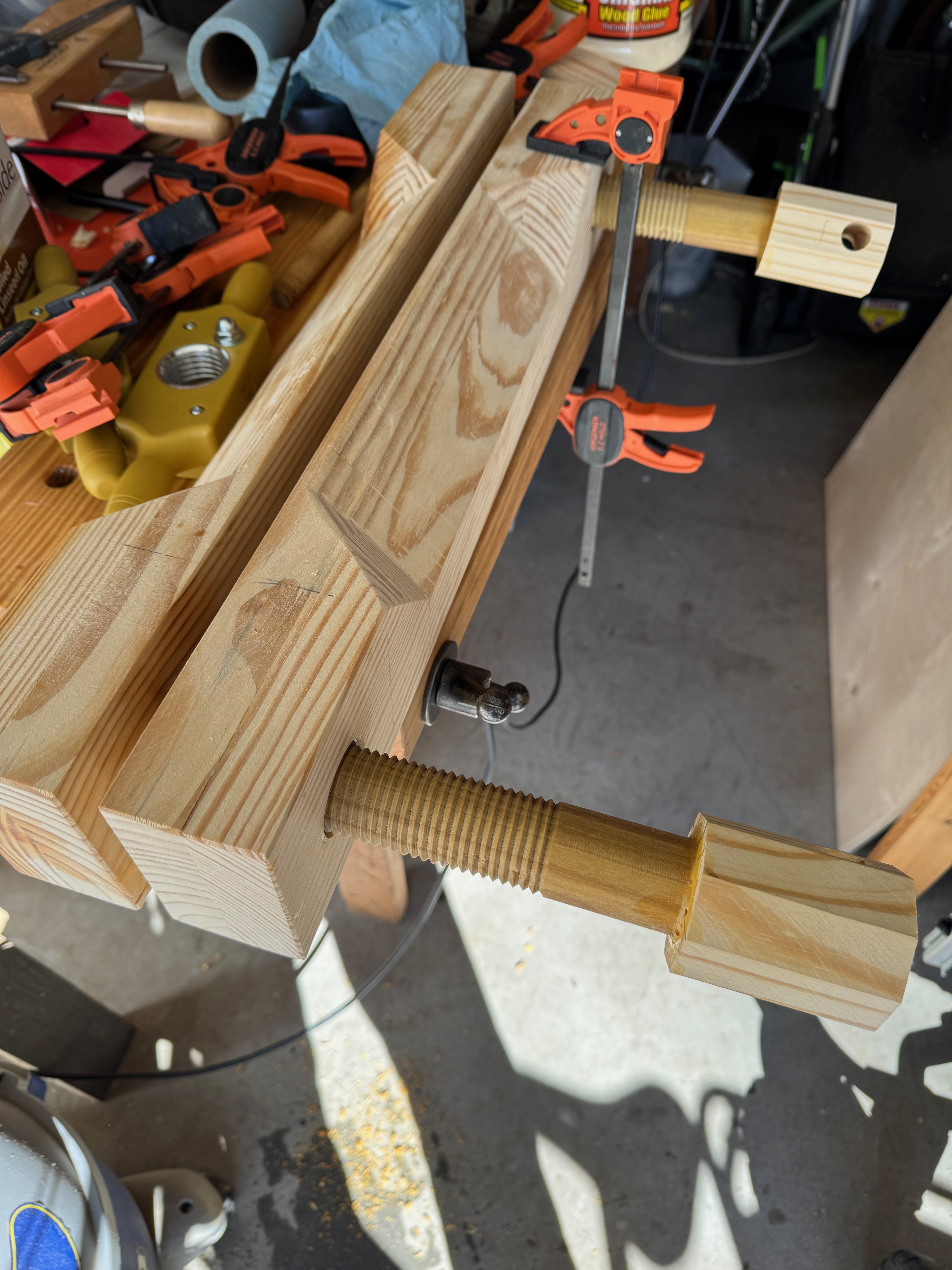
The first side quest! In order to perform many of the actions I'd signed up for, I knew I needed at least a lying press. Basically a modified Moxon Vise, it would need to be beefy enough to handle an 800-page book and strong enough to apply the pressures needed for treating the text block as a solid unit. I was, at this point, tuned into a number of YouTube creators, and Darbin Orvar had a wonderful video detailing the creation of a book vise (lying press) and book plough.
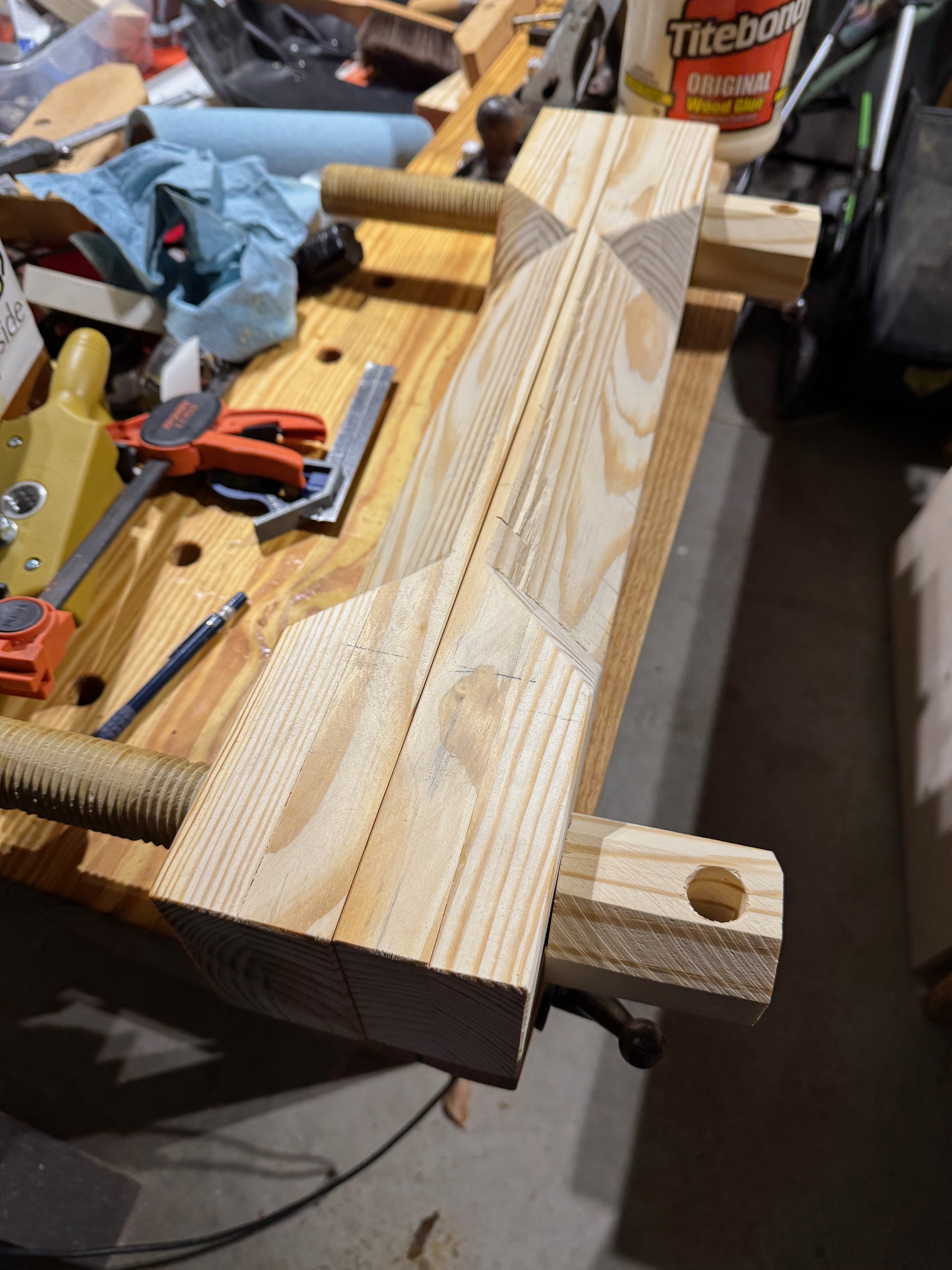
Separating the signatures
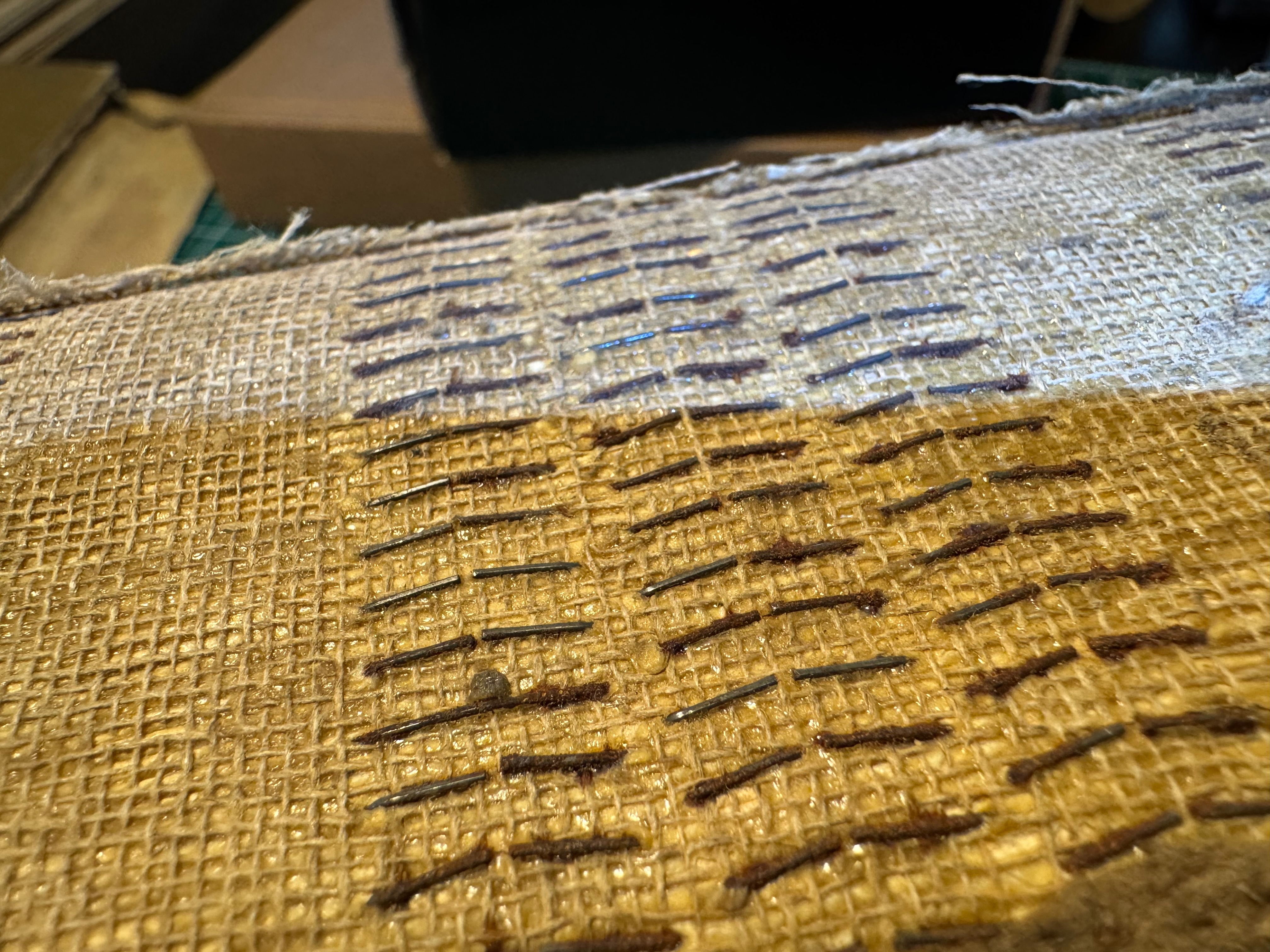
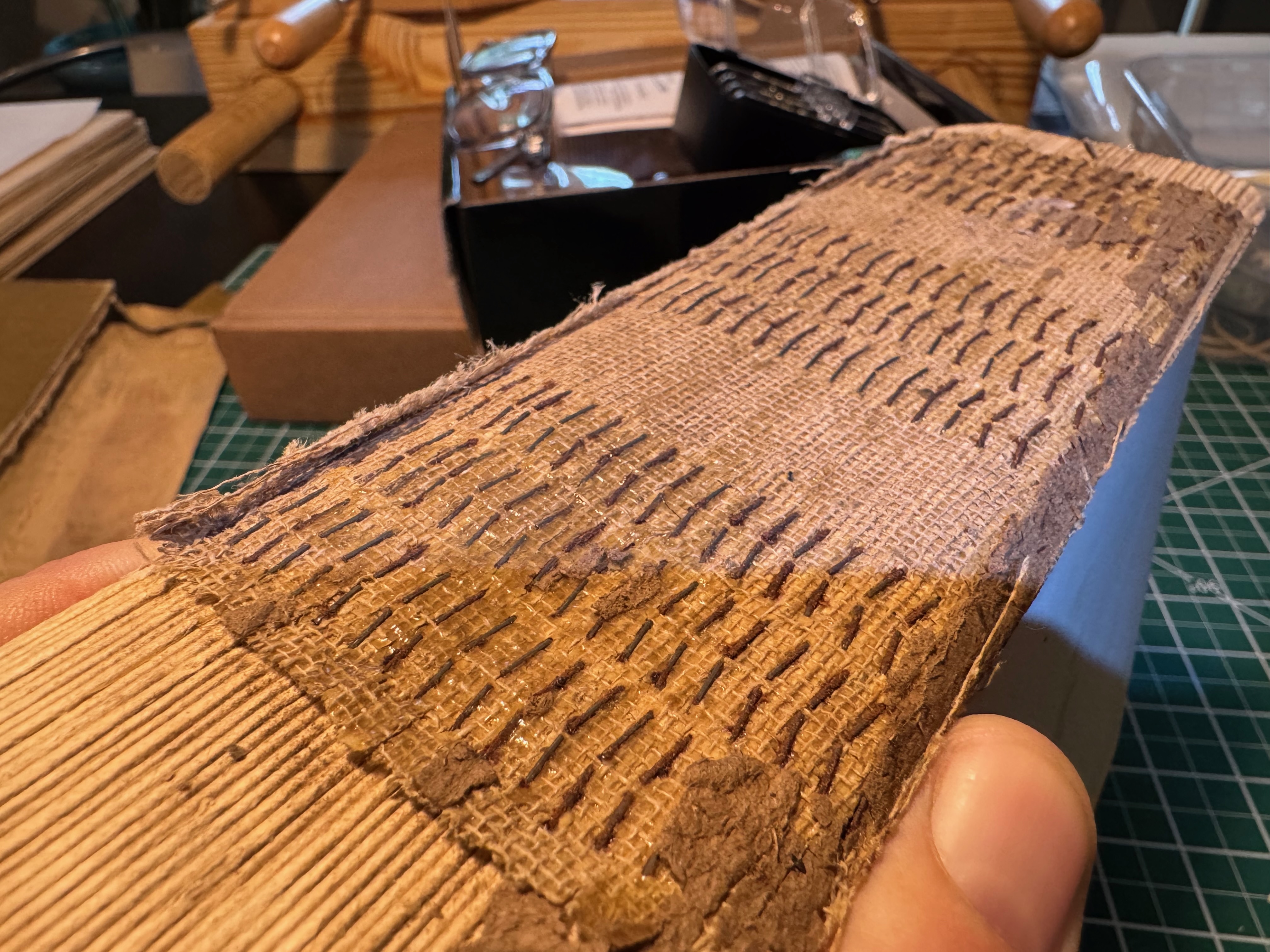
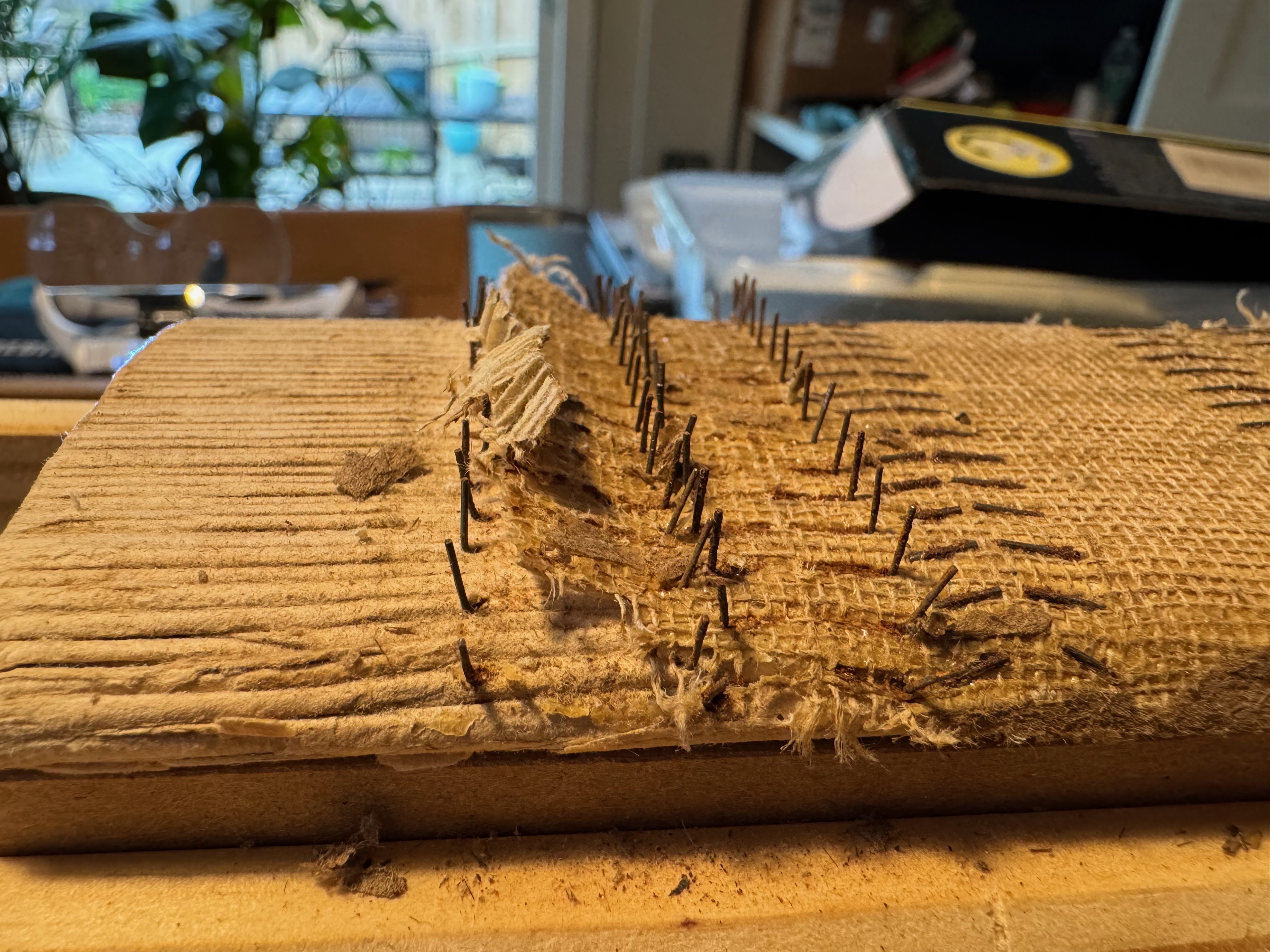
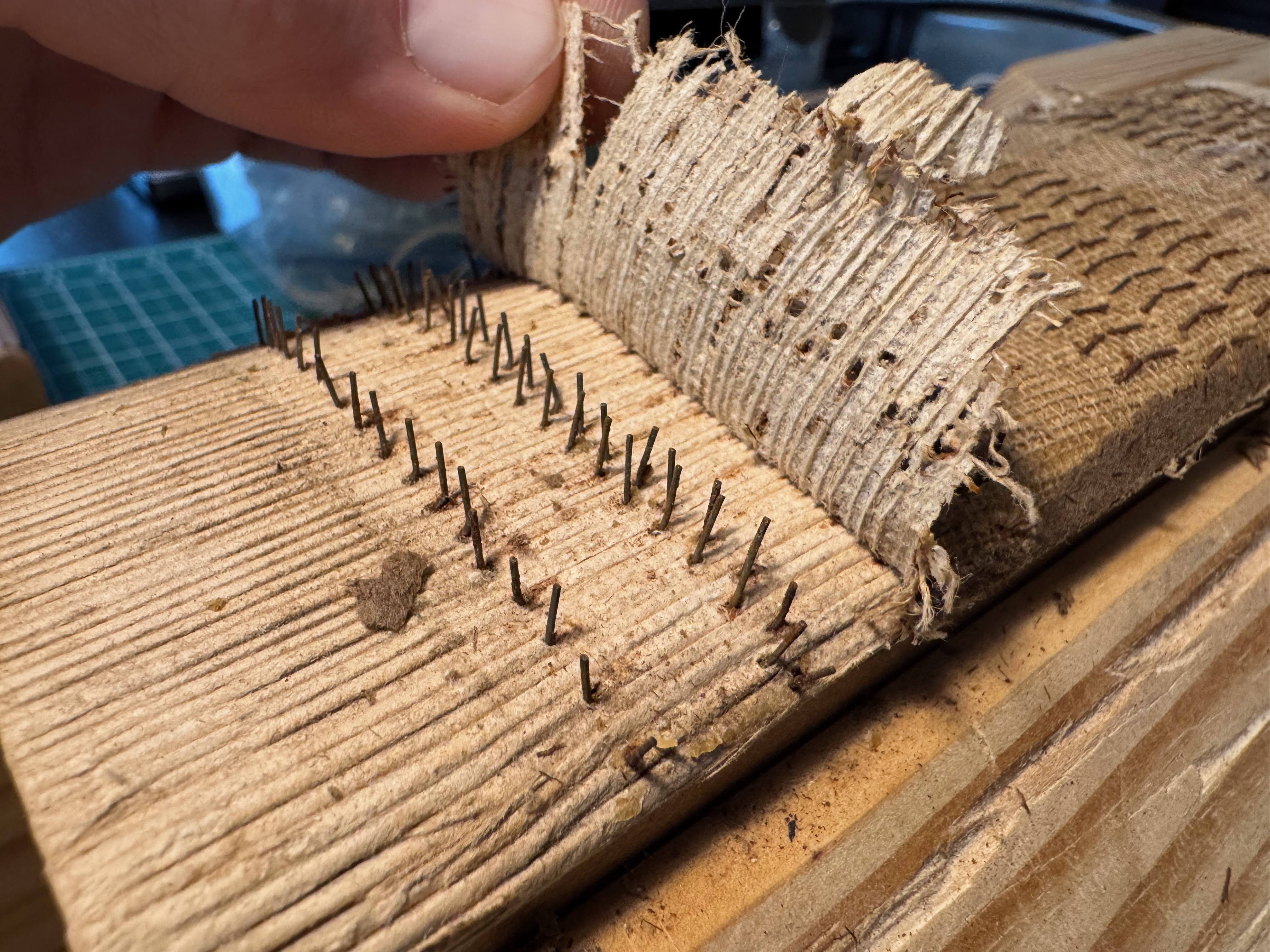
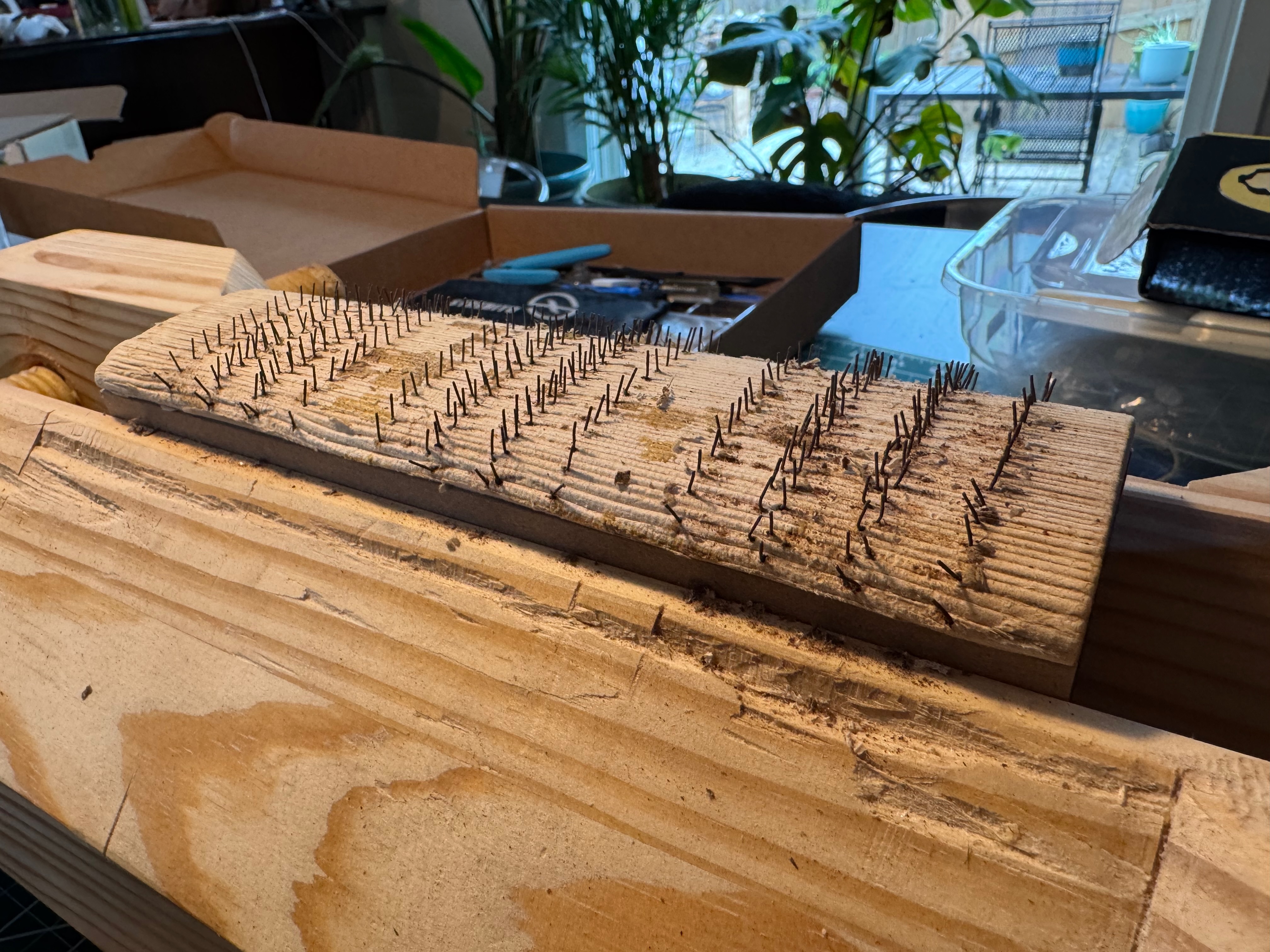
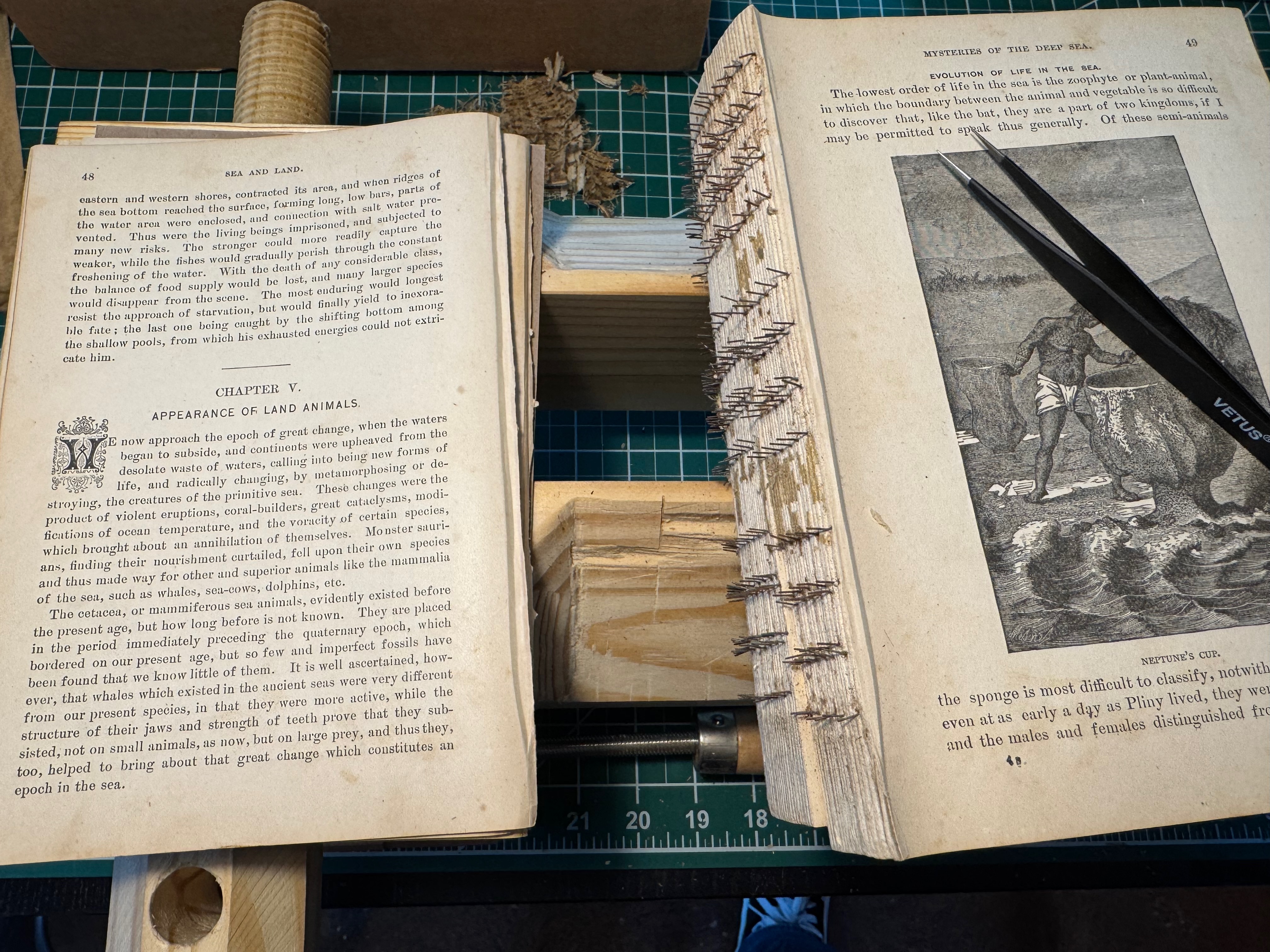
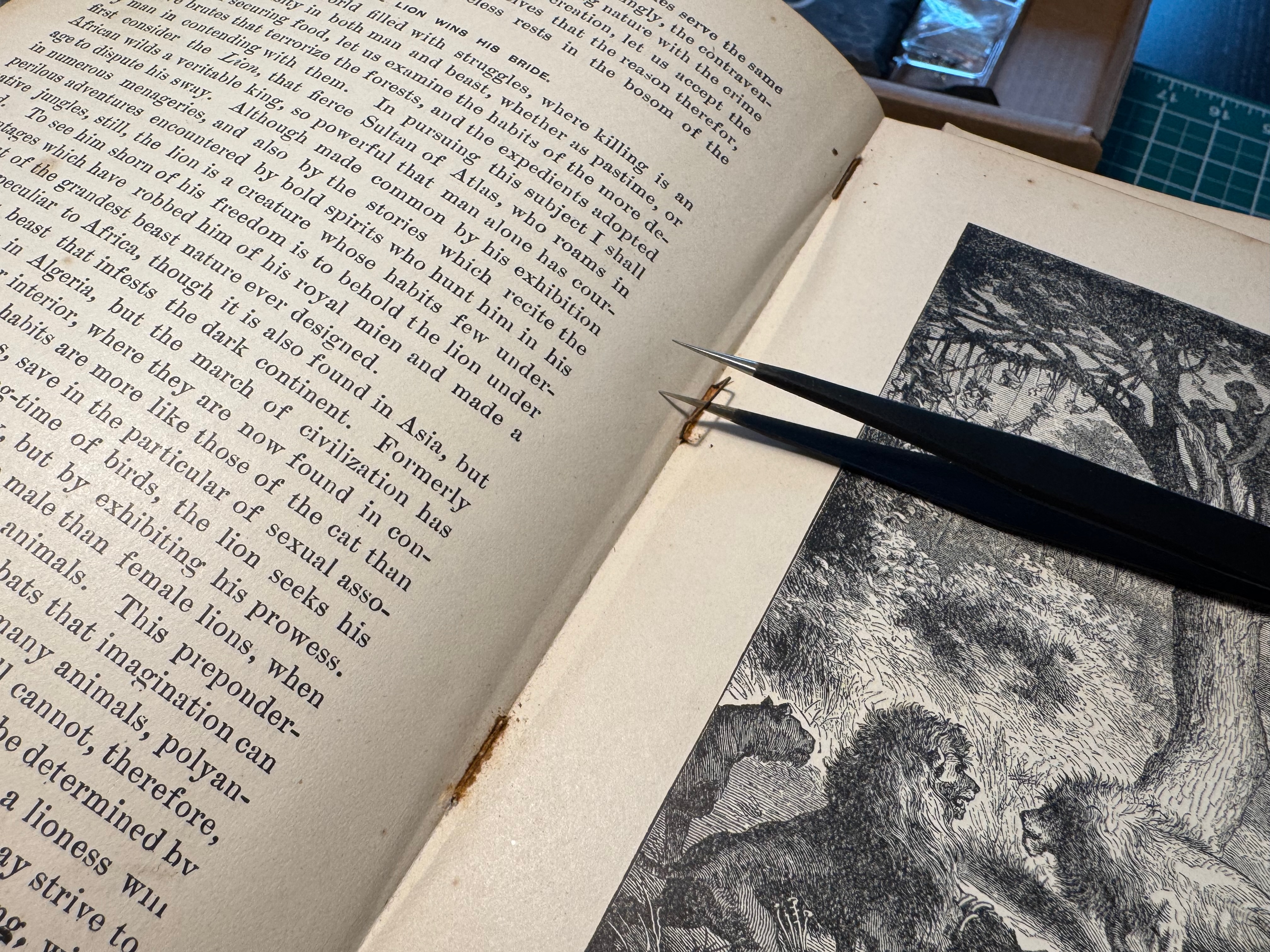
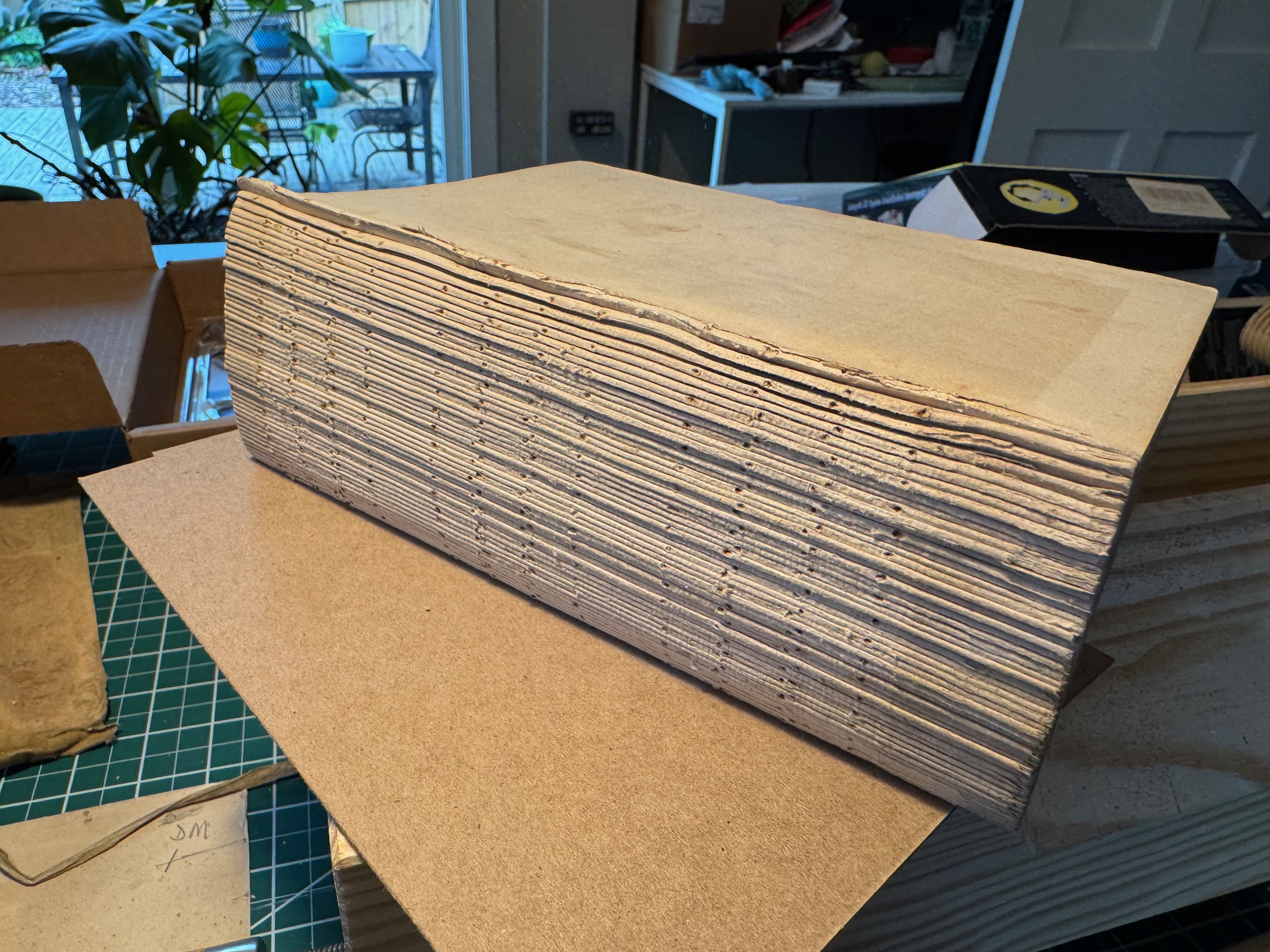
With the press made, it was time to resume deconstructing the text block. I'd spread a mixture of methylcellulose on the spine to loosen the remaining glue and paper sediment, and to my surprise found staples holding the signatures together, rather than thread as I'd expected. While delicate, they all were more or less solid and bent easily with some tweezers and patience. I didn't understand the pattern of the staples, and ultimately it wouldn't matter as I'd decided I was going to sew the text block back together.
Knocking down the signatures
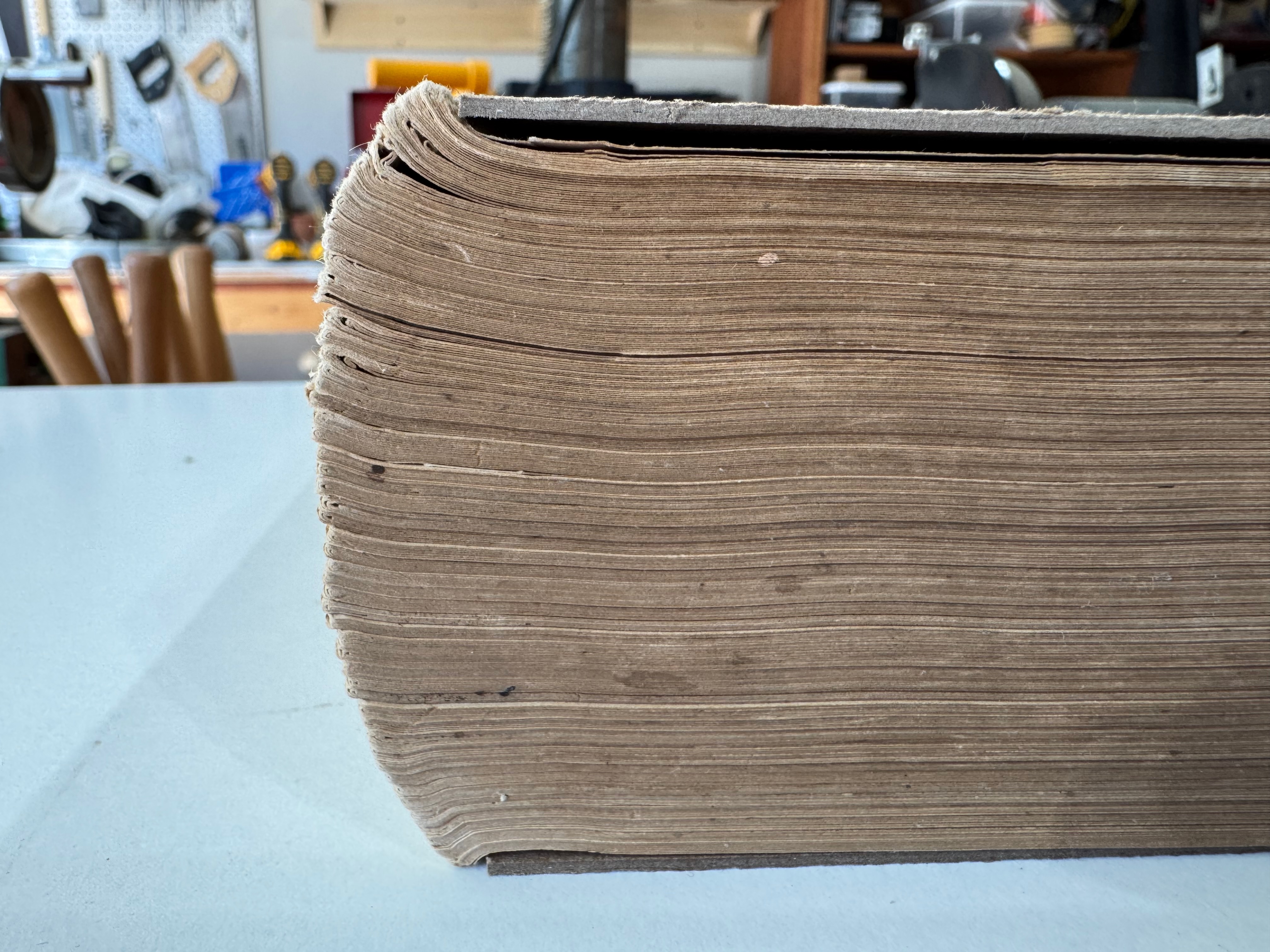
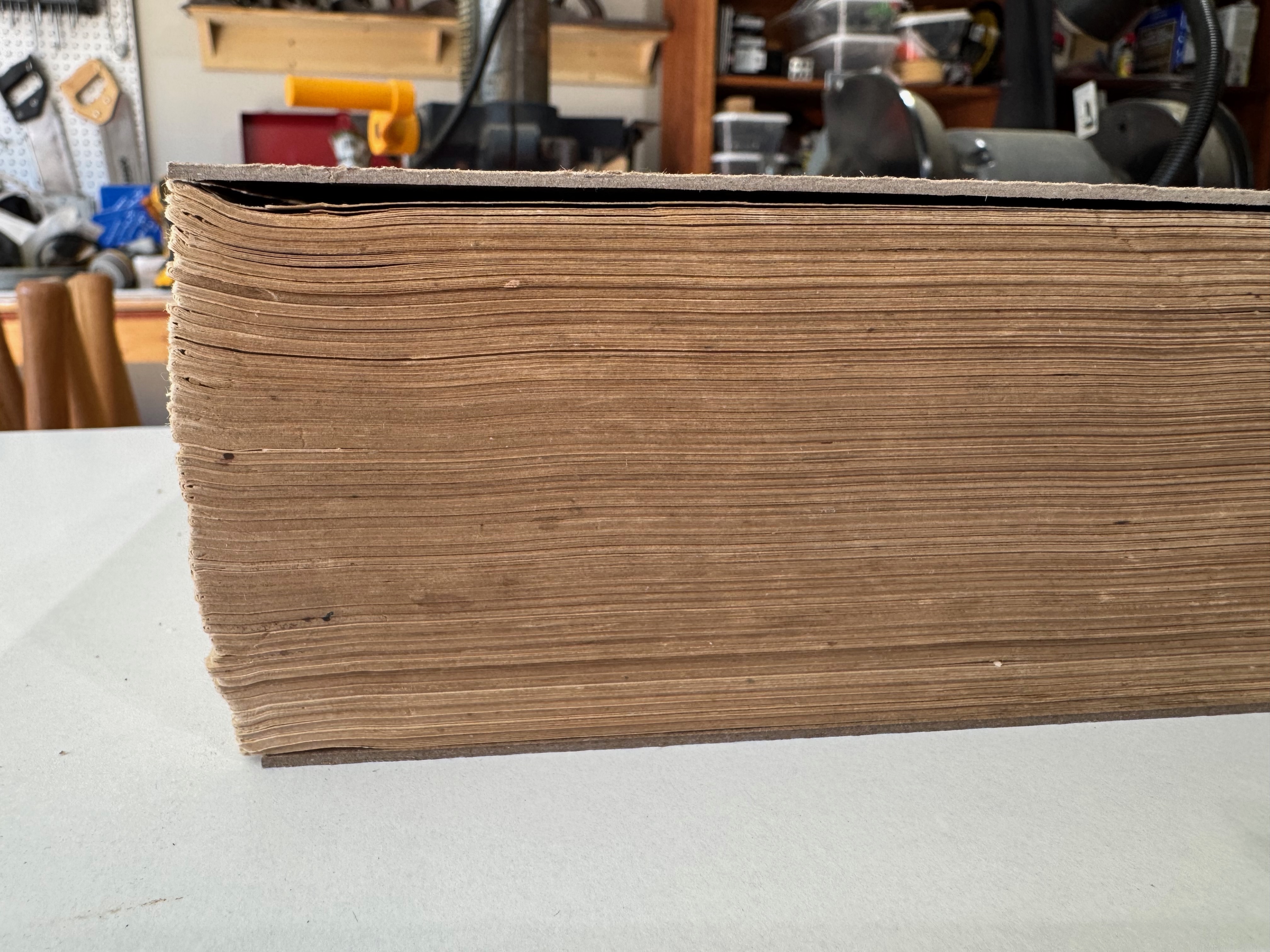
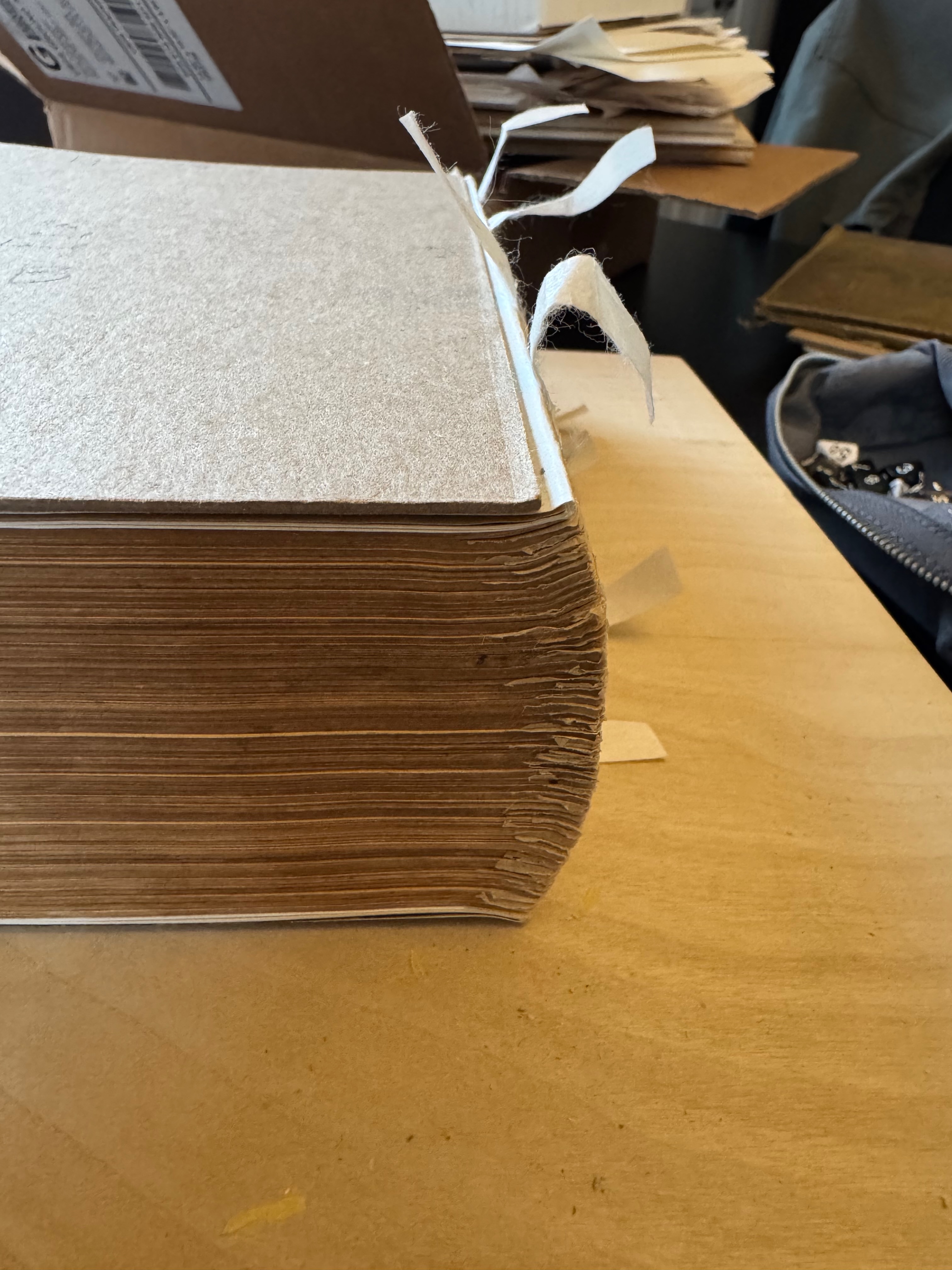
Before I could reassemble them (or even guard the folds), I needed to remove any curve at the spine edge of the signatures. This is a process called "knocking down", and it usually involves a very flat, very sturdy iron. You lay the spine edge on the iron and gently whack the signature with a broad, flat hammer. Just enough to remove the curve and leave the signature more or less flat. I could tell it would be most important with the first and last signatures.
Guarding the signatures
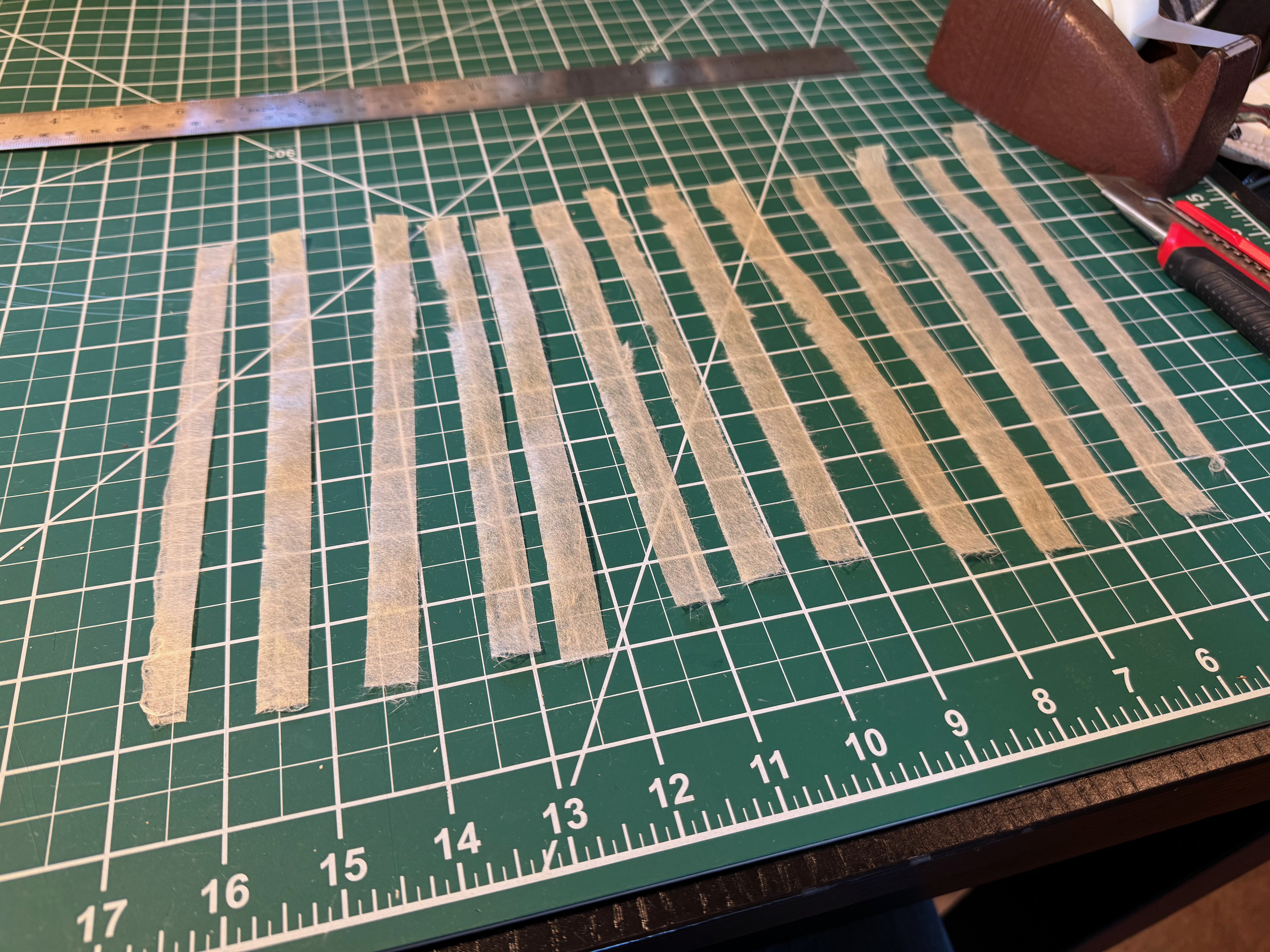
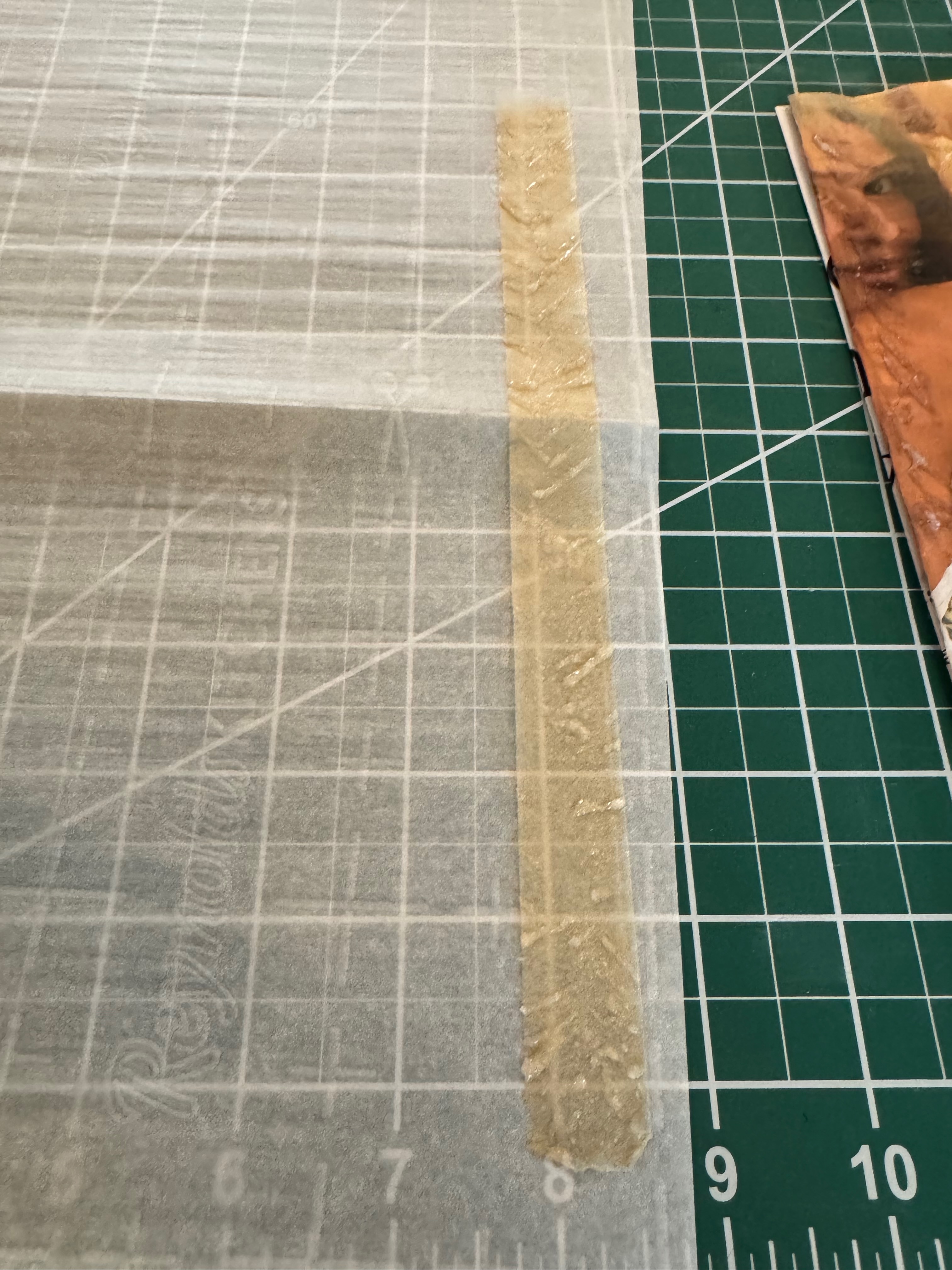
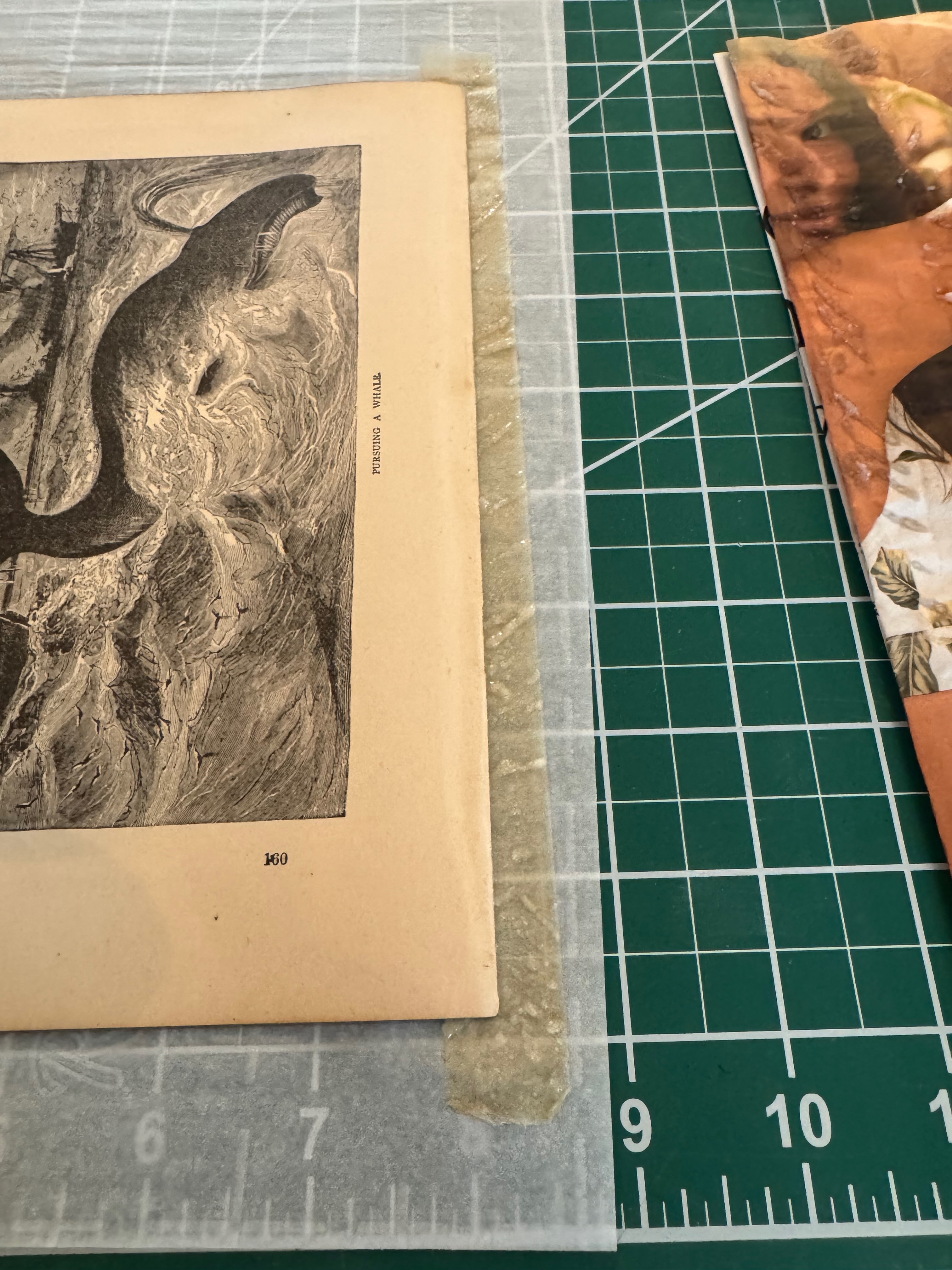
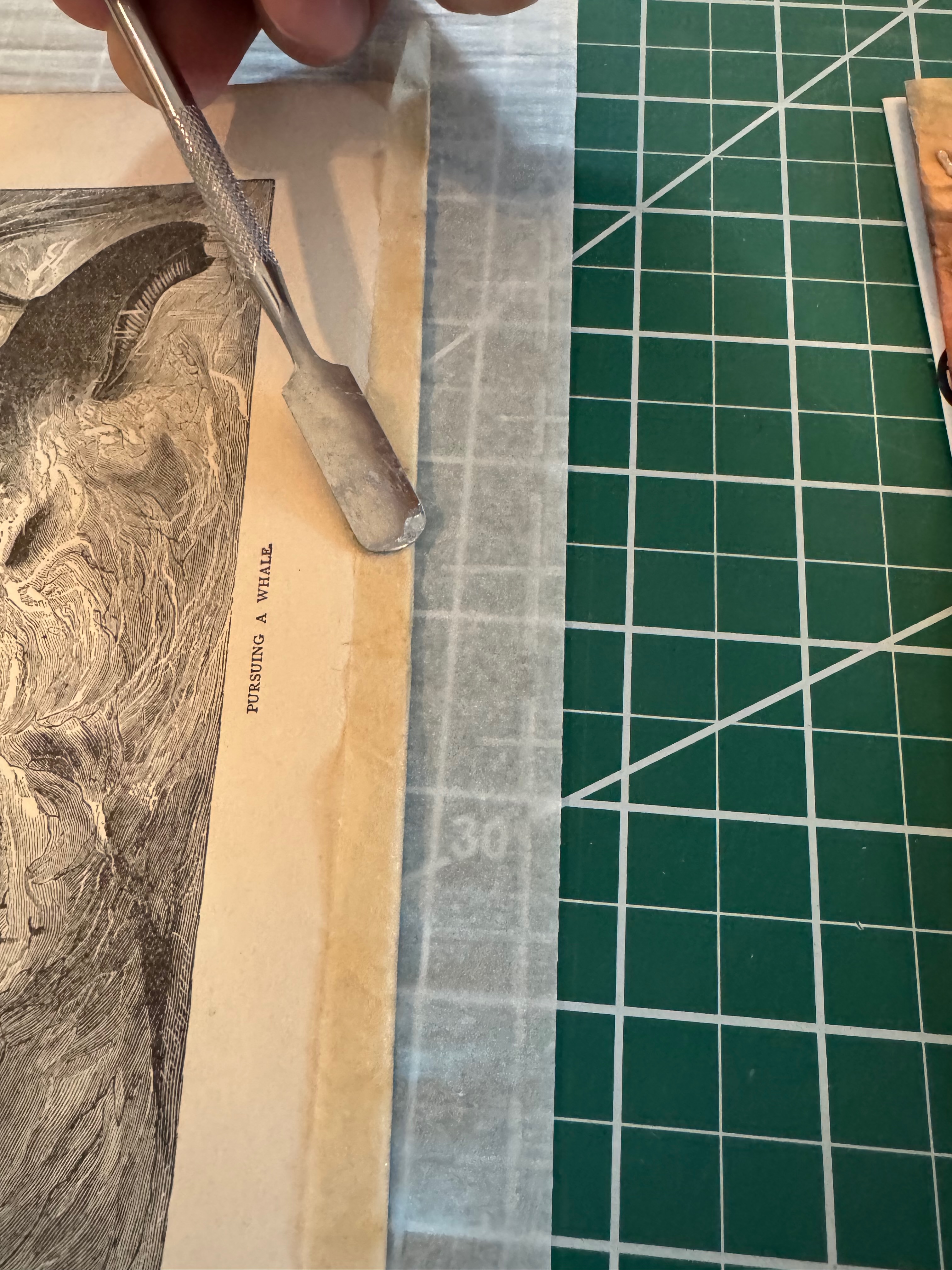
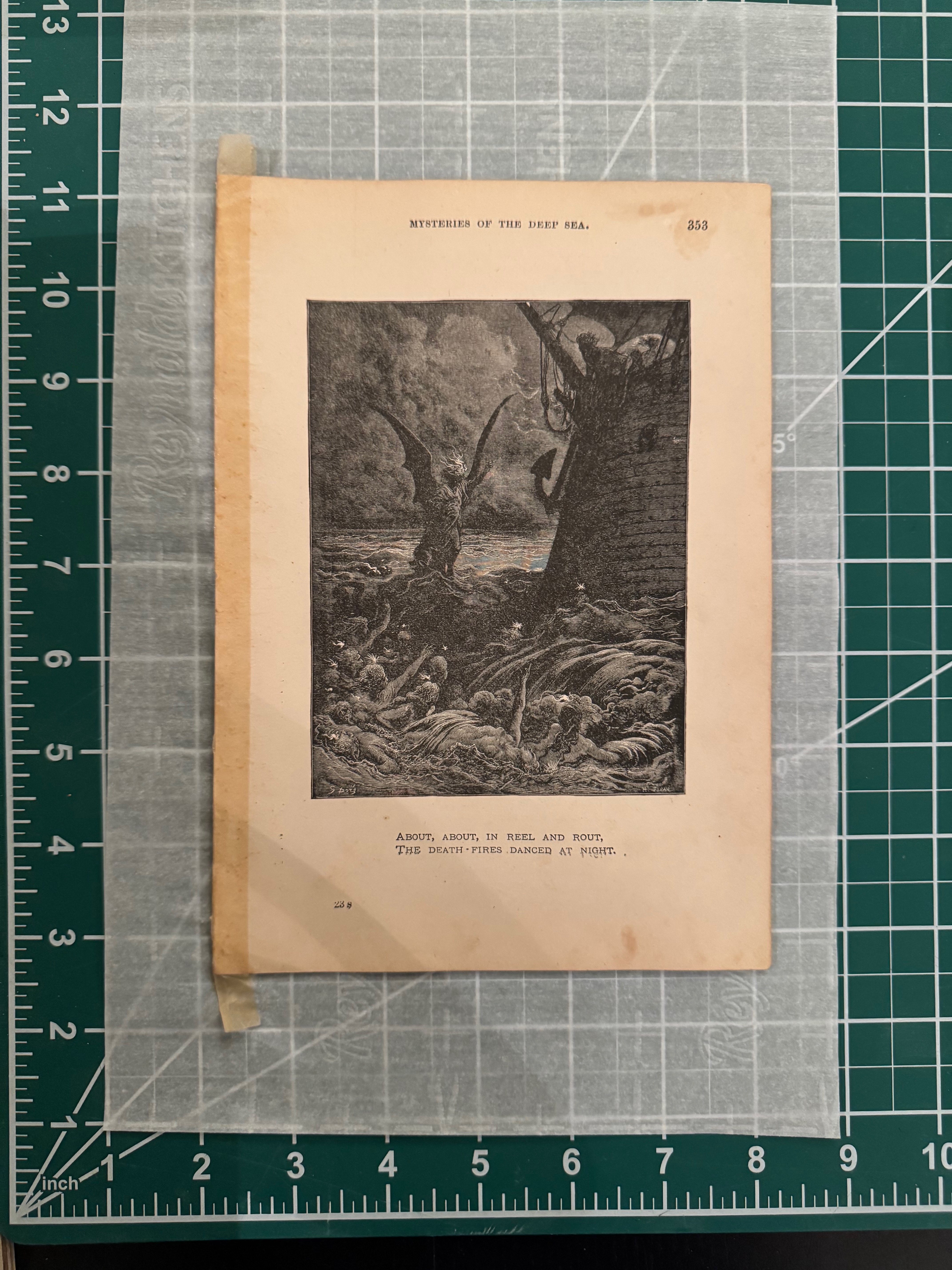
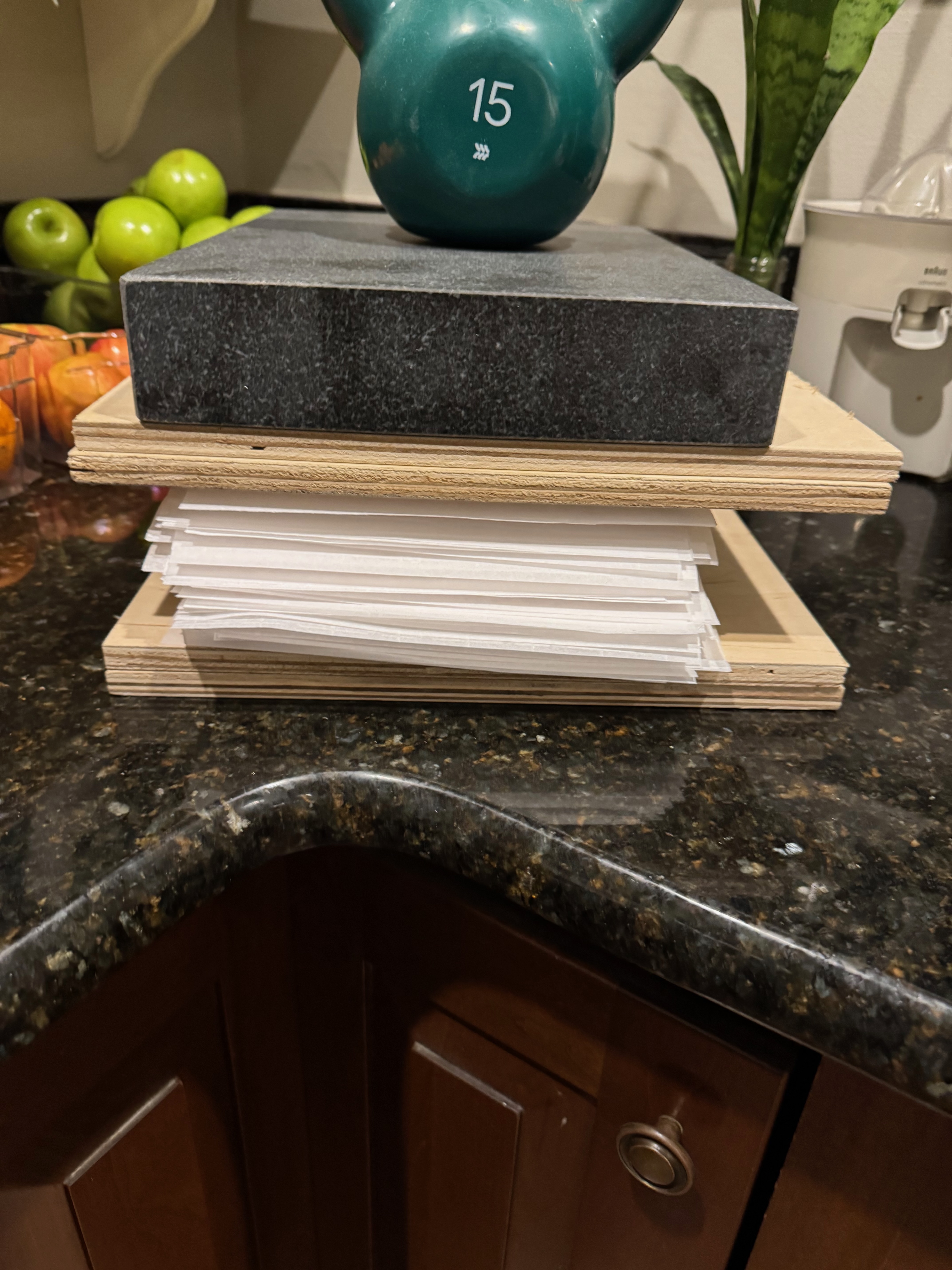
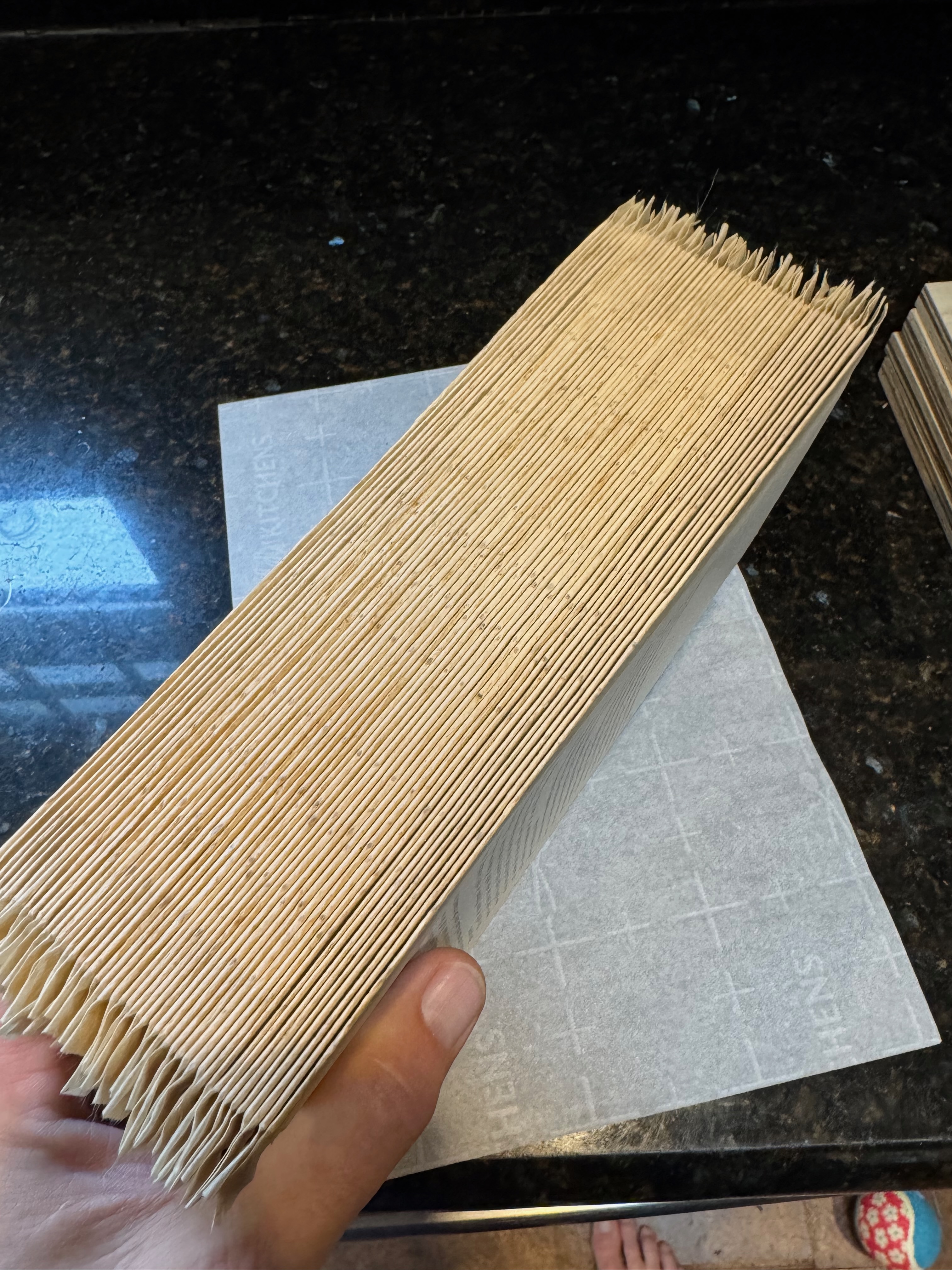
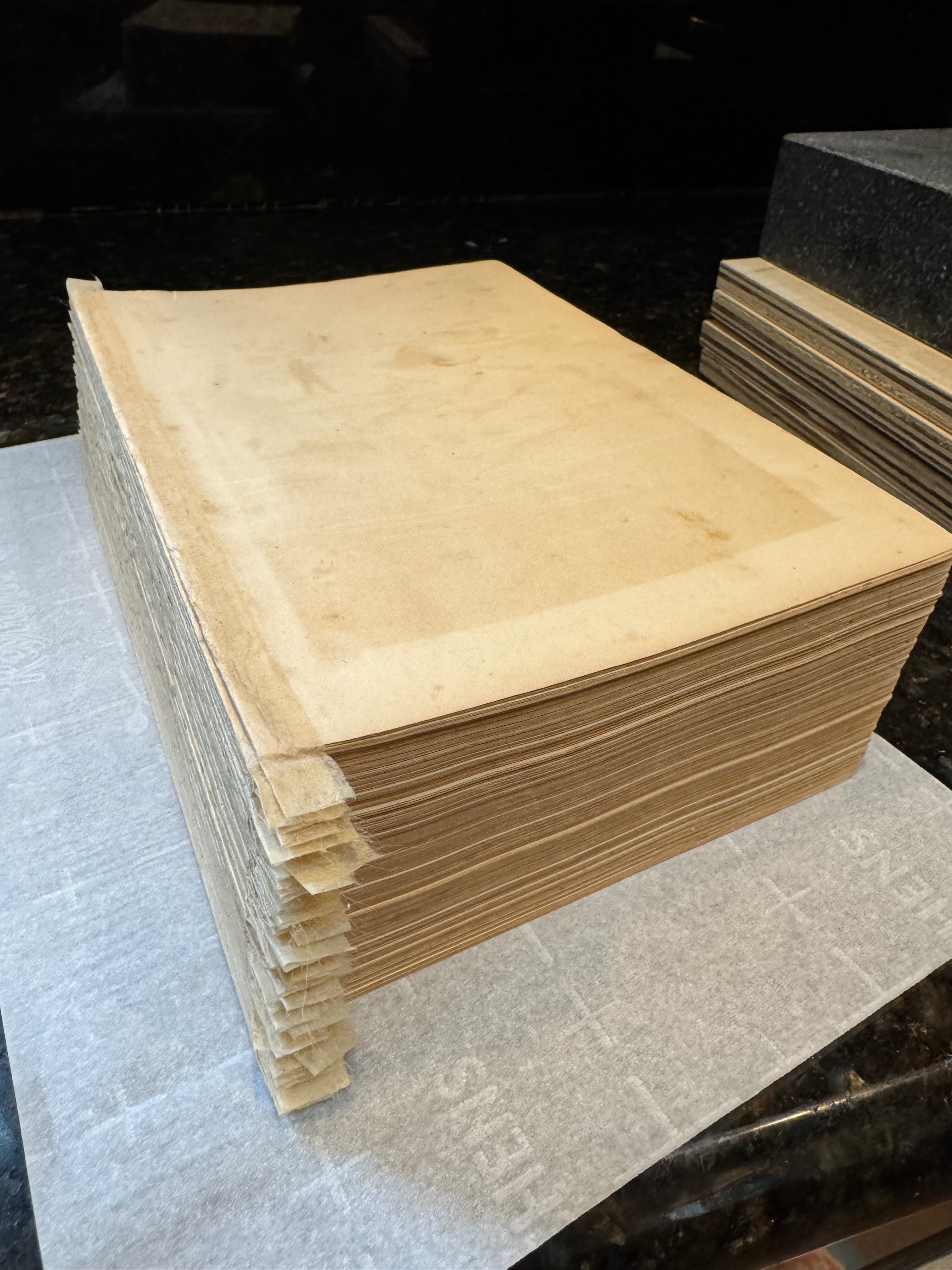
Since these signatures had been stapled and I saw no sign of tape or banding across the spine, I knew I'd be punching new holes in the signatures to accommodate them. That would require reinforcing, or "guarding" each signature with a small strip of thin but sturdy paper, just one per signature would be enough, so long as the inner-most sheet of the signature's fold was secure. These were brushed with a coat of methylcellulose and applied along the spine of each signature, then carefully folded over and set aside to dry.
Burnishing the endpapers
To elevate the endpapers a bit, I applied a light coating of beeswax and burnished it into the paper, giving it a glossy sheen, as well as a delightful smell. This would protect the endpaper and give it a little moisture protection. Usually you would use an agate burnisher, but since I didn't have one, I used the smooth face of the hammer I'd used for knocking down the signatures.
Marking the text block
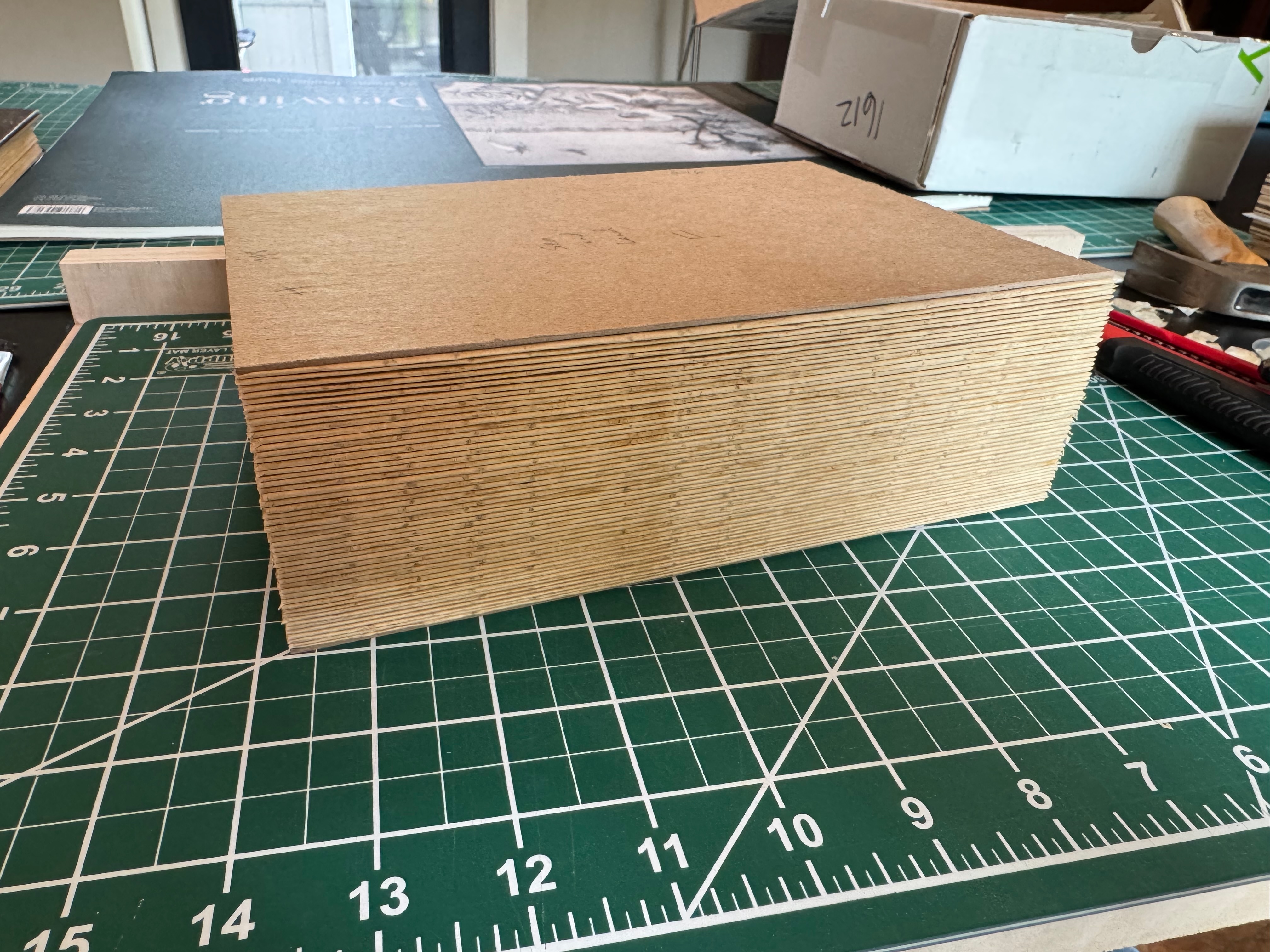
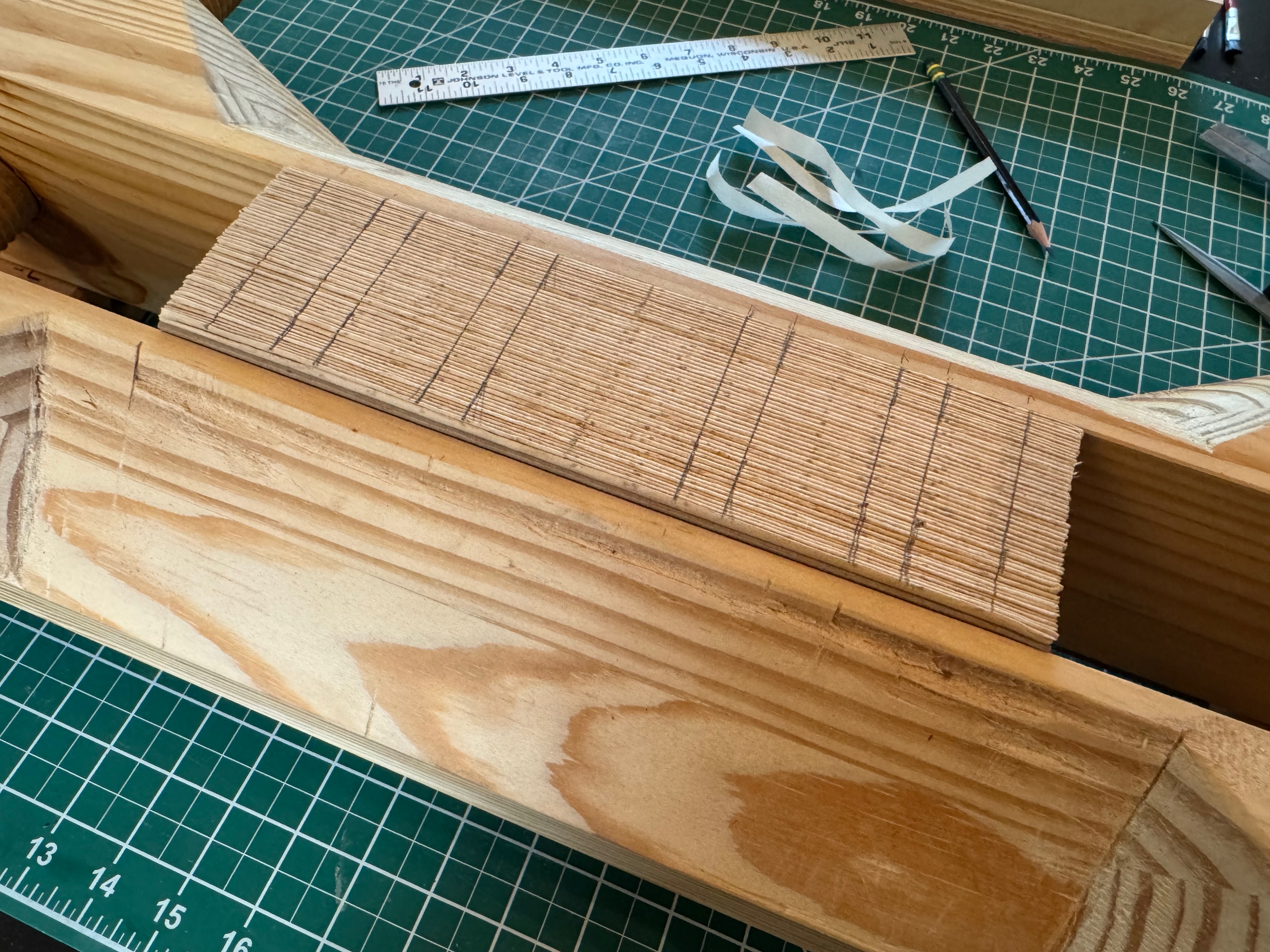
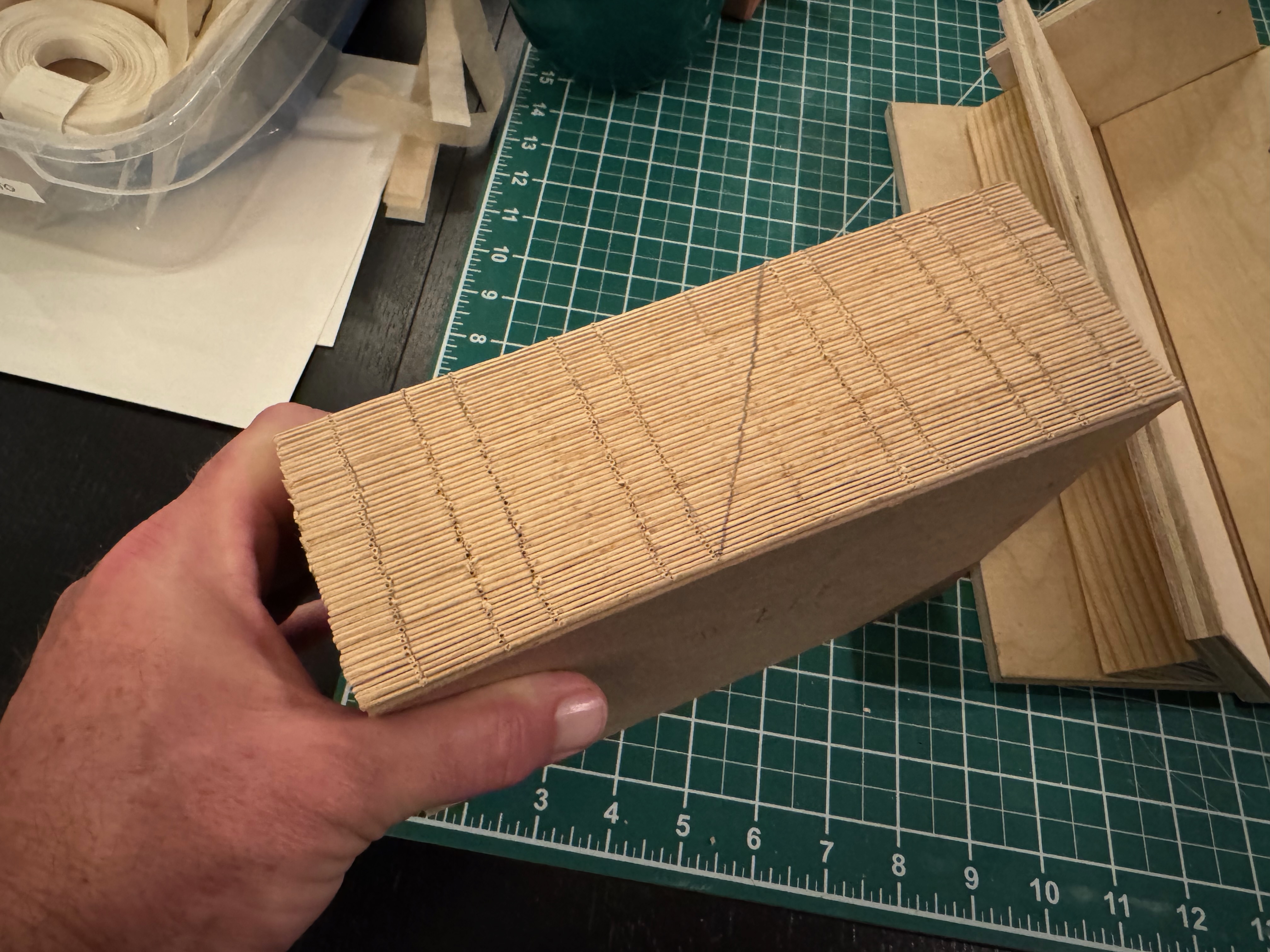
With the signatures all dried and trimmed, I lined them up, double checking the order several times, and drew layout lines where the initial sewing holes would be as well as where the tapes would lie across the spine.
Punching the signatures
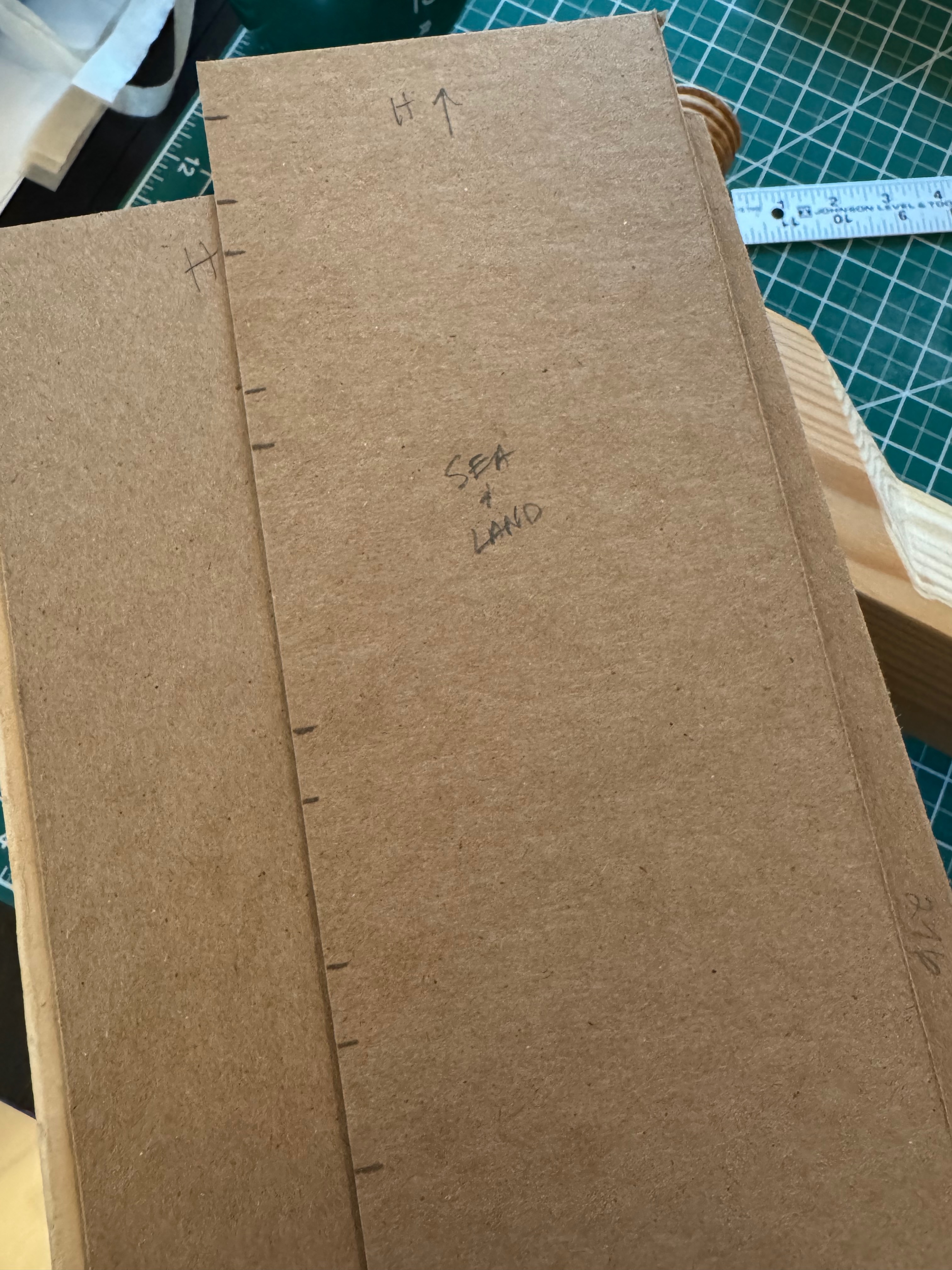
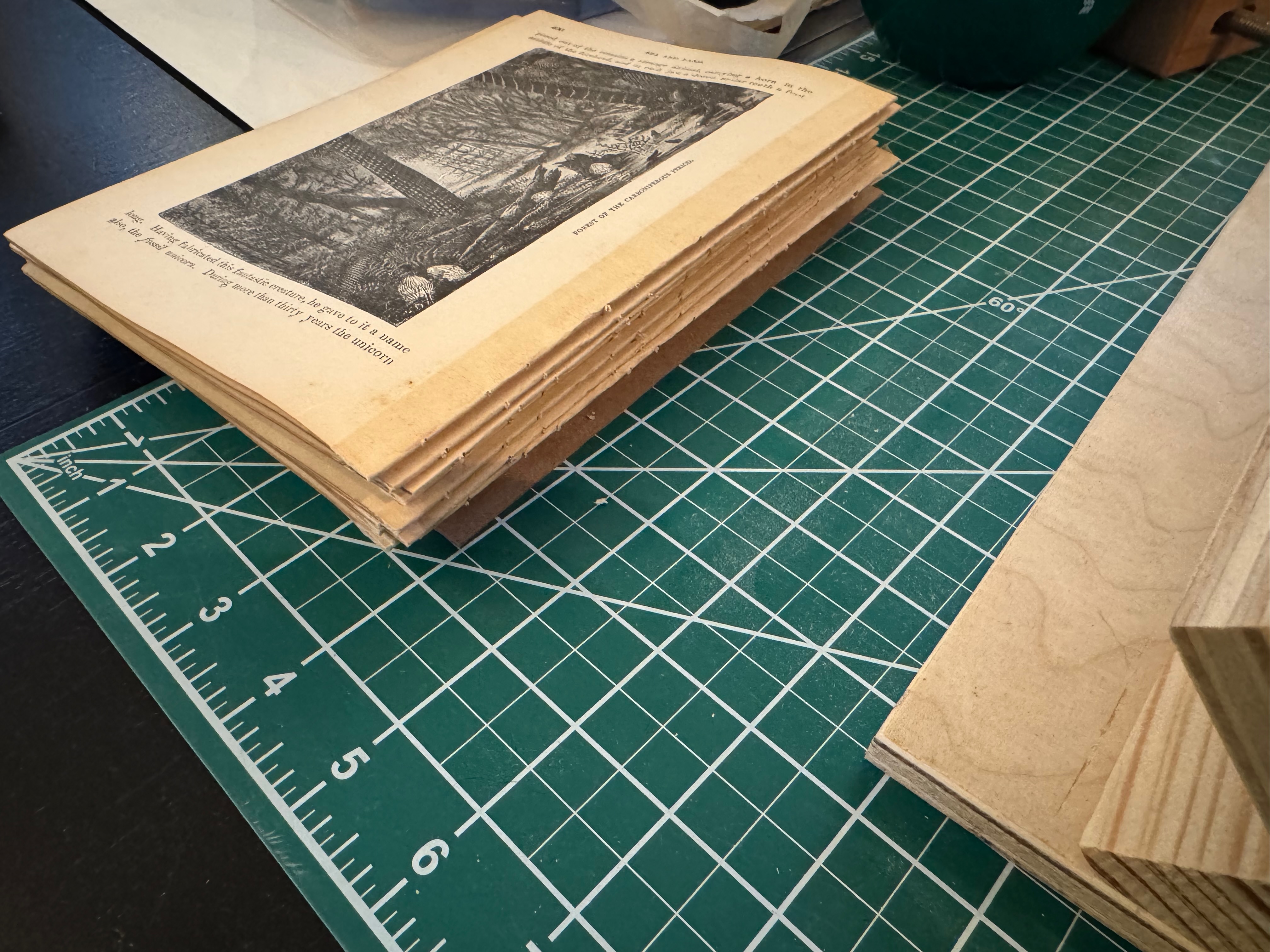
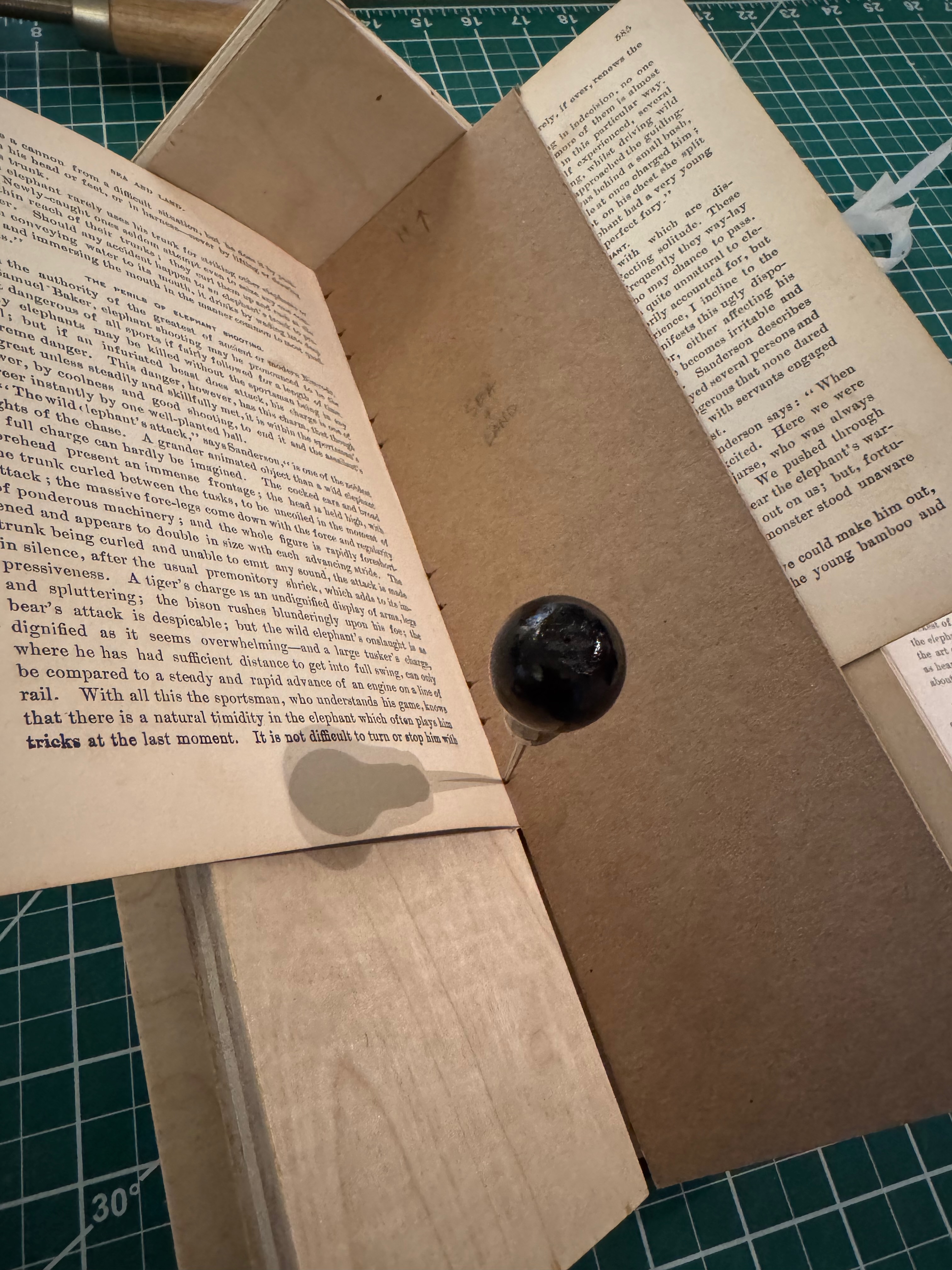
Second side quest! To more easily ensure common placement for the signature sewing holes, I built a signature cradle. A v-shaped trough with one reference edge. Place a signature folded open along the bottom, push the head (or tail, but be consistent) against the reference edge, and using a template, punch holes using an awl cleanly through the fold of the signature. The two wings of the cradle have a gap at the bottom a few millimeters wide to allow the awl to pass through the papers completely. When all the signatures were punched, I added a reference line across the spine to ensure correct ordering (I should have done it earlier).
Sewing the text block
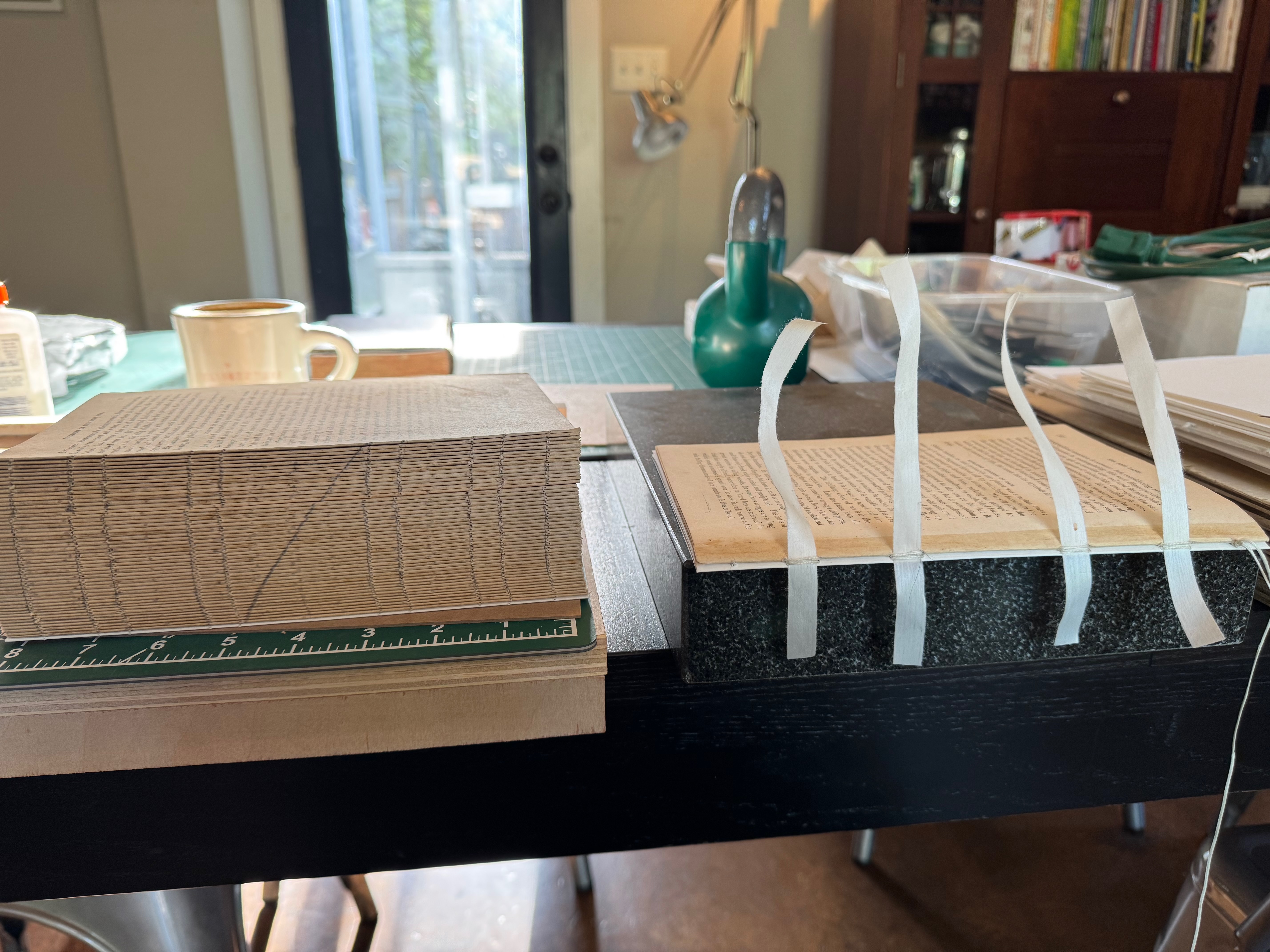
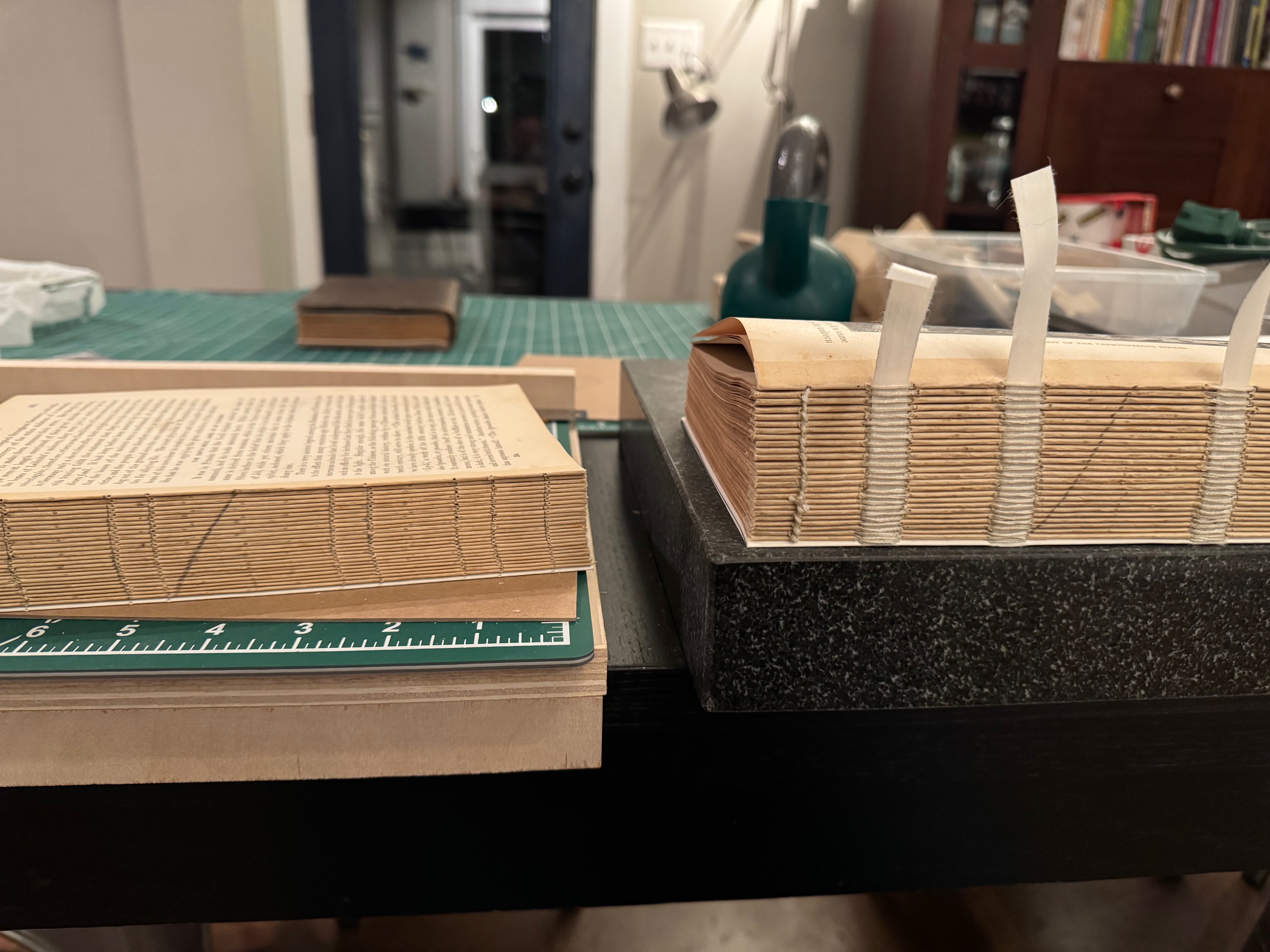
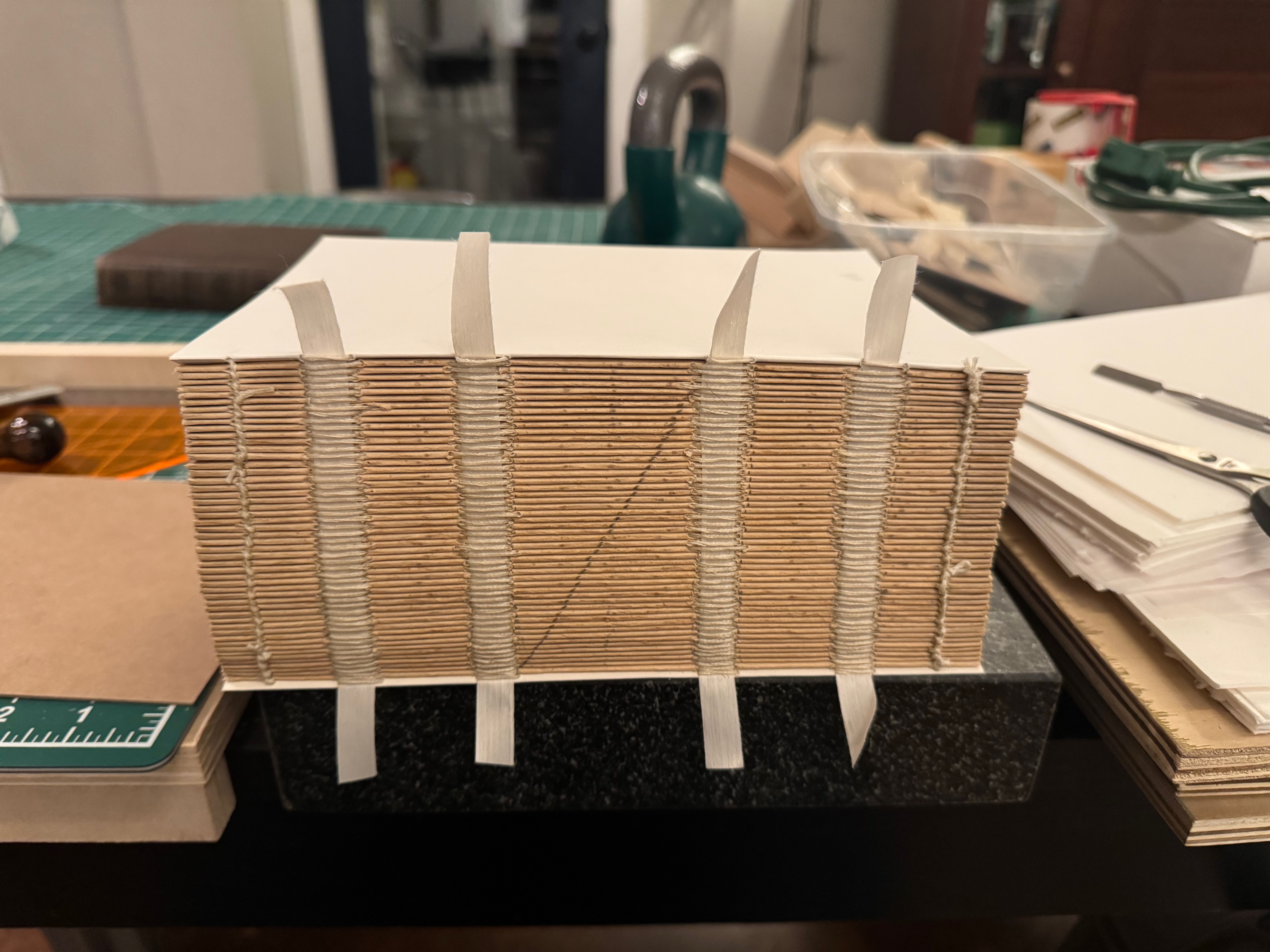
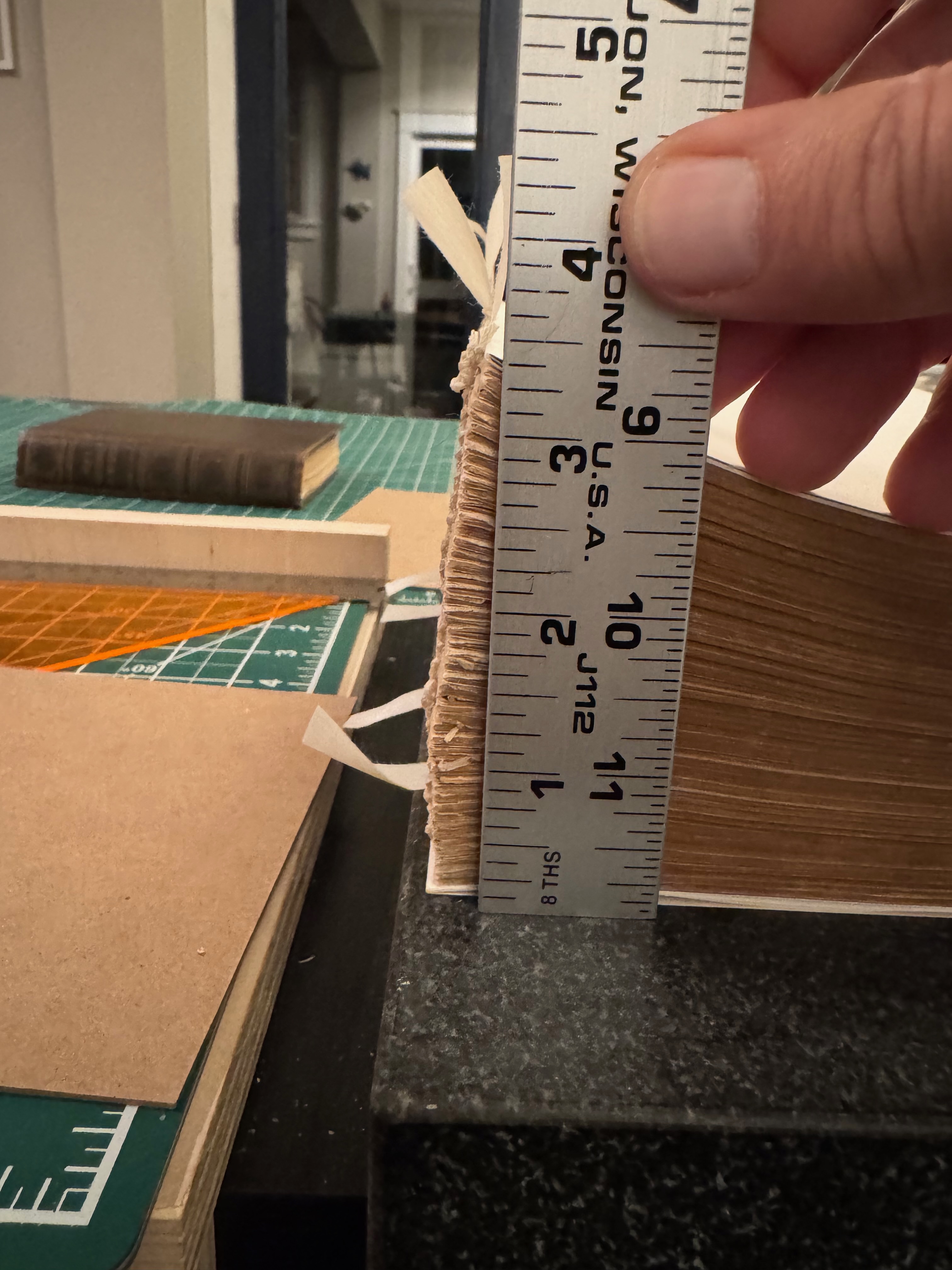
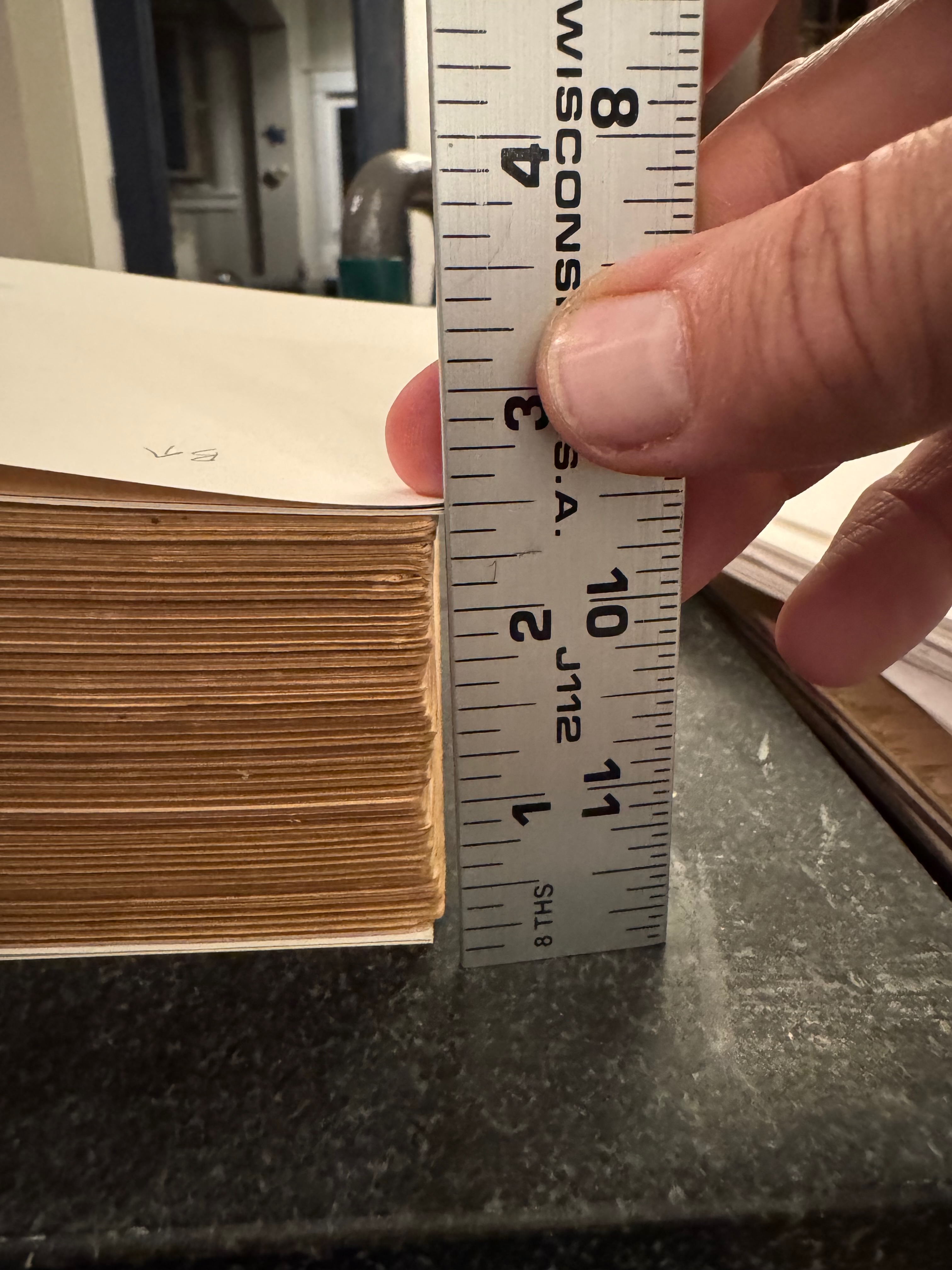
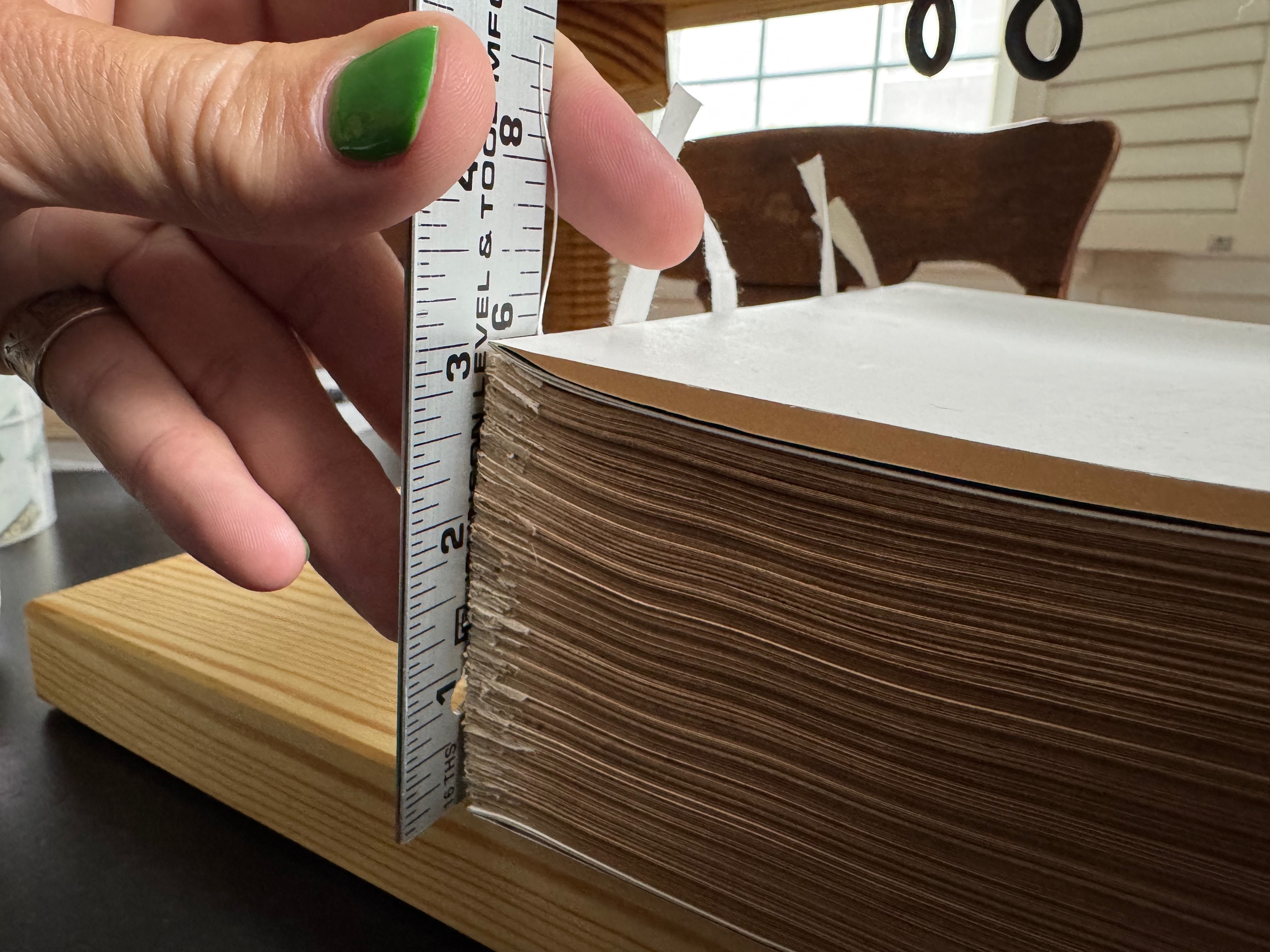
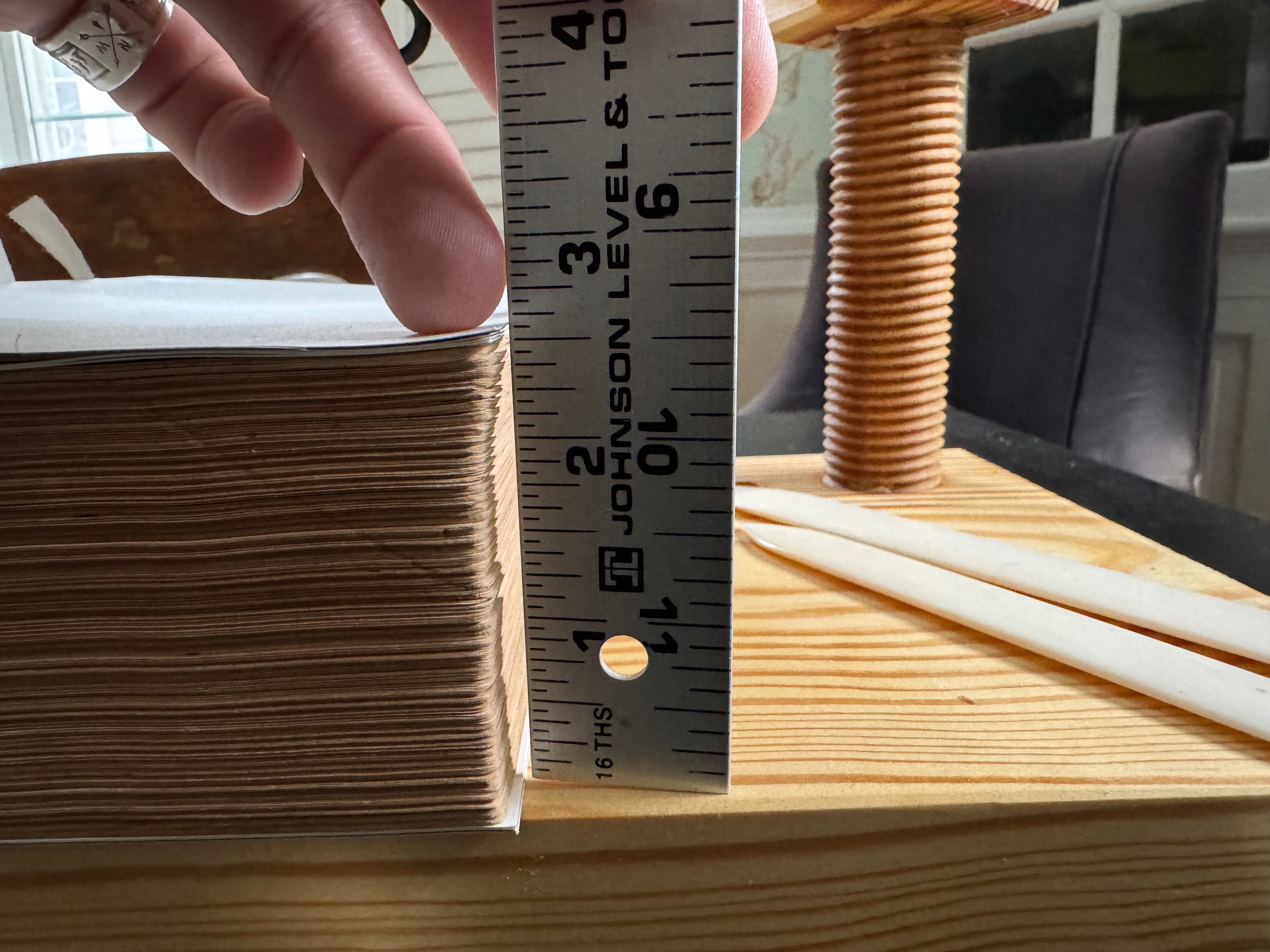
Third side quest! I ended up building, but not using (at least for this project), a sewing frame. I found it easier ultimately to elevate the text block and manually align and adjust the signatures. I chose a relatively thick thread and applied a very thin layer of beeswax to help it smoothly travel through the holes in the signatures. I knew that a properly sewn text block should be able to withstand 20-25% swell on the spine side, but this thread ended up being too thick when applied to each signature, and clocked in at 30% swell. So I put the project aside for a while to consider alternate approaches.
Undoing the text block
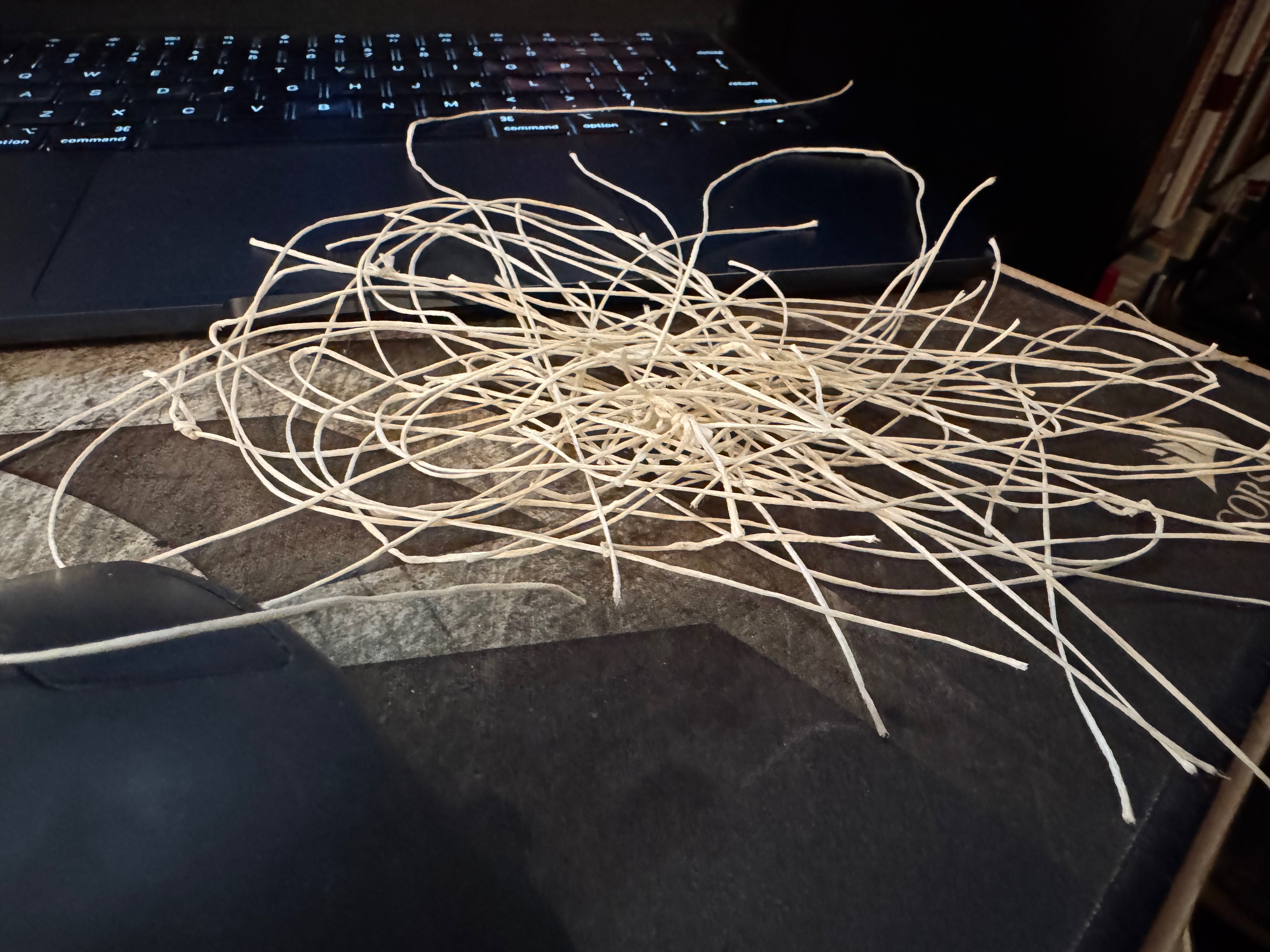
I had to completely undo the entire text block and carefully remove all the stitching to ensure the holes weren't torn or made too loose.
Resewing the text block
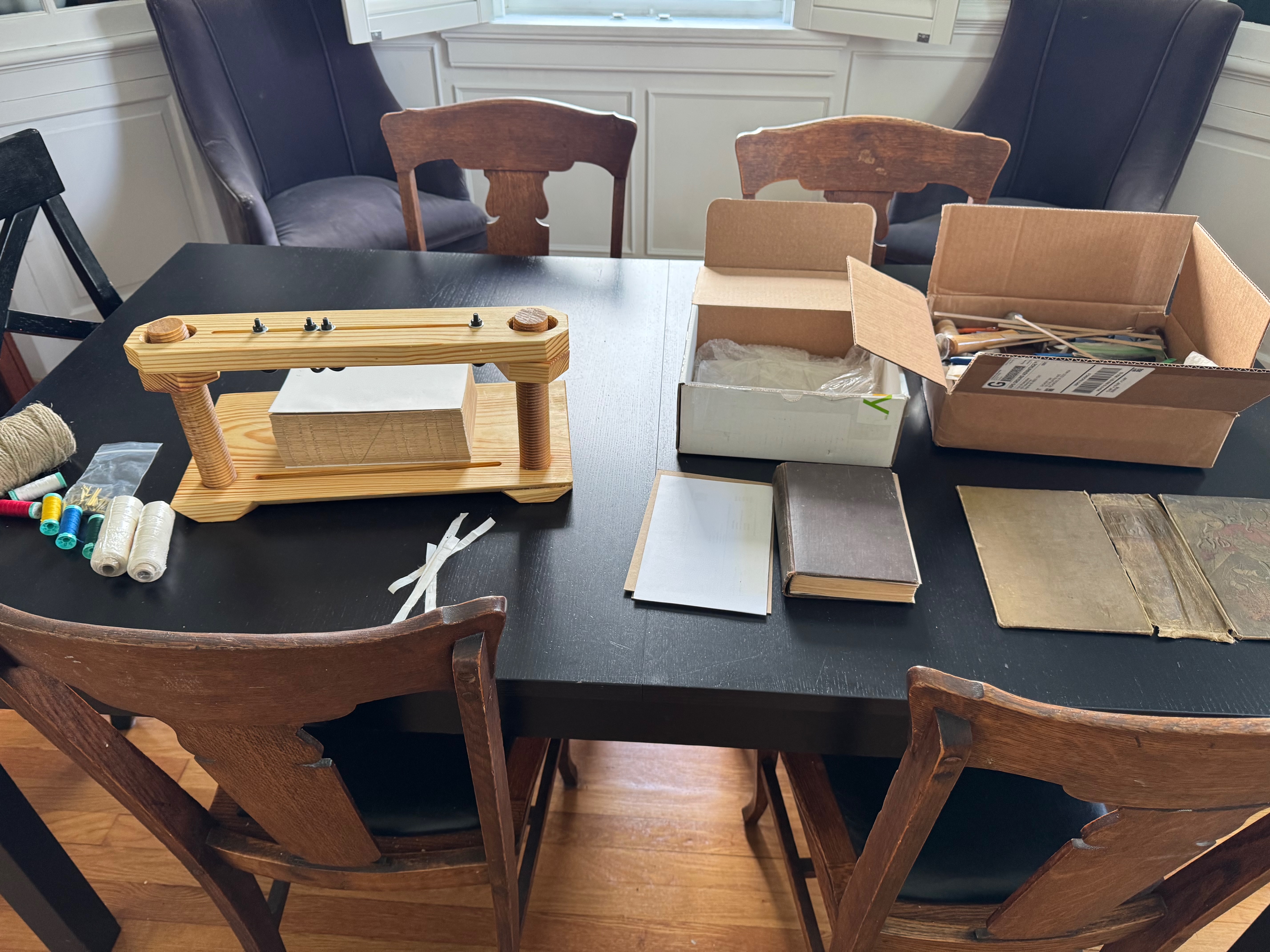
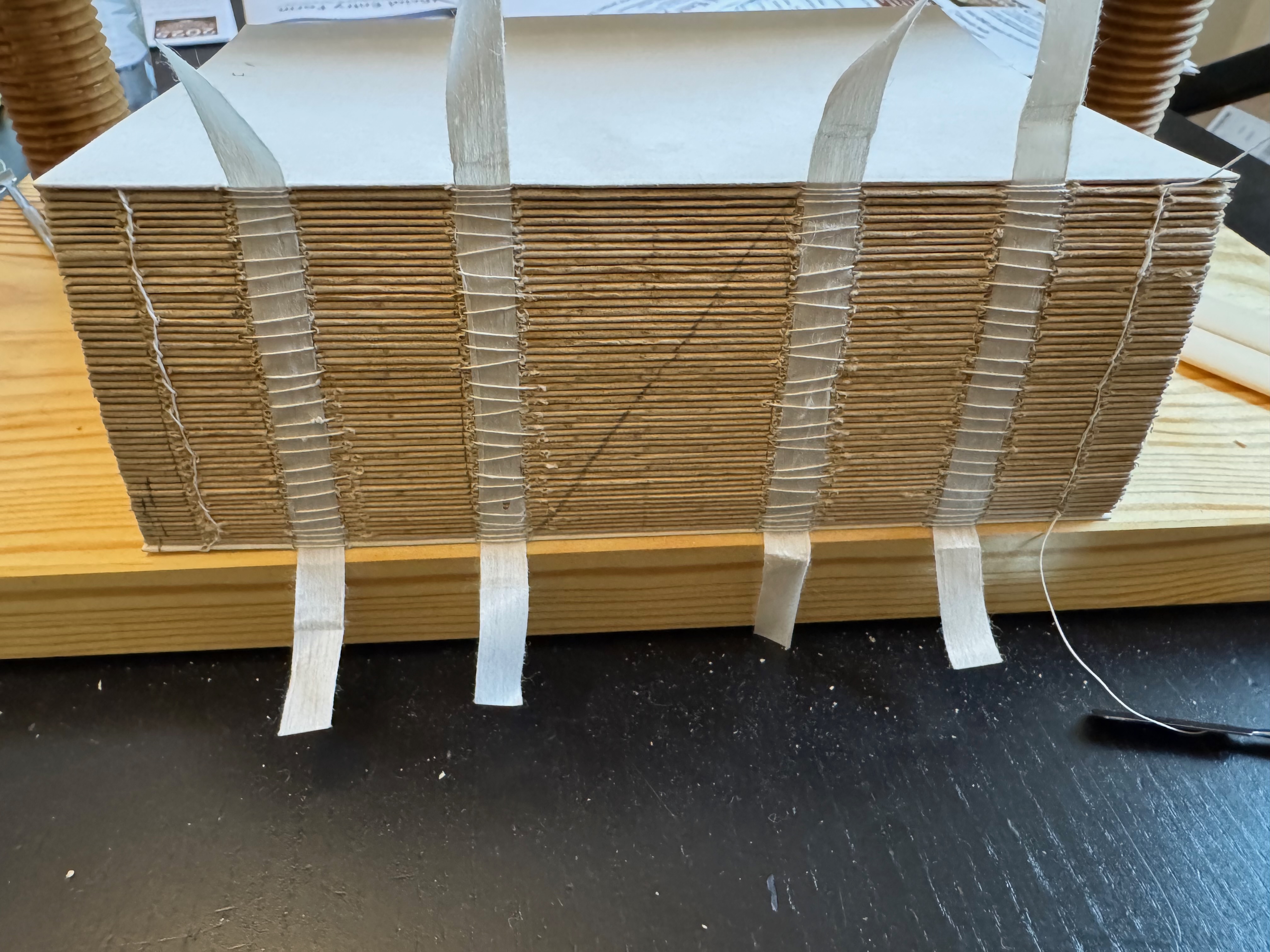
I watched DAS's video on two-on sewing several times to make sure I understood the process. Basically, it's a technique that allows for less swell at the expense of a slightly less secure text block by attaching multiple signatures on each run up or down the spine. In my case, with fifty signatures, I chose an alternating pattern of two-on and three-on binding. I figured once the spine was glued, under mull, and bound, it would still prove to be secure. In the end, it was a success, and brought the swell at the spine down to 18%! Much easier and fully within optimal range.
Gluing the spine
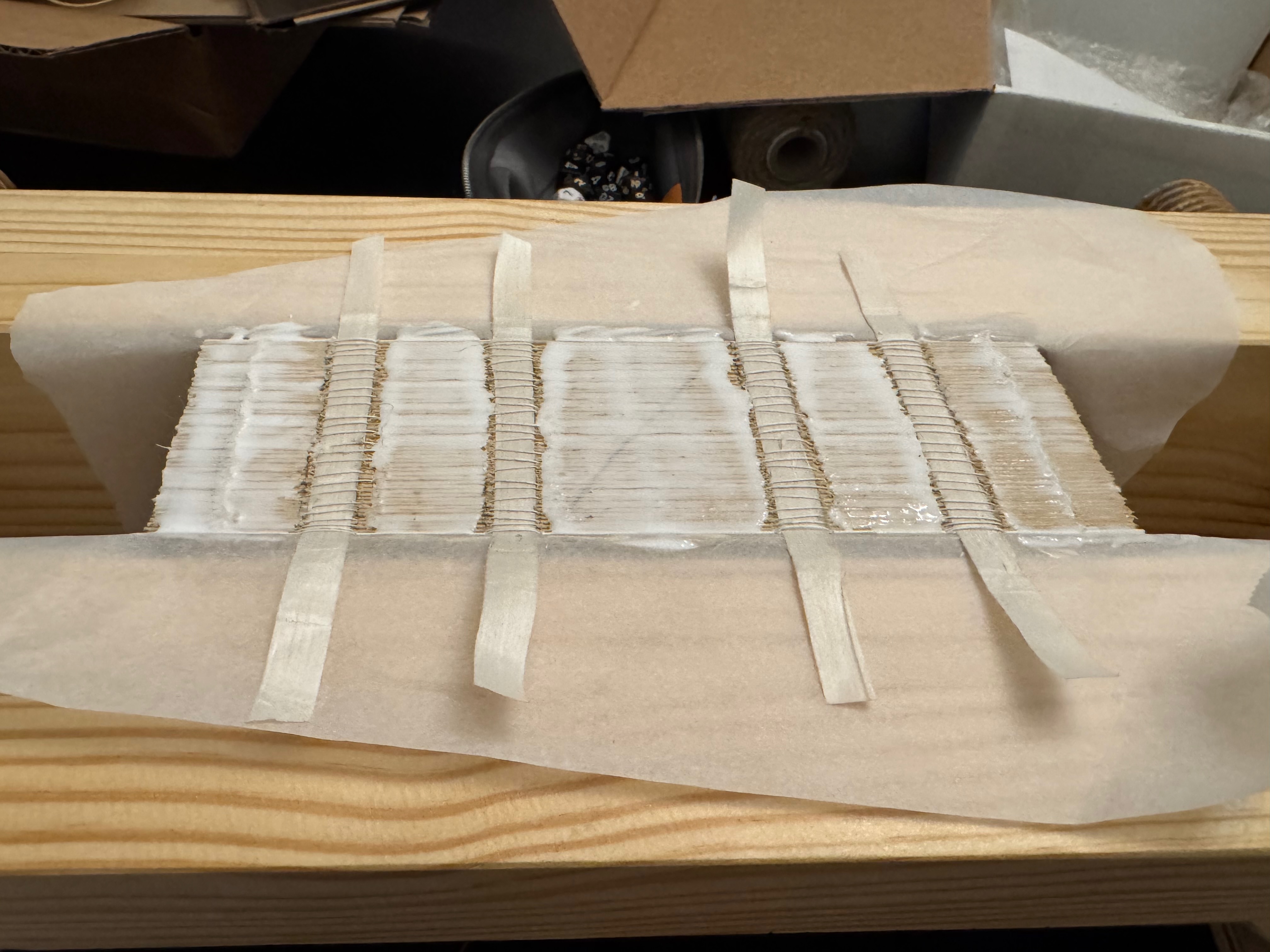
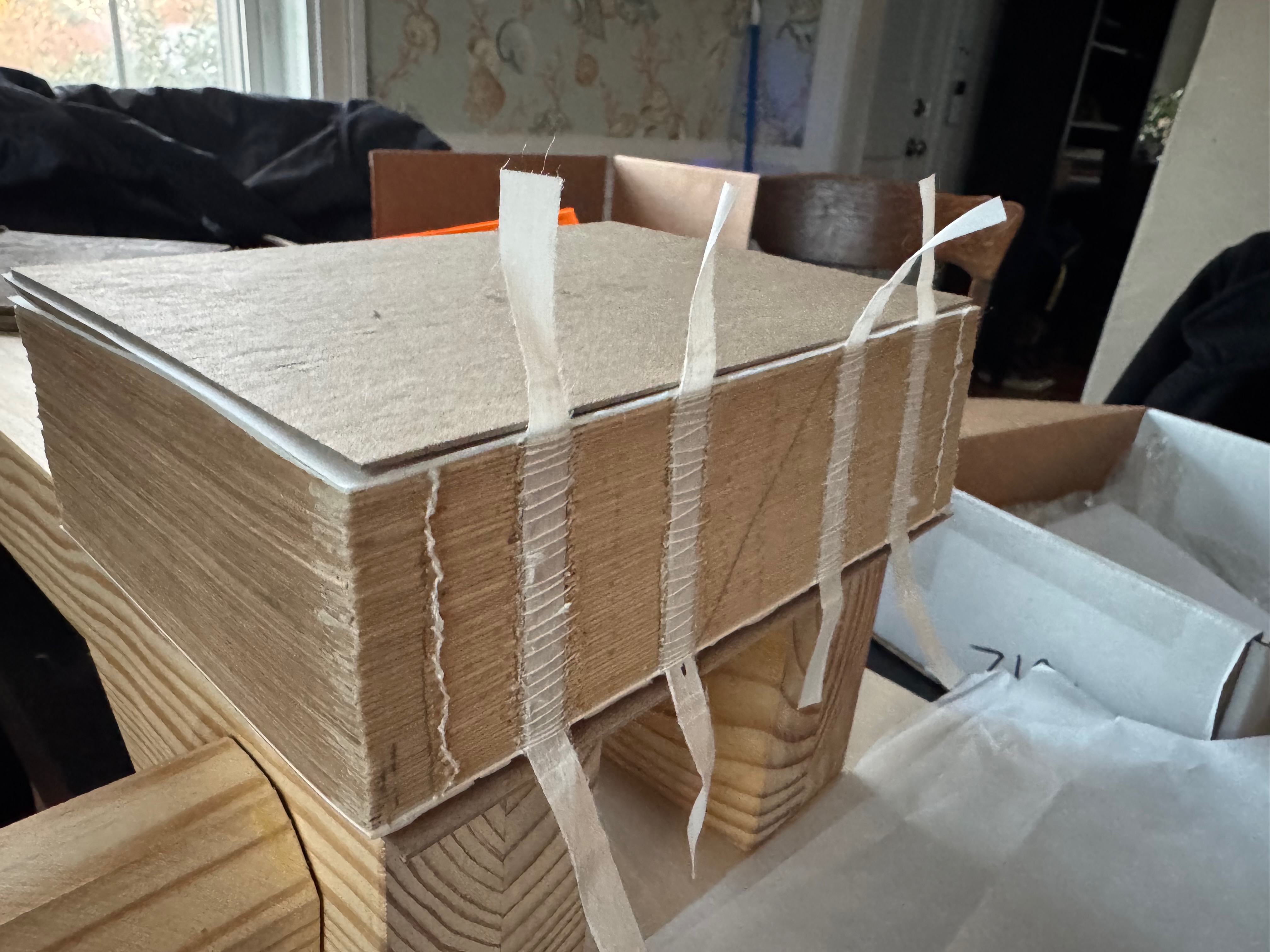
The text block was back together and strong and secure, despite the change in sewing technique, and it was time to strengthen and reinforce it with glue. It was important to avoid the tapes so the back could be properly rounded later.
Rounding the text block
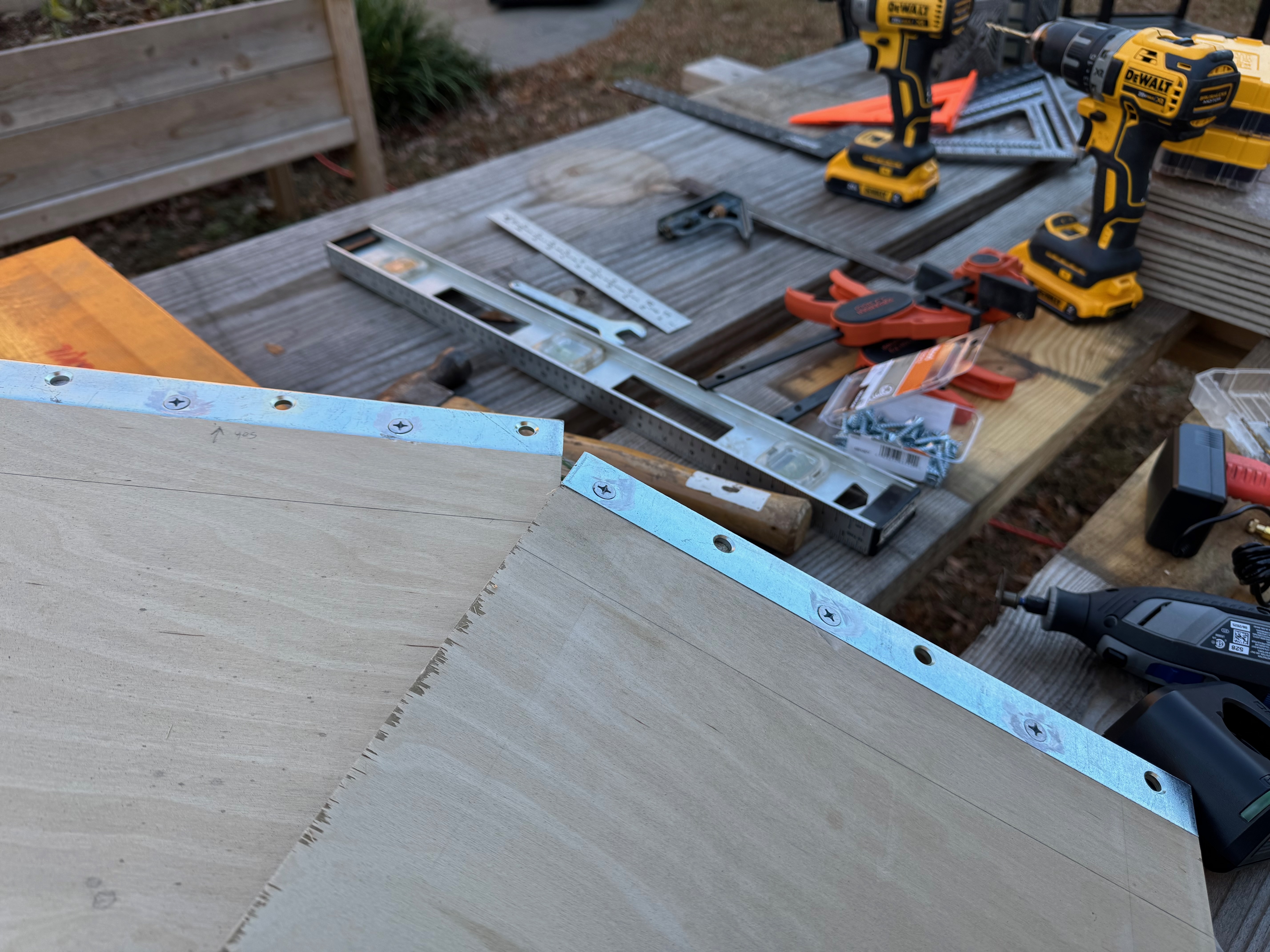
In order to round the text block, you would normally have shouldering irons that would catch the force of the blows applied to the signatures and help fold them over, forming the shoulder. I didn't have shouldering irons, so I made some. Two lengths of steel plate, pre-drilled, were screwed to some rabbets I routered out of a pair of plywood boards. In the end, I went pretty easy on the text block as I was afraid to put too much stress on the spine.
Strengthening the spine, pt 1
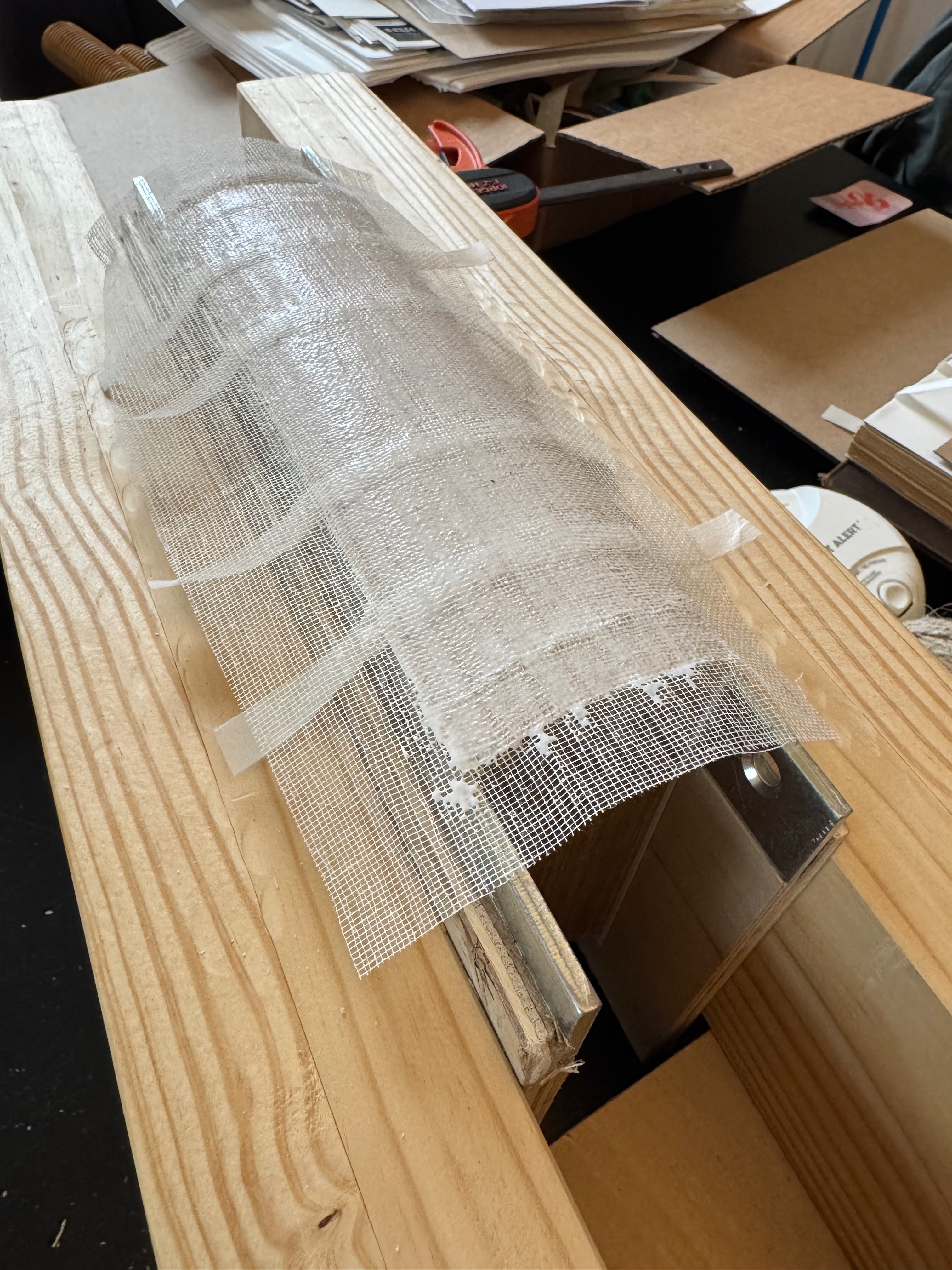
Now it was time for the first round of spine strengthening. A layer of glue, then mull laid down on it, then sandwiched with more glue, impregnated the mull and tapes with glue, forming a solid layer from head to tail.
Sewing the bands
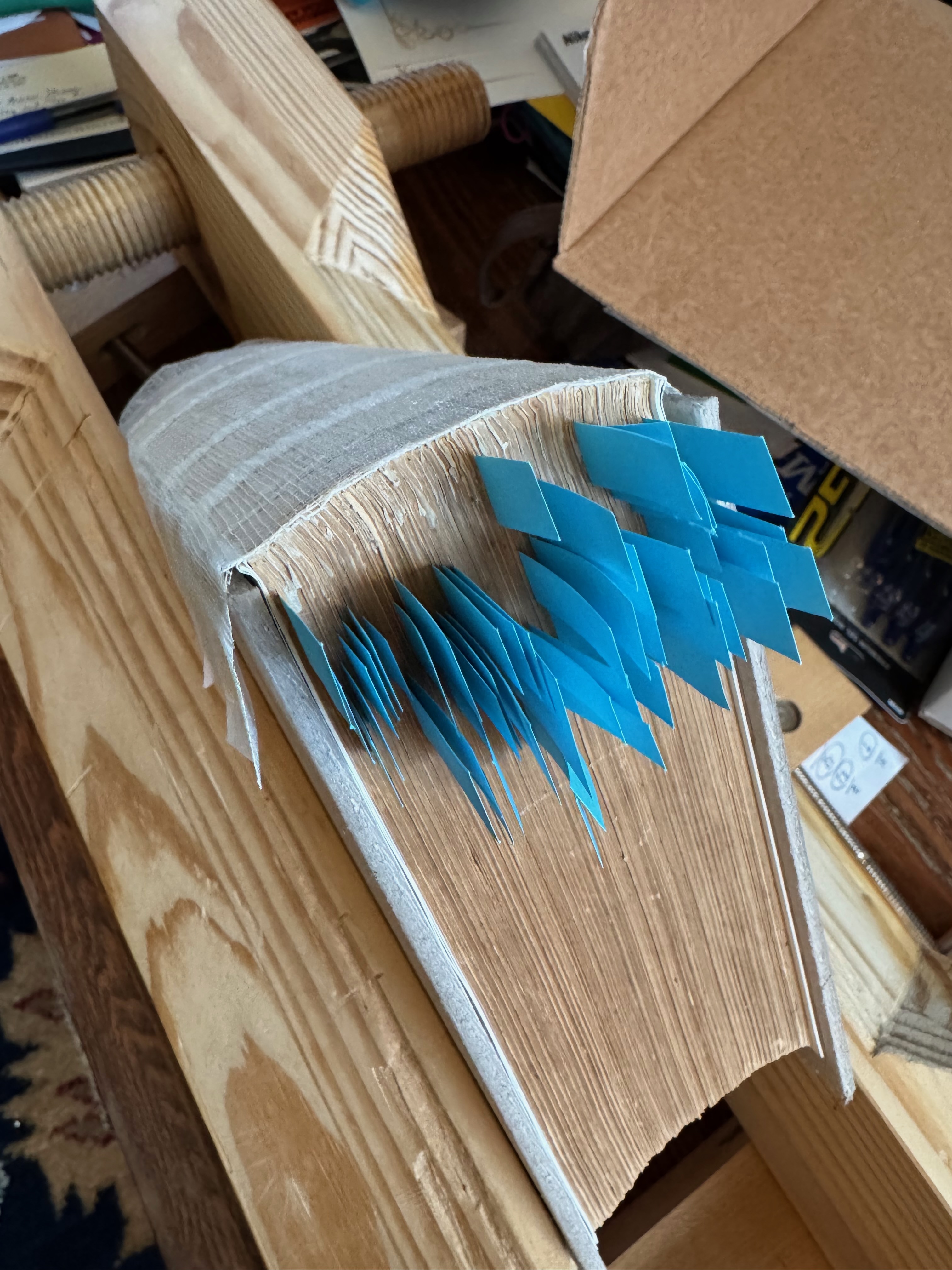
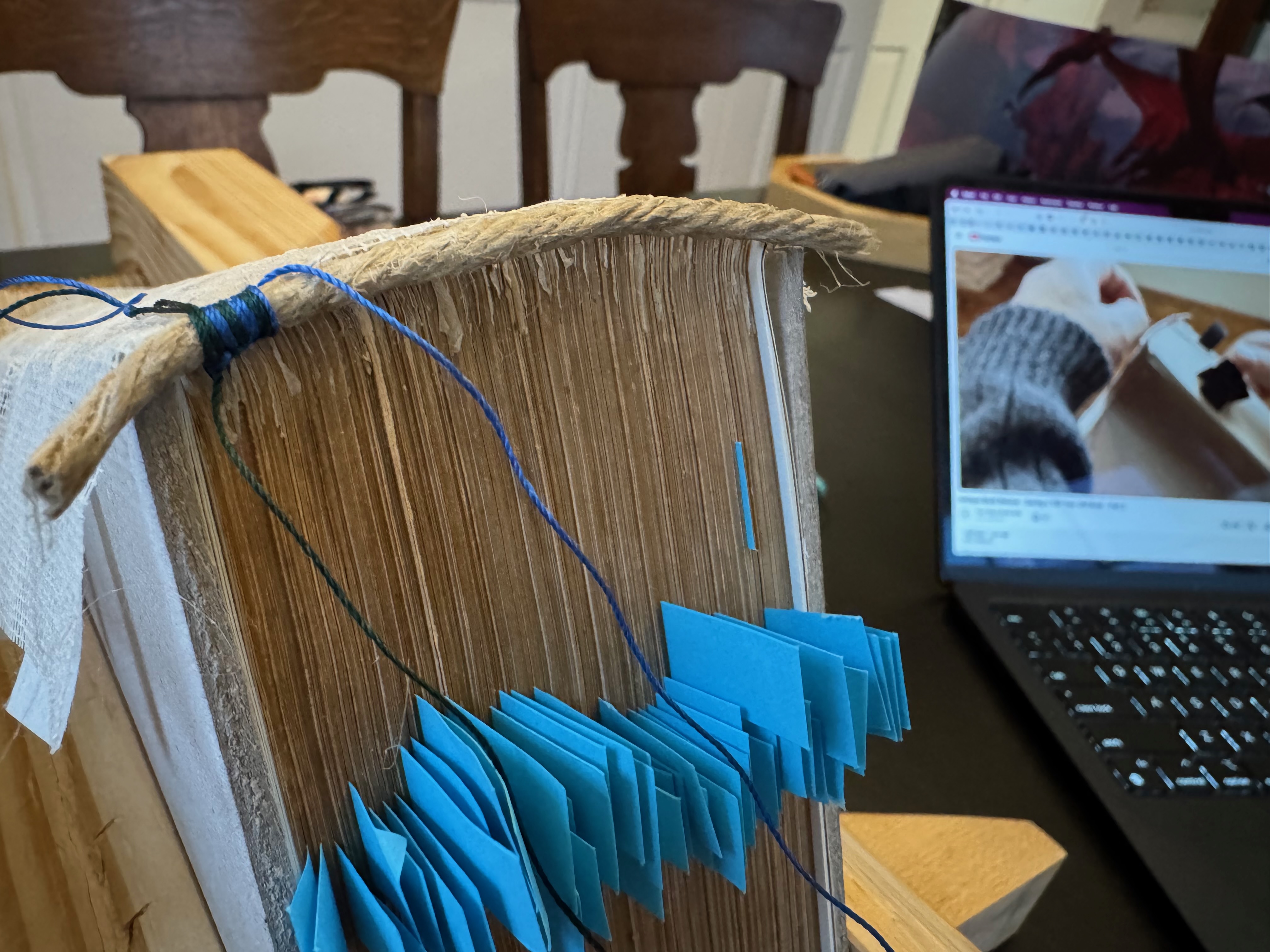
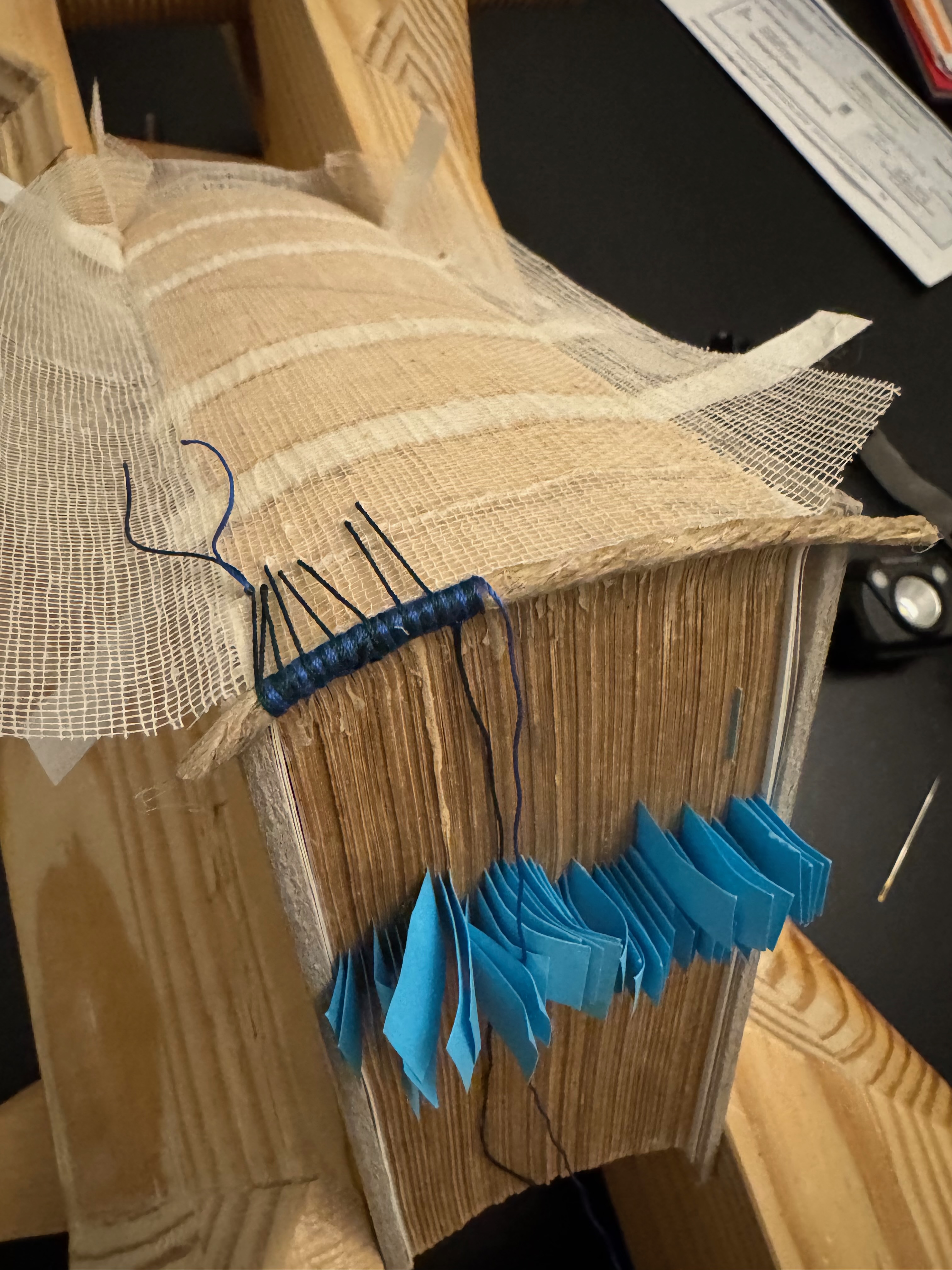
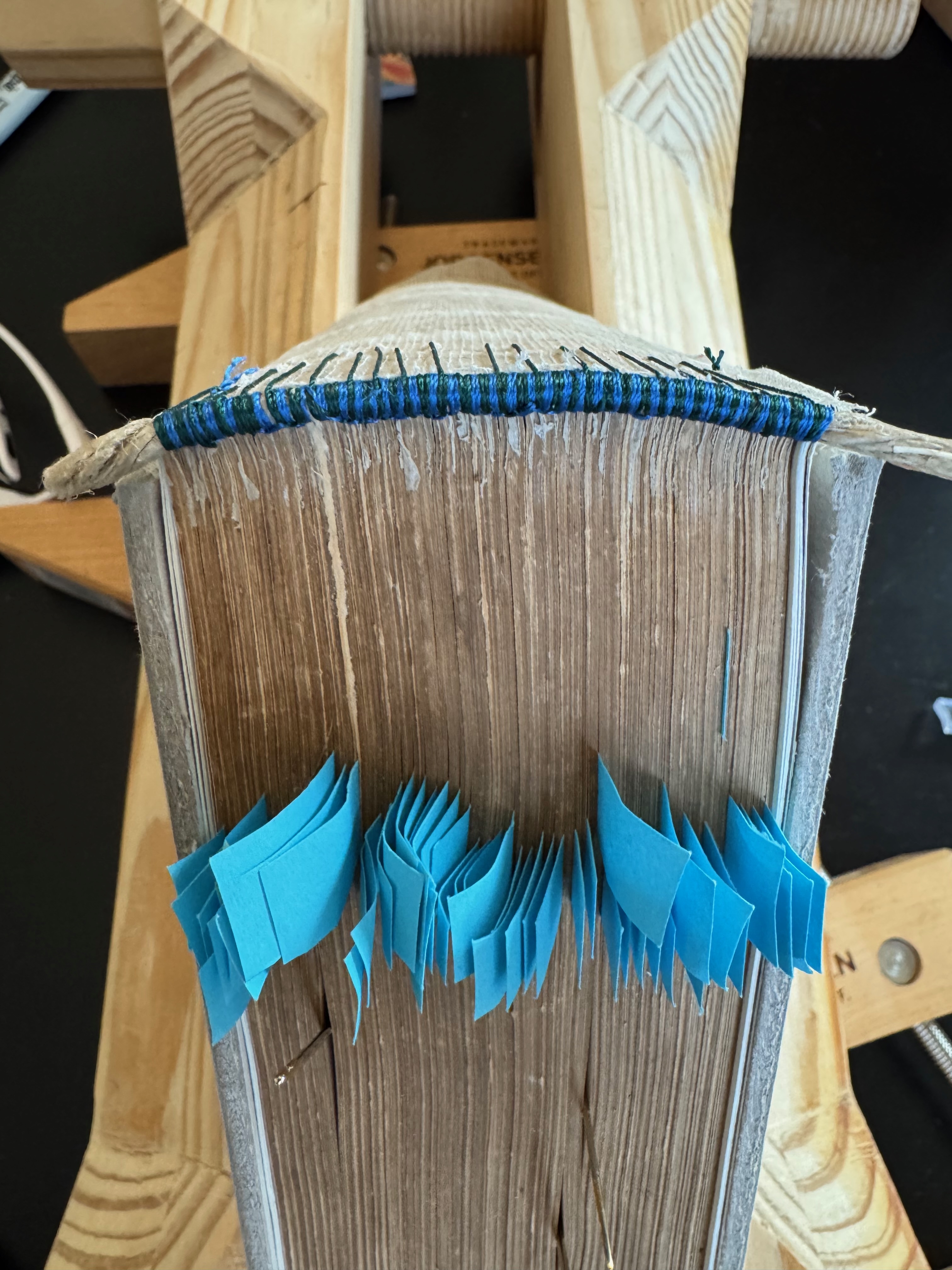
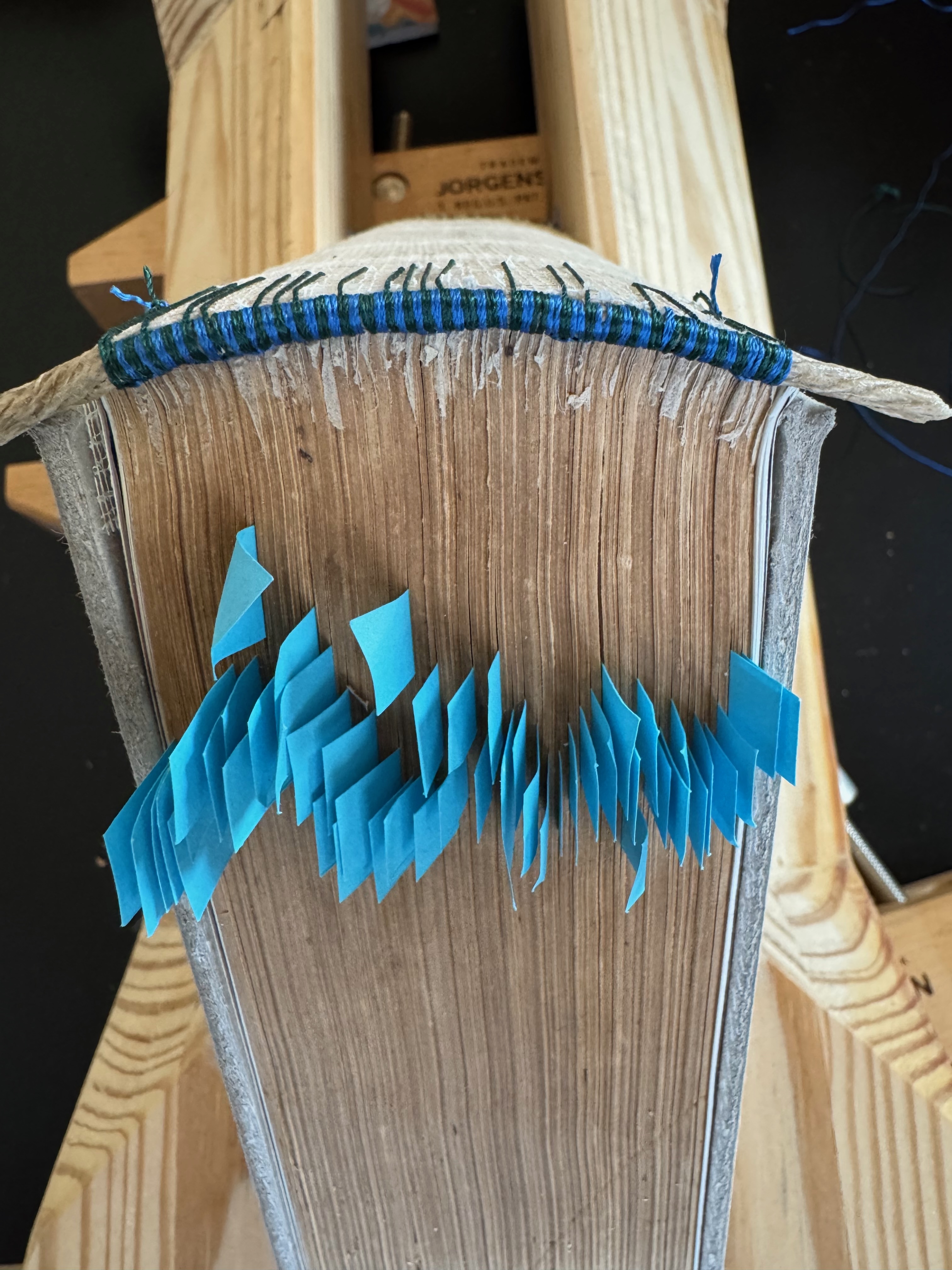
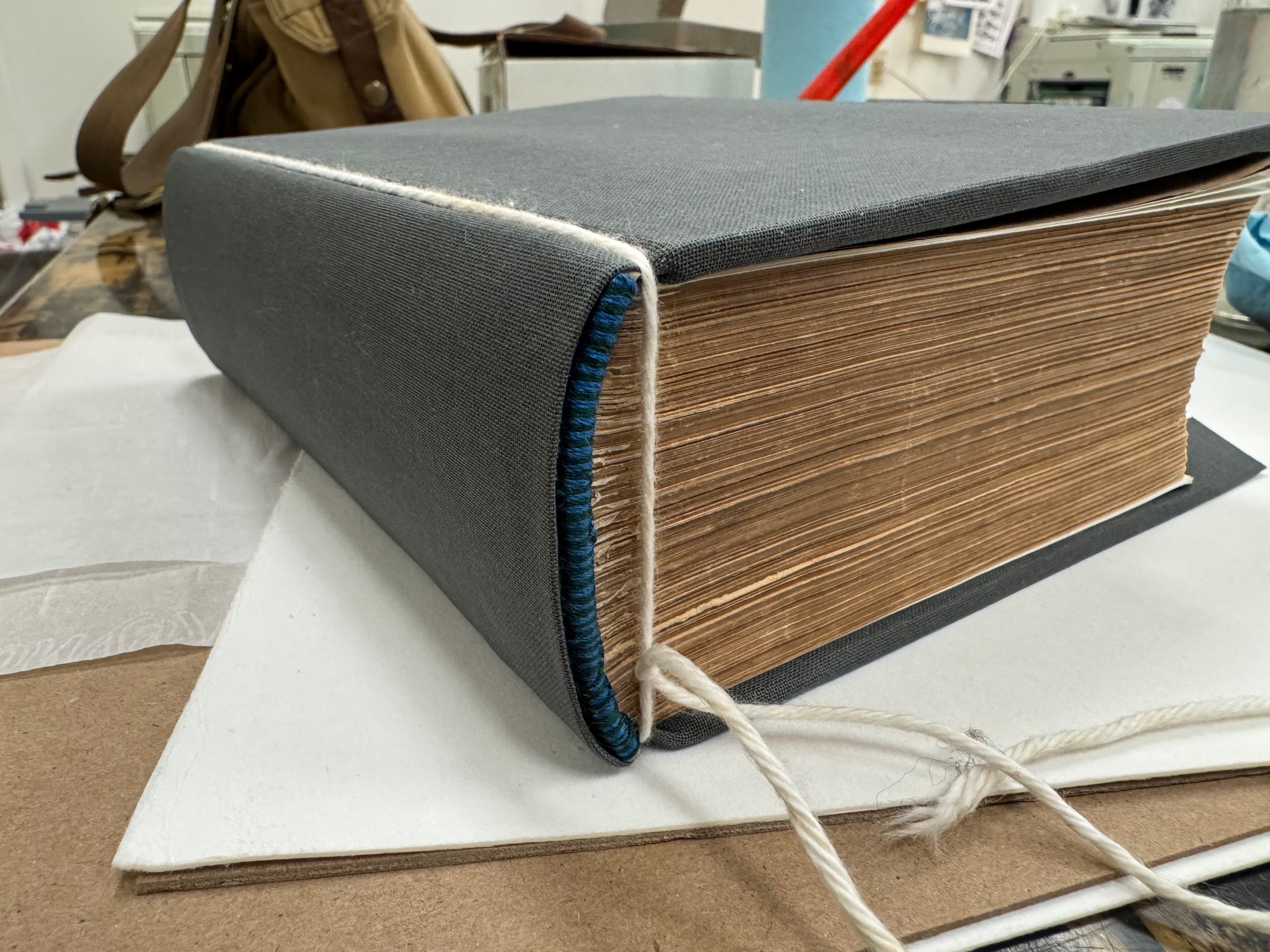
The first time I bound a book, I made decorative head and tail bands, but they weren't very structural. For this book, I felt it needed as much support and reinforcement as I could give it. Plus, sewn head and tail bands would be more period appropriate and be an opportunity to again show off some theming. I chose blue and green threads (sea and land) and firmed up some paper cord with PVA glue to act as the core of the bands. I identified the centers of the signatures, and started the wrapping process. If you've ever made friendship bracelets as a kid, you'd probably recognize the process. Every so often, the whole structure would get sewn into the book via the fold in the signature with the thread coming out the back of the spine. Ideally, it's done underneath the first sewn line of knots across the spine, further strengthening the structure. Like many parts of this project, I would have benefitted from starting with the side least likely to be seen regularly, but I didn't. Head first, literally and figuratively.
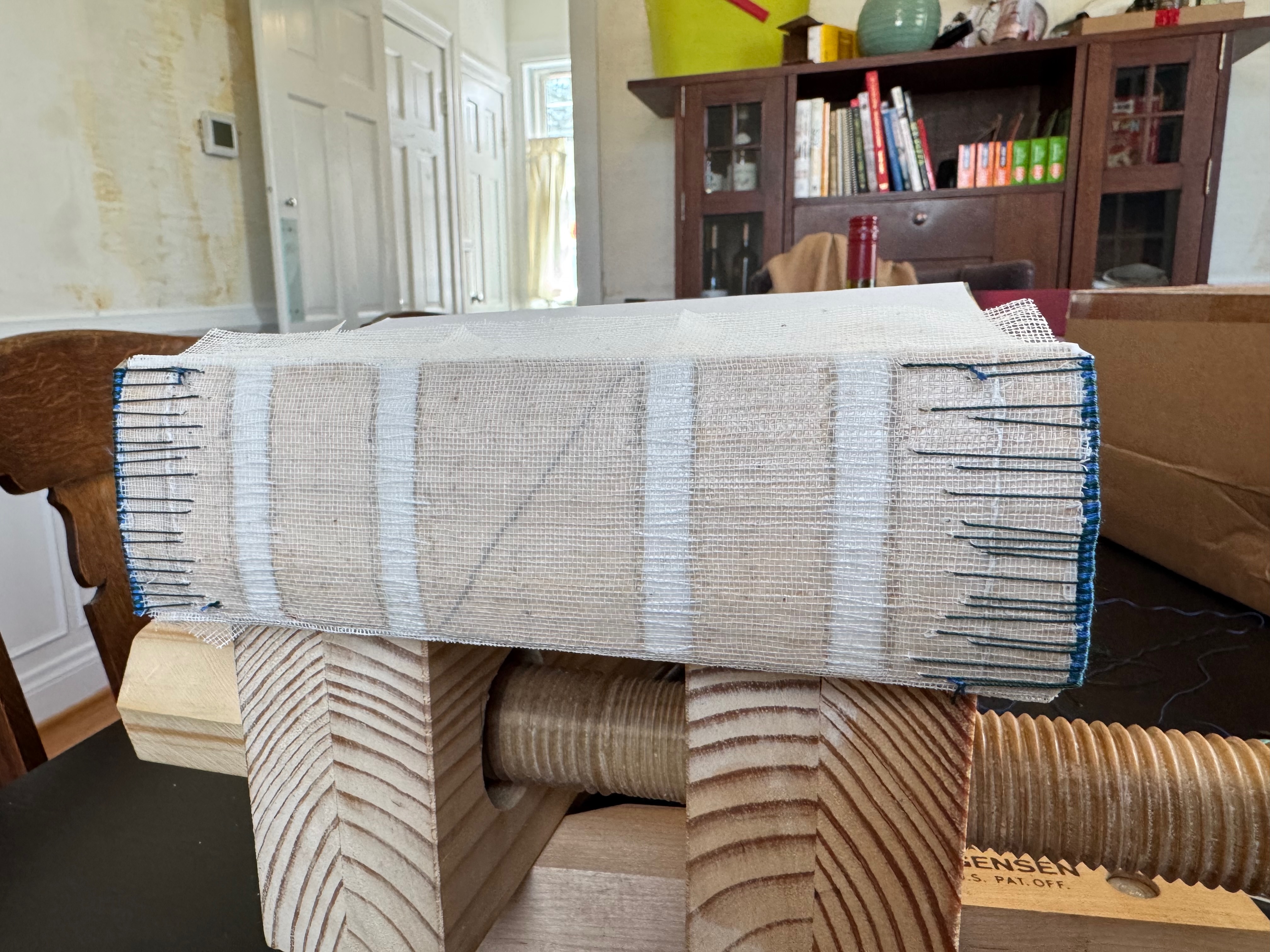
Strengthening the spine, pt 2
Next came a spine stiffener, and piece of cardstock glued and smoothed down, followed by the hollow, a structural piece that would allow the spine's cloth to fold open without creasing on itself.
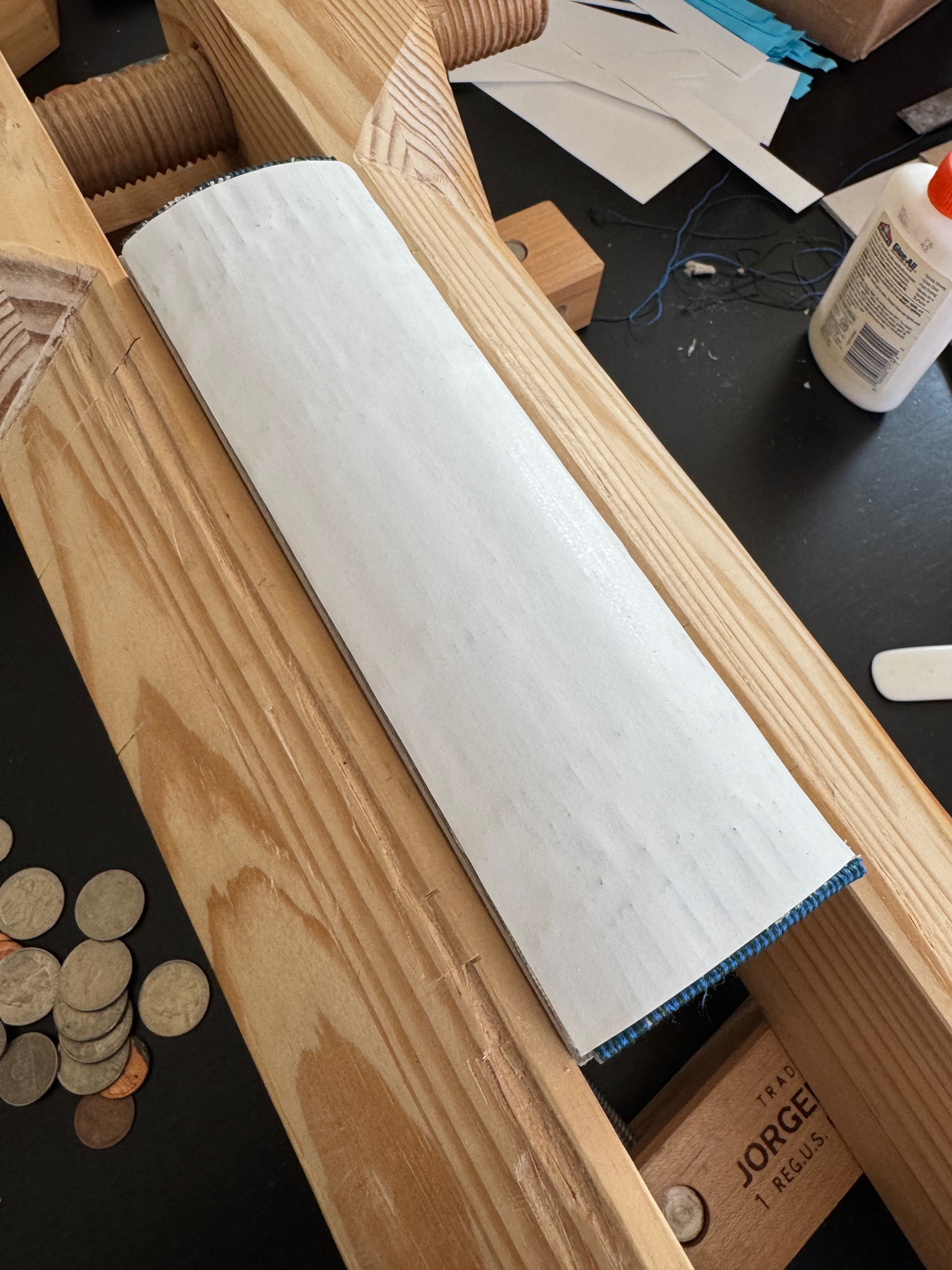
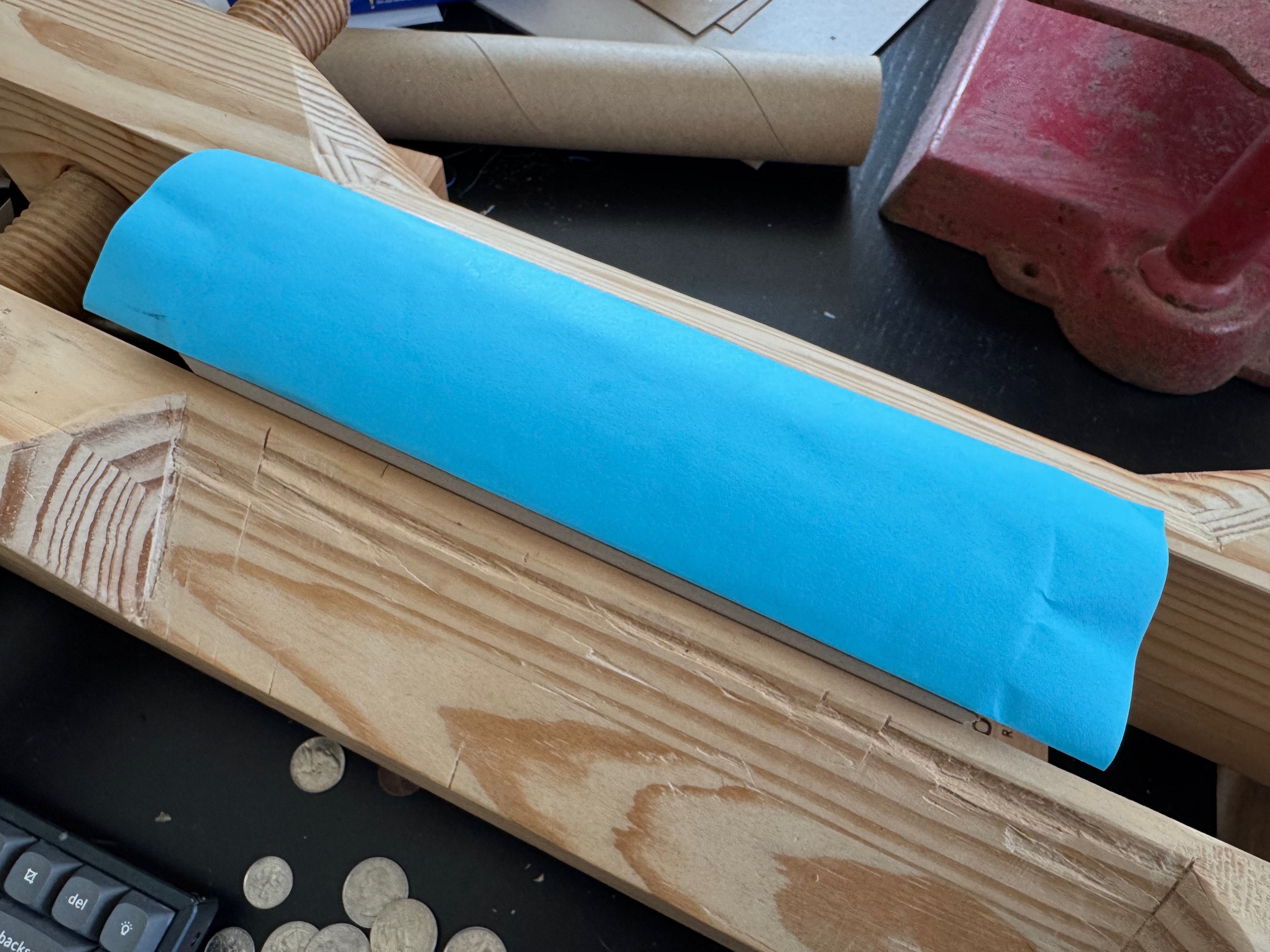
Making the tabs
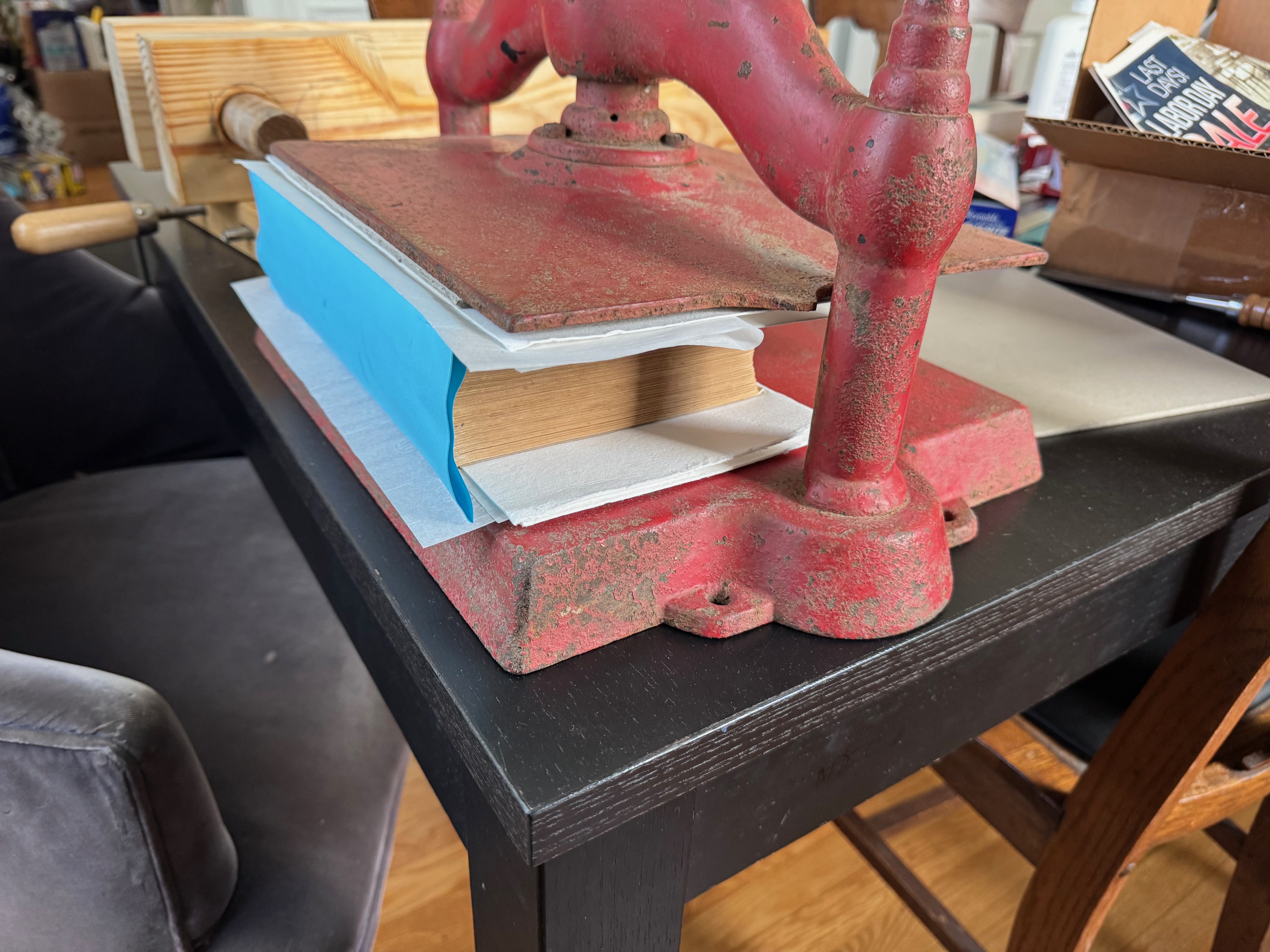
The two waste sheets on the front and back of the book were now folded down in thirds, and sandwiched with glue, binding the remaining mull and tape within it. About this time, I also managed to pick up an antique nipping press locally. Having steady pressure, equally applied would be pretty crucial throughout the remainder of the process.
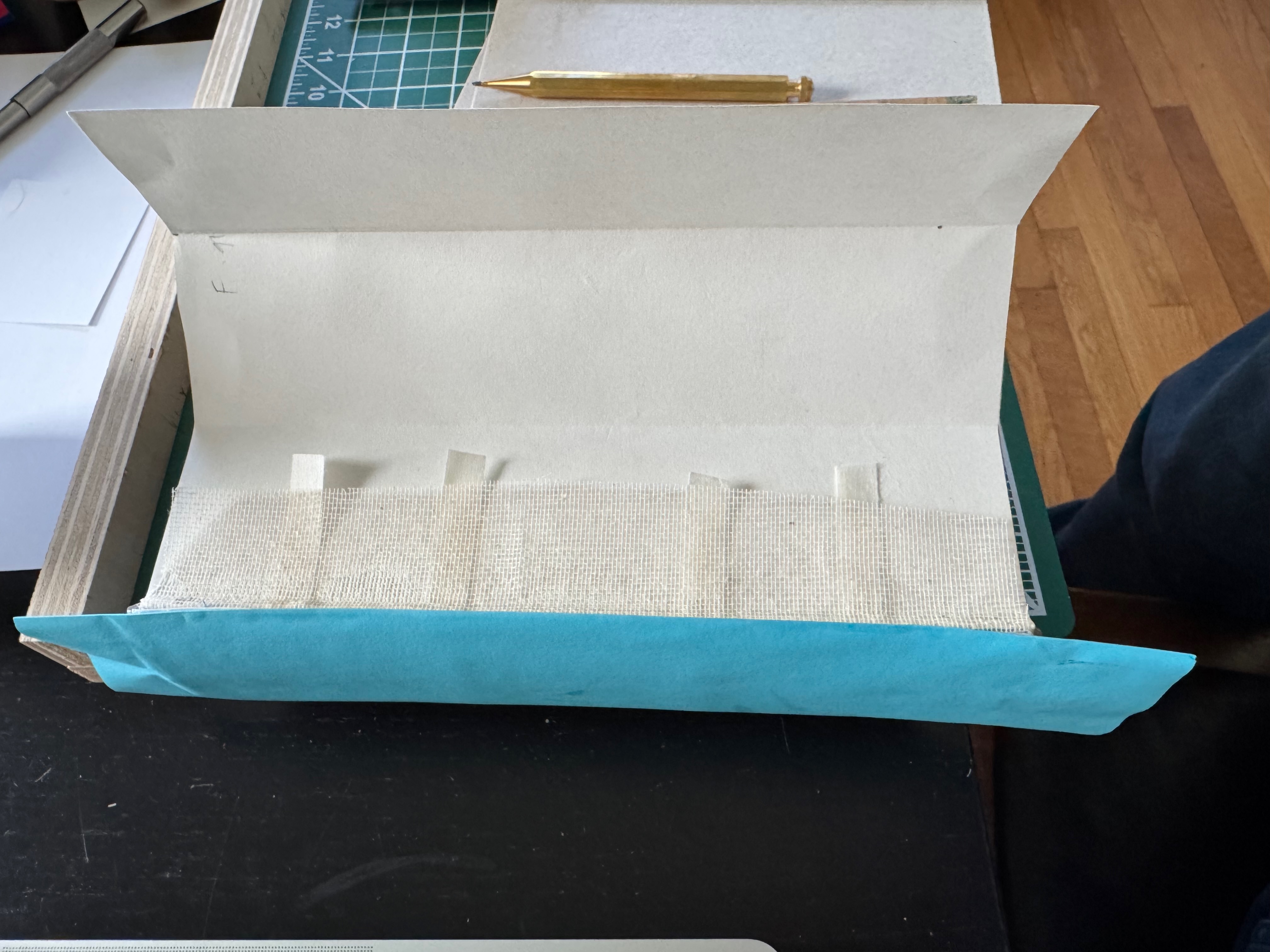
Assembling the boards
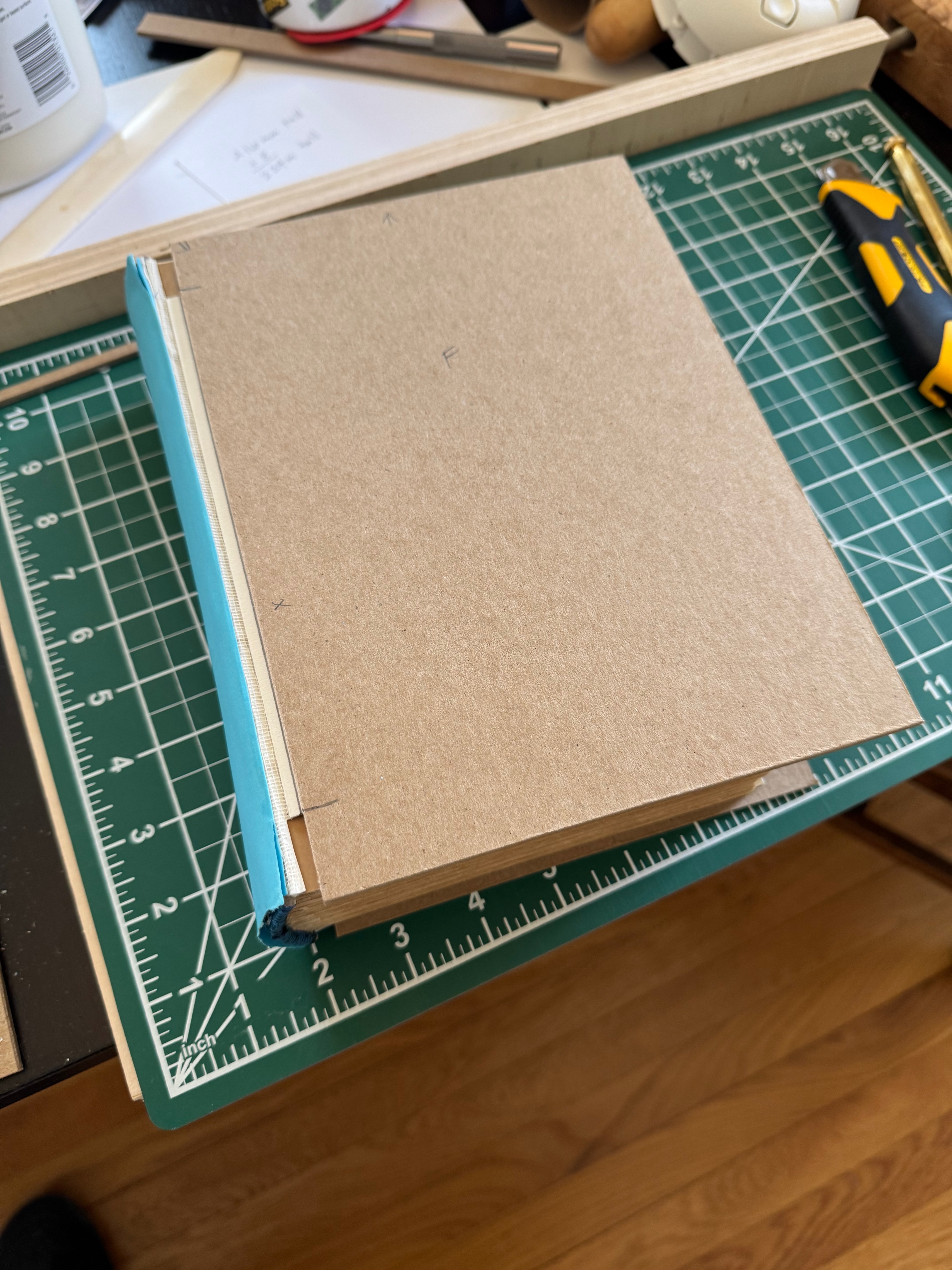
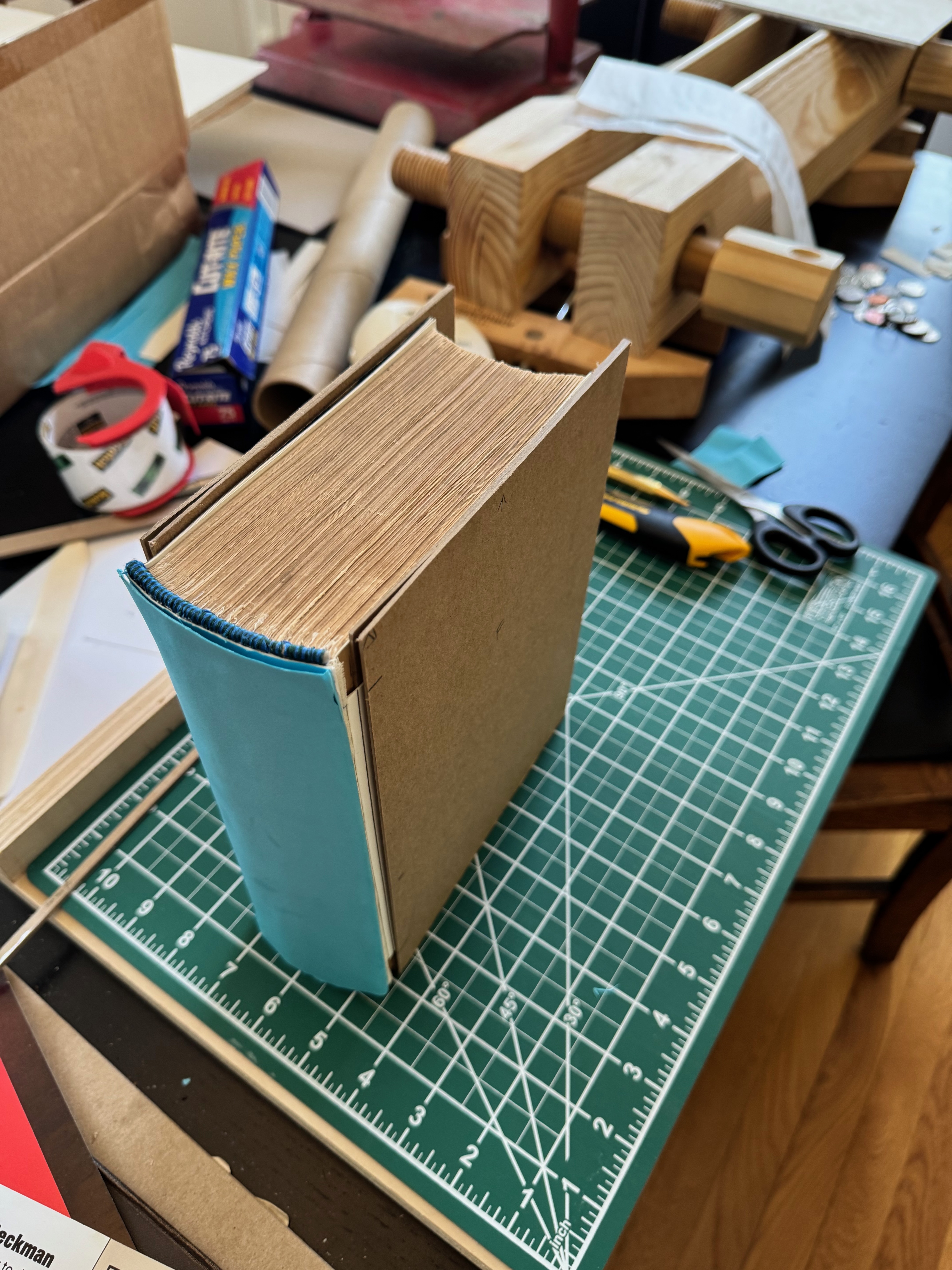
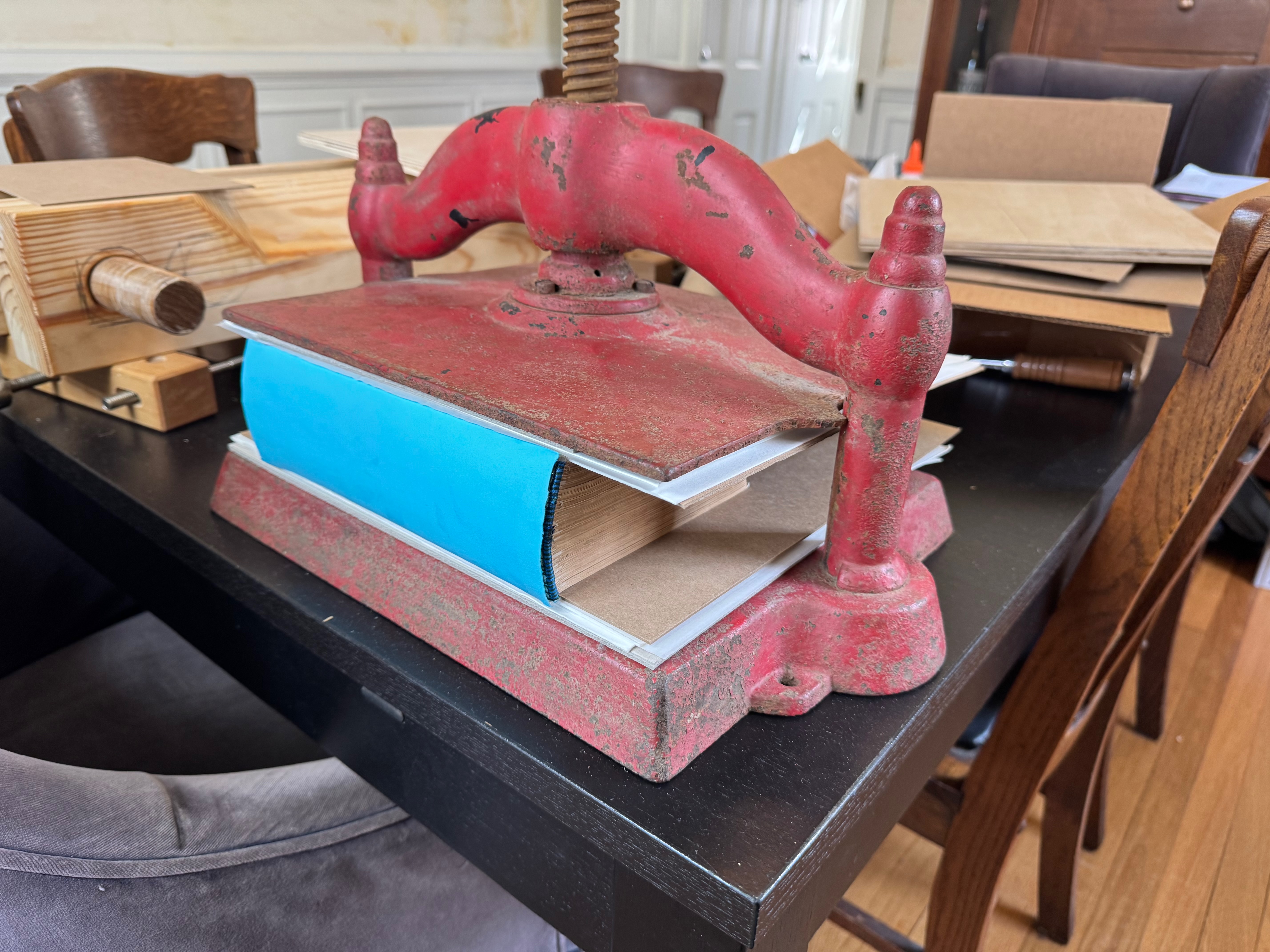
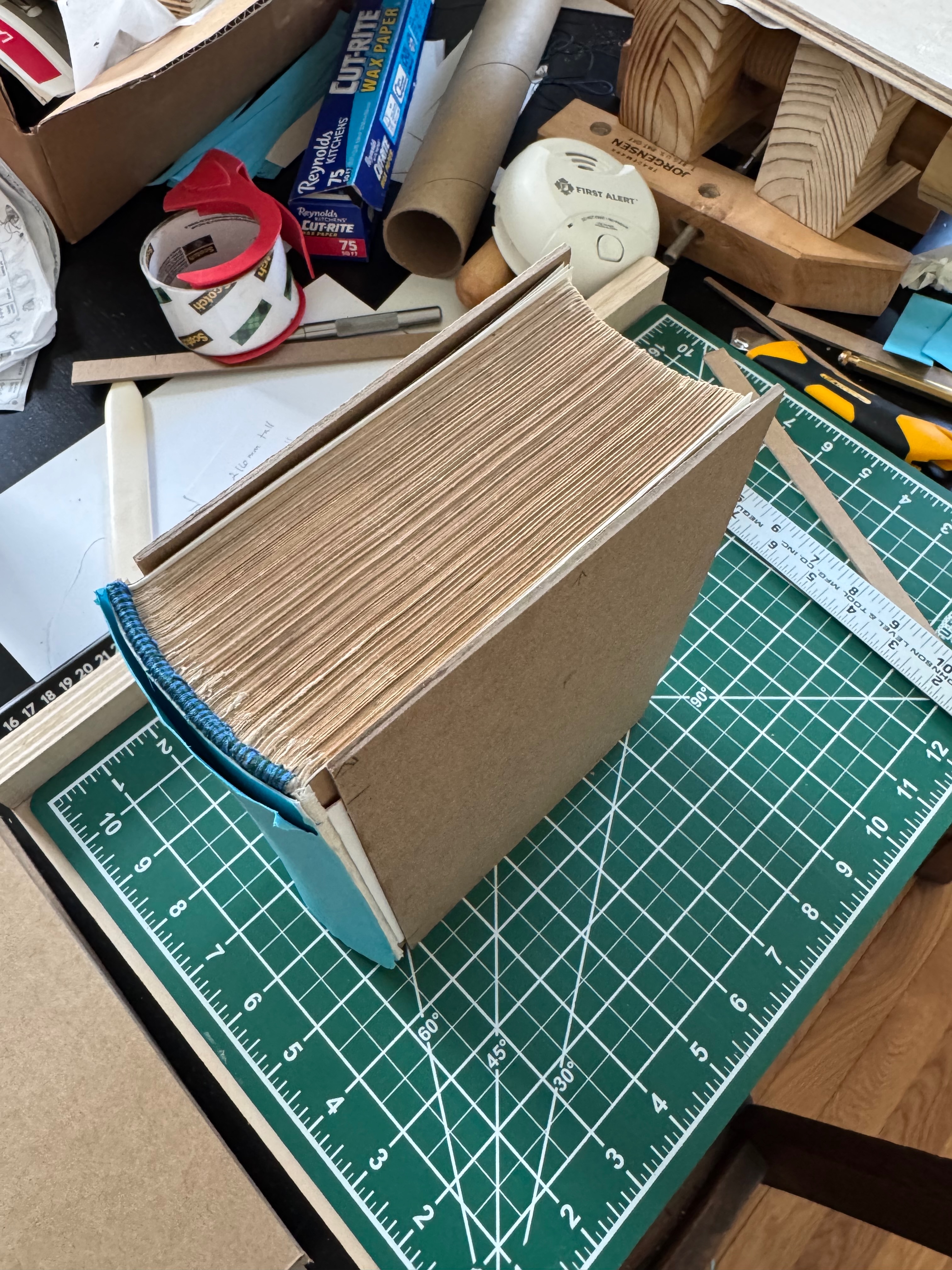
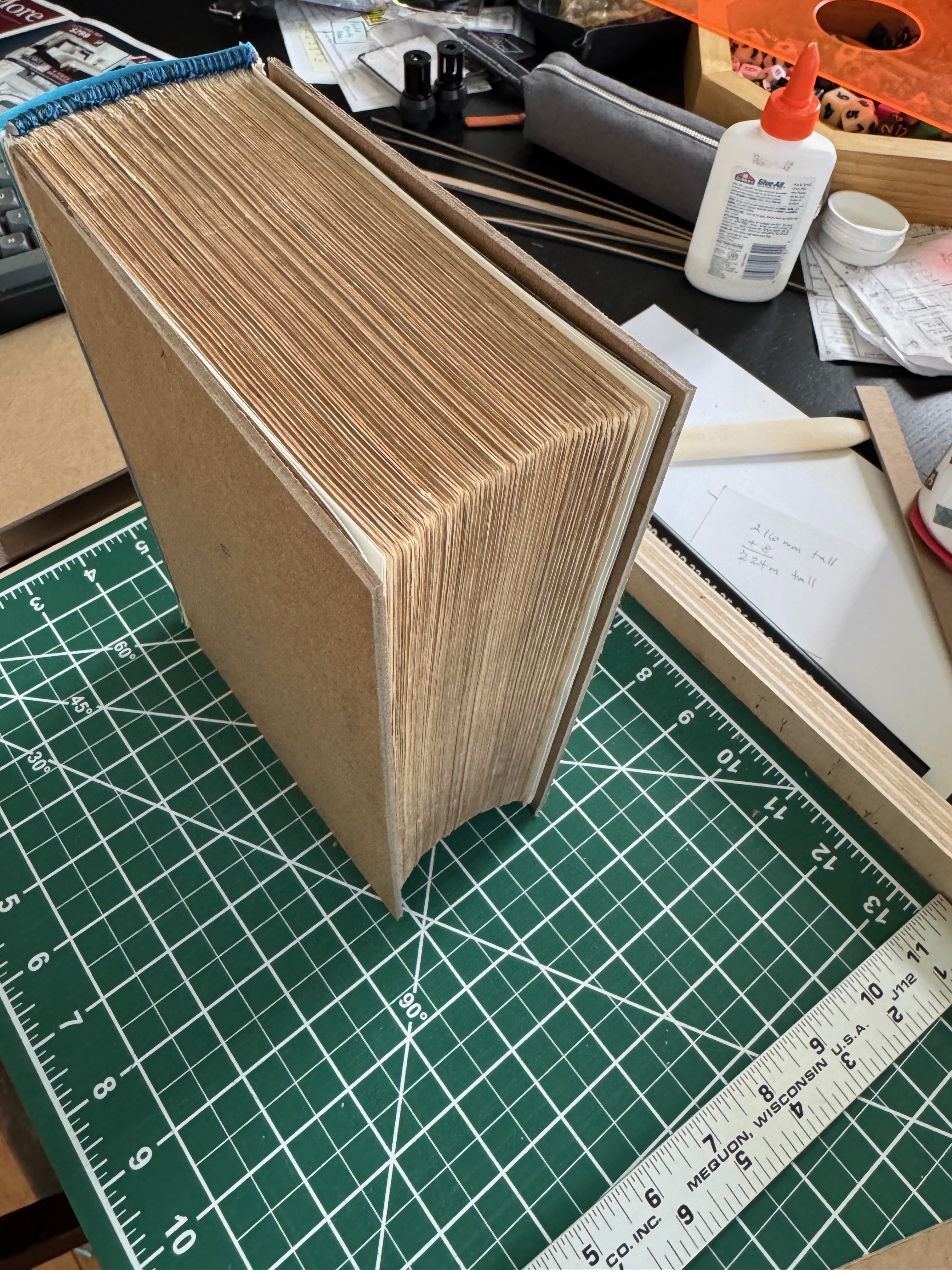
I had determined that the cover boards would be 4mm thick, but made by laminating two 2mm boards, leaving the last third unglued along the edge of the spine. That gap would eventually take the tabs I'd just made and fully secure the covers to the spine. At this point, it's a book!
Creating the deboss cards
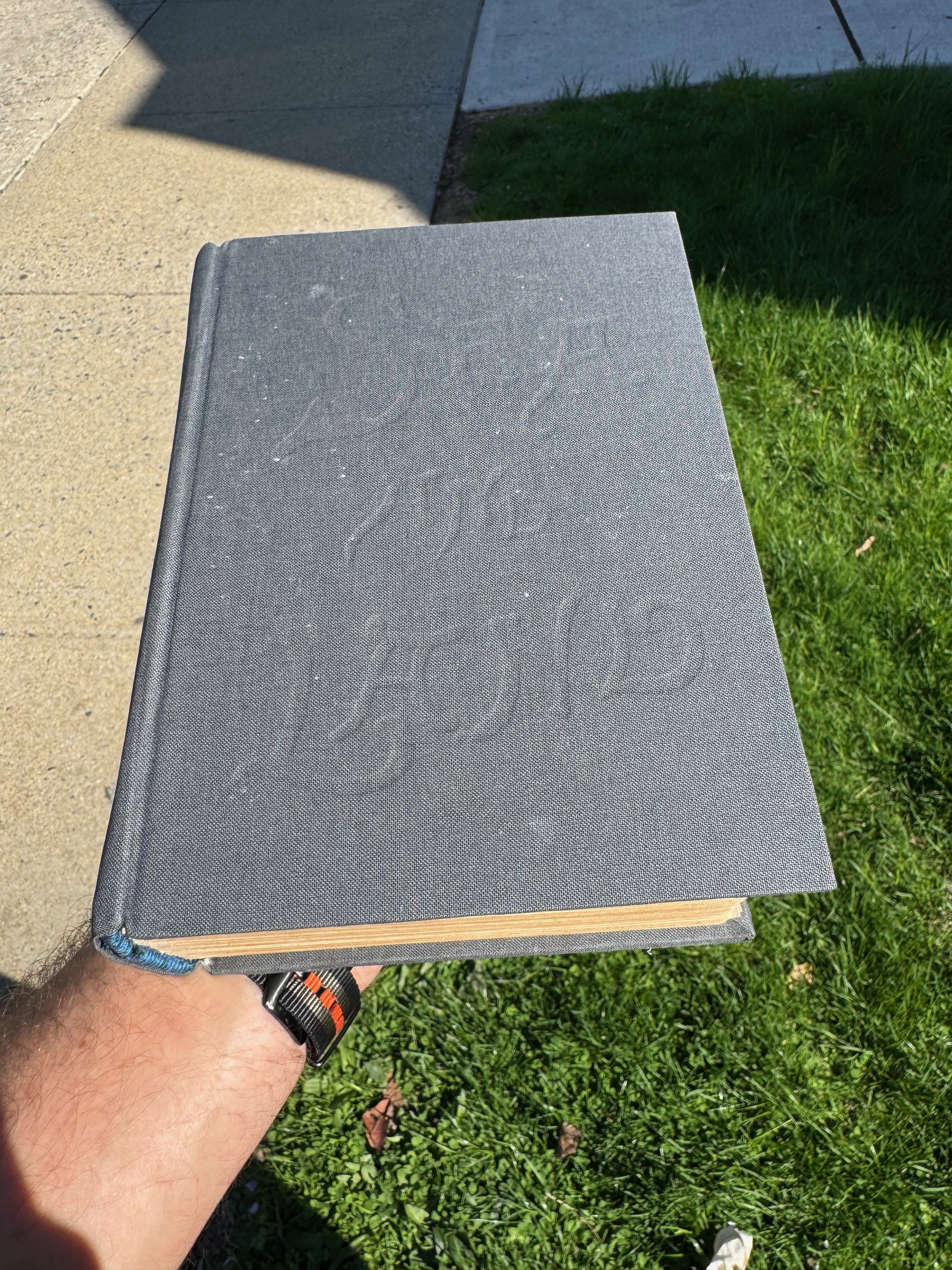
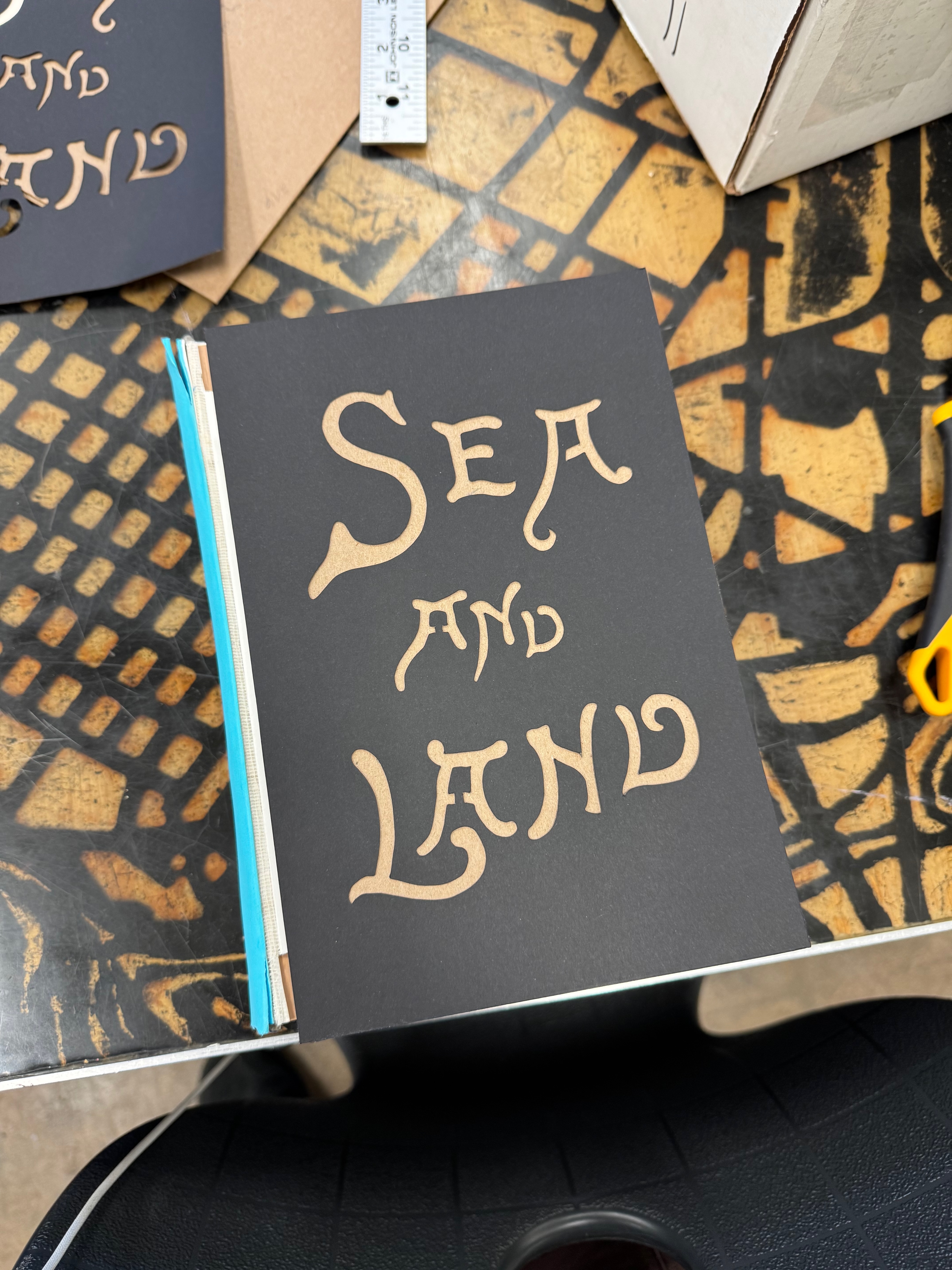
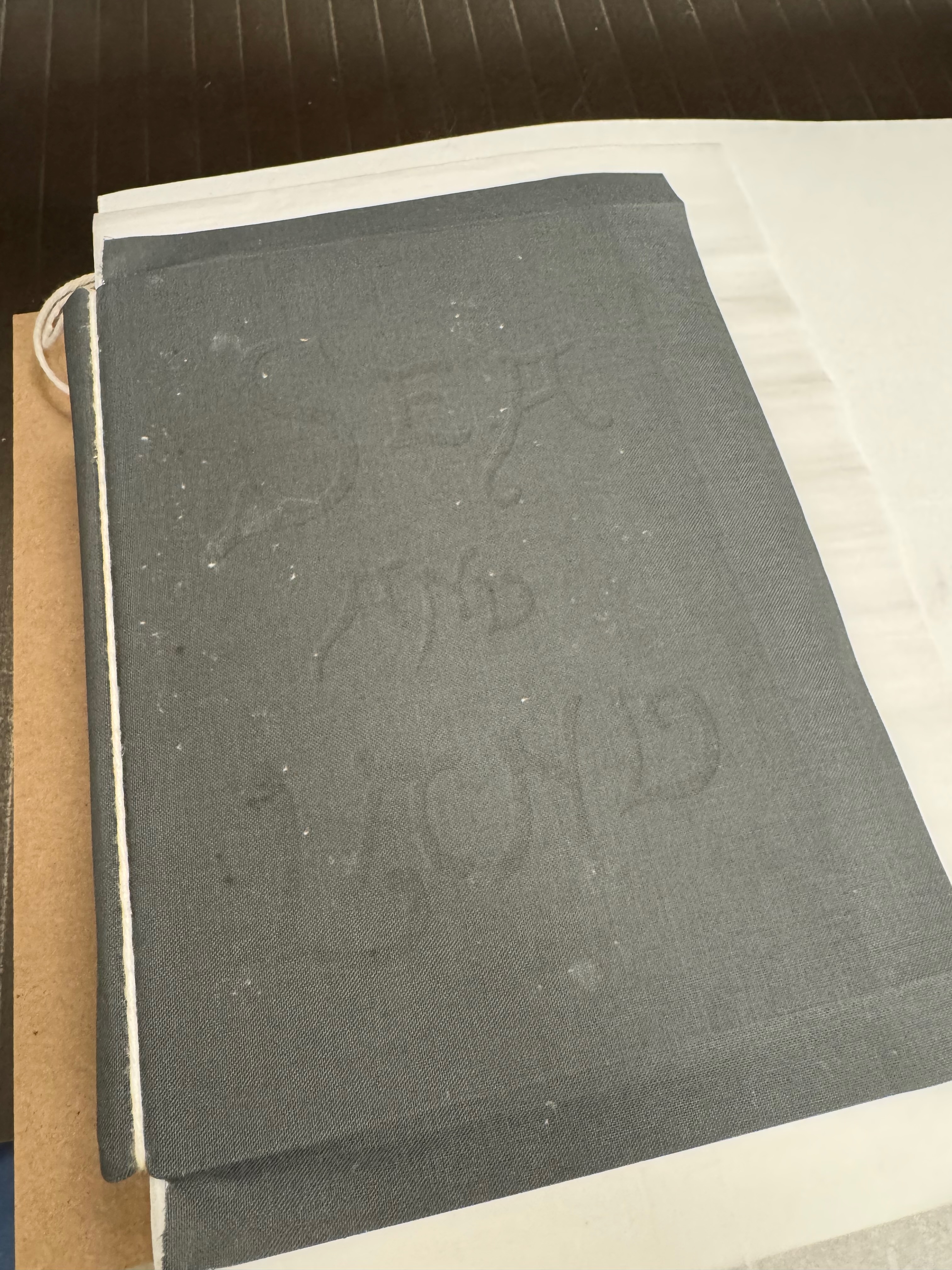
Since I was not reusing the original covers, but I wanted to pay homage to its design, I traced the title lettering in Affinity Designer and turned it into an SVG, which I could scale and place and make full cover size. I cut it out with a Cricut at the studio and glued the cardstock to the cover boards and set them to dry in the press.
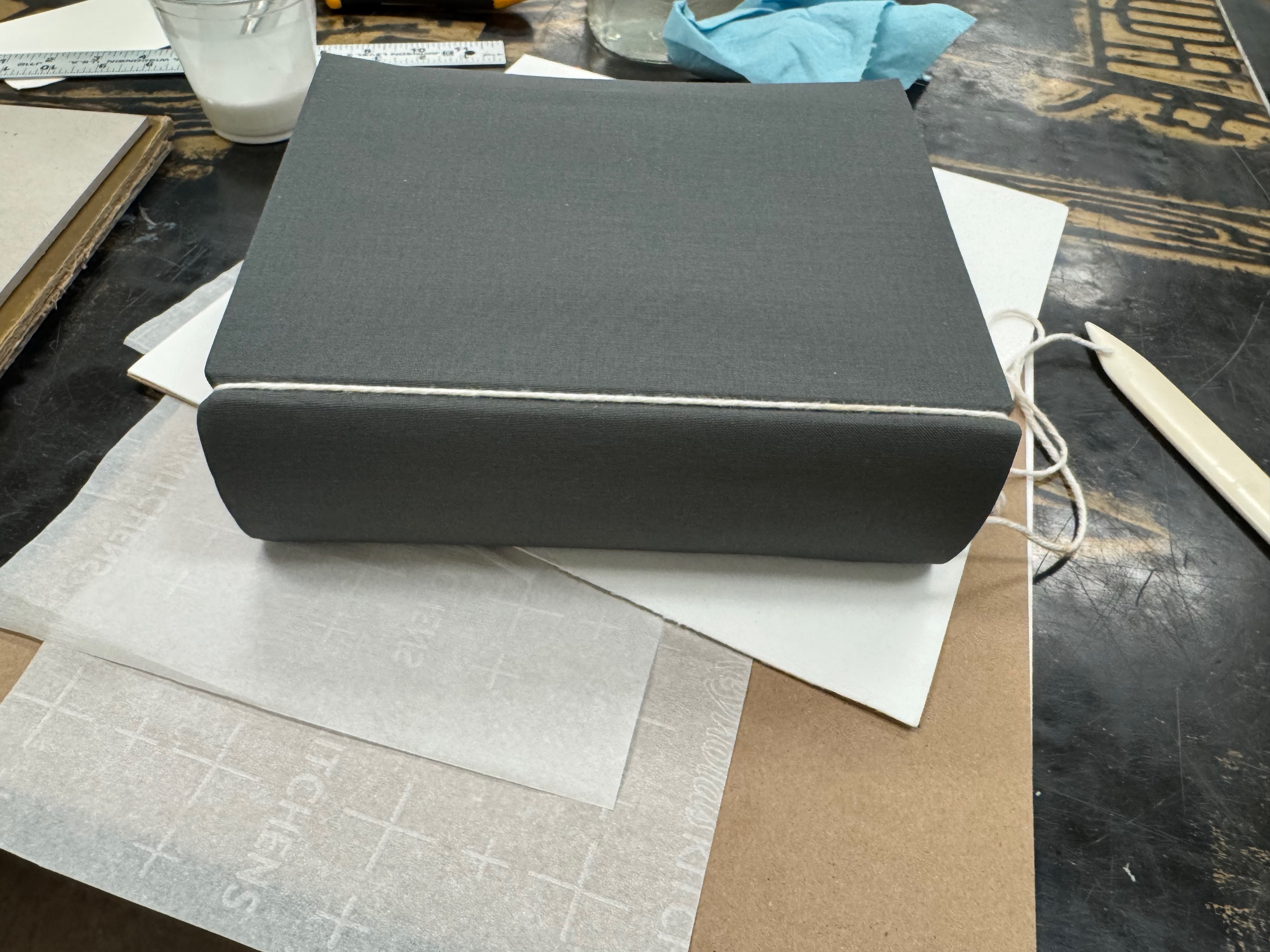
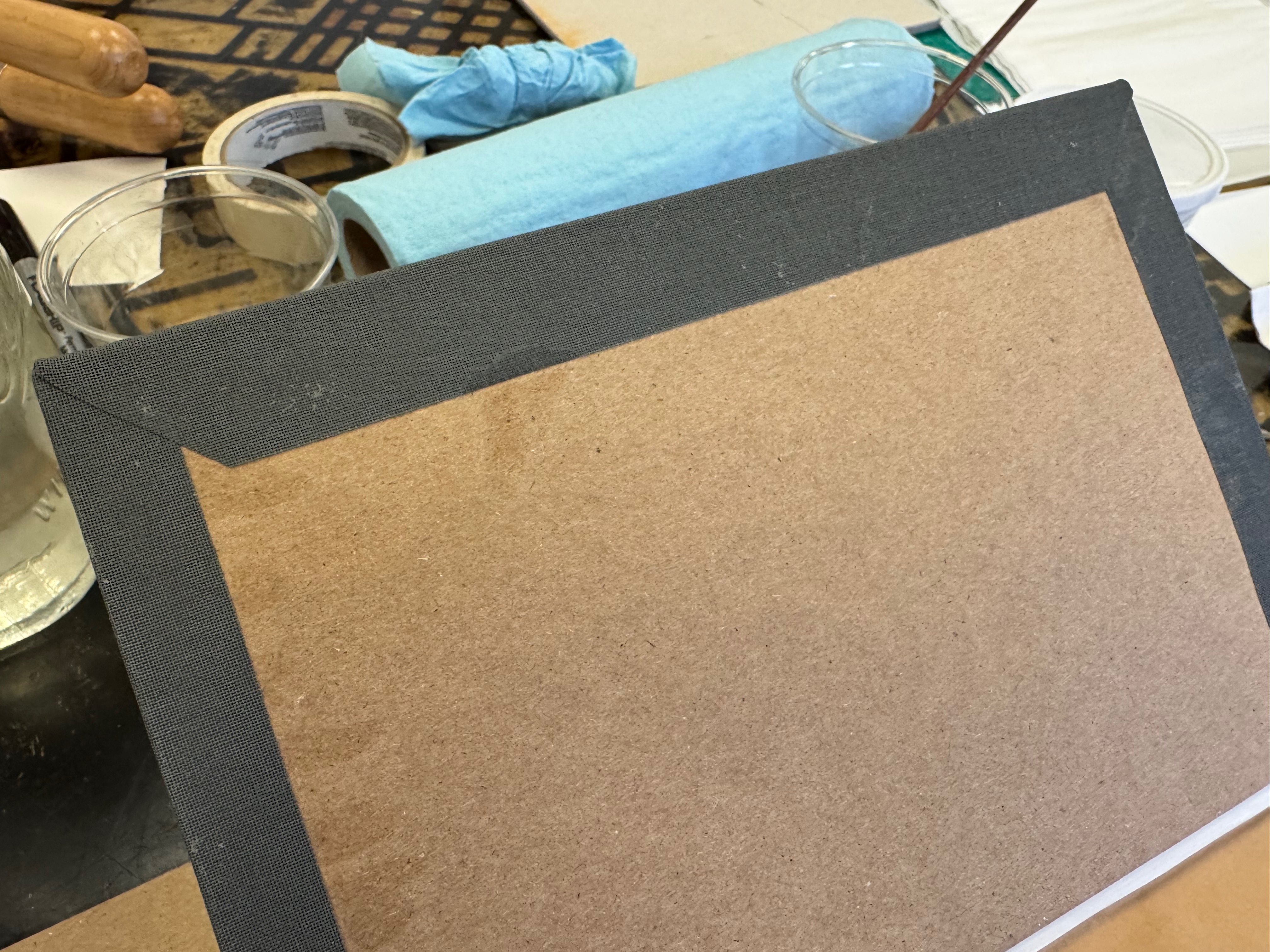
Clothing the book
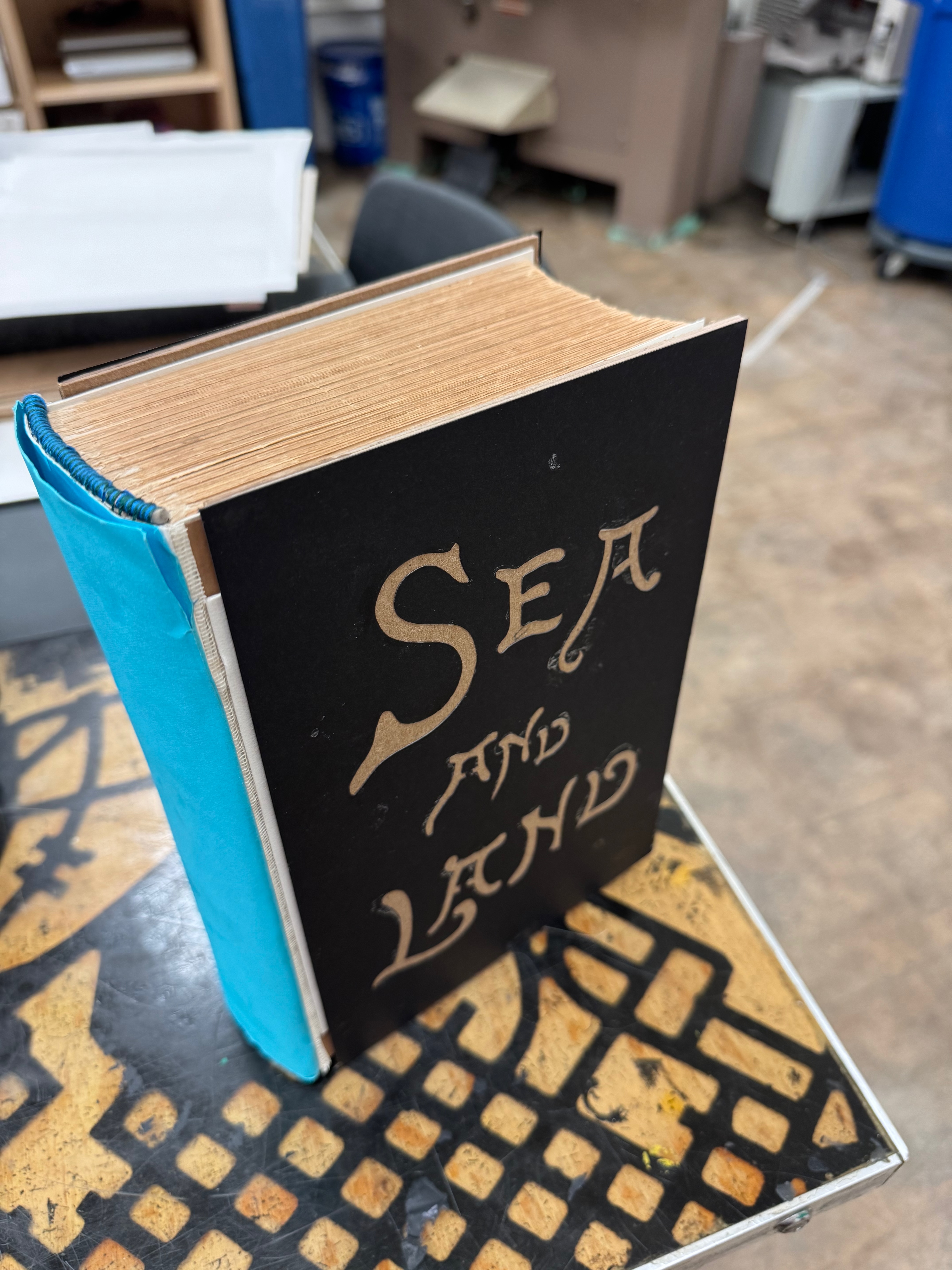
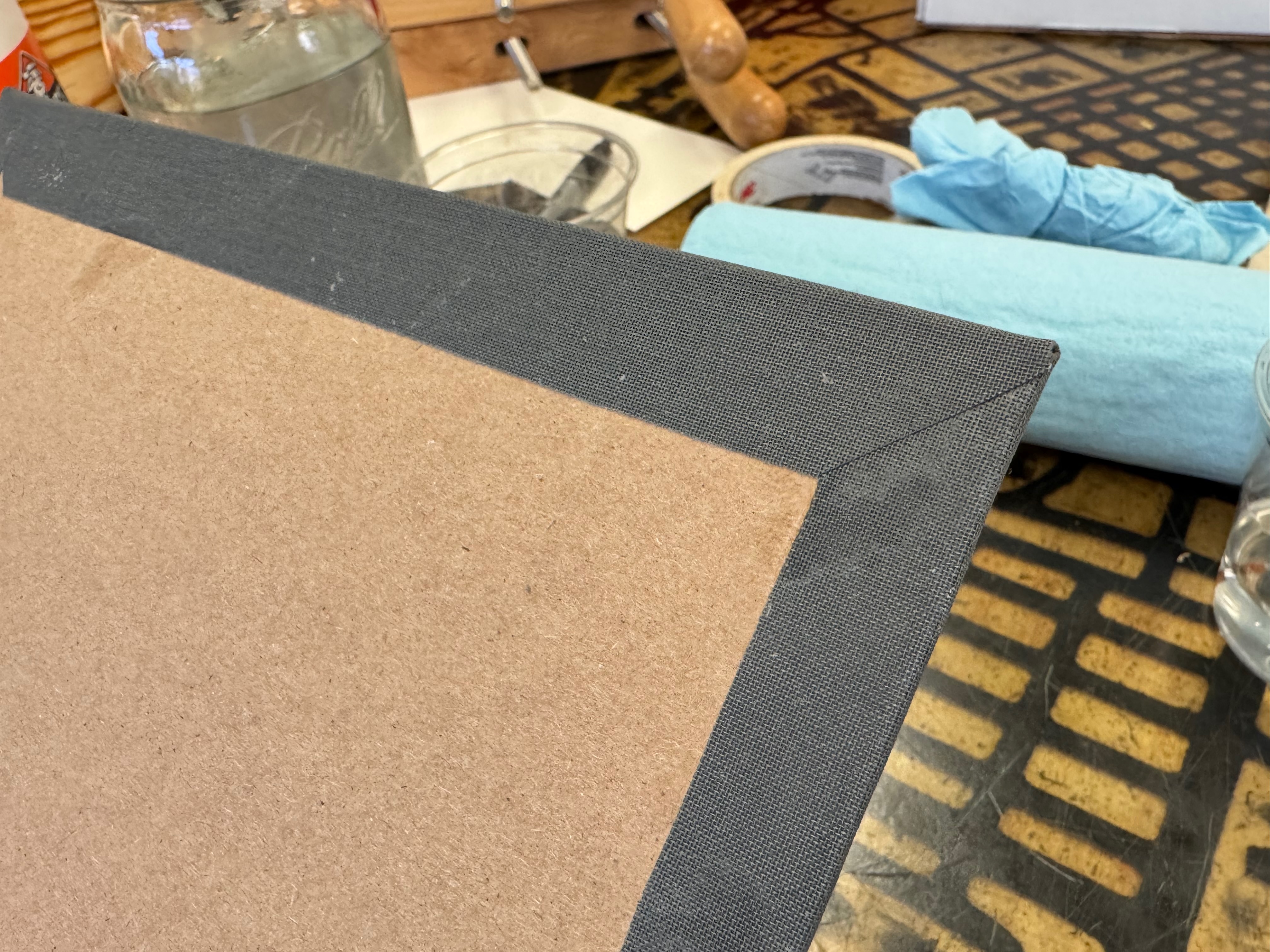
The book was structured, but still vulnerable. Gluing down book cloth and putting it in the press allowed the cloth to be debossed into the stencil I cut out. I was in a bit of a rush, and the blotter paper I used outside the book met up with some glue coming through the book cloth, and left little fuzzy bits.
Attaching endpapers
The last step was attaching the endpapers, fully connecting and making secure the cover to the text block. A mixture of PVA glue and methylcellulose gives a bit more working time and allows the endpapers to be smoothed against the cover boards. The cover boards had bowed slightly as the cloth compressed, and gluing the endpapers inside would counter that bend and the tension would pull them back flat.
Assembling the shadowbox
The back cover had no decoration or ornamentation, but the front cover and spine still retained some of their former beauty. In addition, the personal note and pressed flowers found in the book all made for a nice memento of the book's former life. I mounted them all in a shadow box, which would accompany the book and get presented to Stu.
Ready for presentation
I drove up the morning of Geek Flea with the book still in the nipping press, where it had sat overnight, receiving as much pressure as I could muster and as much time as I could give it. When I finally pulled it out the press, it was as much a surprise to me as it was to Stu, and I couldn't have been more pleased with how well it all turned out.
The next step for me is to try and recreate the original cover artwork as a dust jacket so Stu will have something other than a grey spine to look at on his shelf.